A water change is the fastest, most reliable way to bring nitrate down right now. Reducing feeding, thinning out overstocking, adding live plants and vacuuming detritus from the substrate are the levers that keep it down long-term. If your tap water itself already tests high for nitrate, no amount of water changing alone will get you below that floor — you’ll need a different source-water strategy. Here’s the honest, step-by-step approach.
Before you start: confirm the reading and check your source water
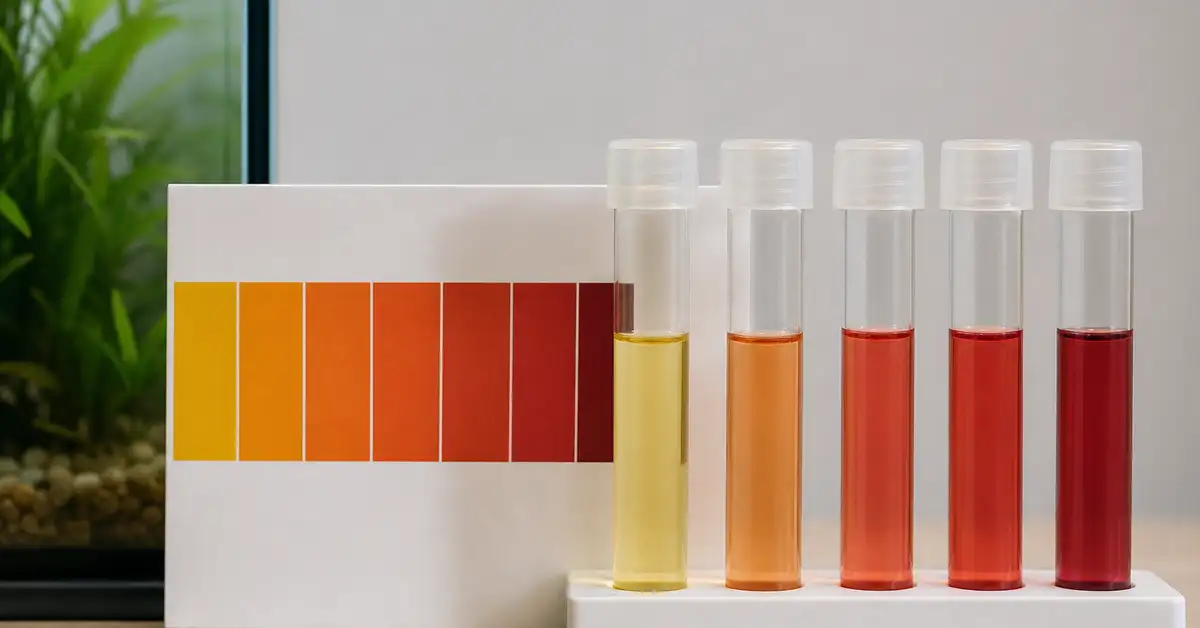
Test your tank with a liquid reagent kit rather than a strip if you can — see our best aquarium test kits guide if you need one. Then test your tap water separately. This matters more than it sounds: if your municipal or well water already contains meaningful nitrate (some sources run 10-40 ppm before it ever reaches your tank), water changes alone will plateau at that floor rather than reaching zero, and you’ll need a source-water fix rather than more frequent changes.
1. Do a water change sized to the problem
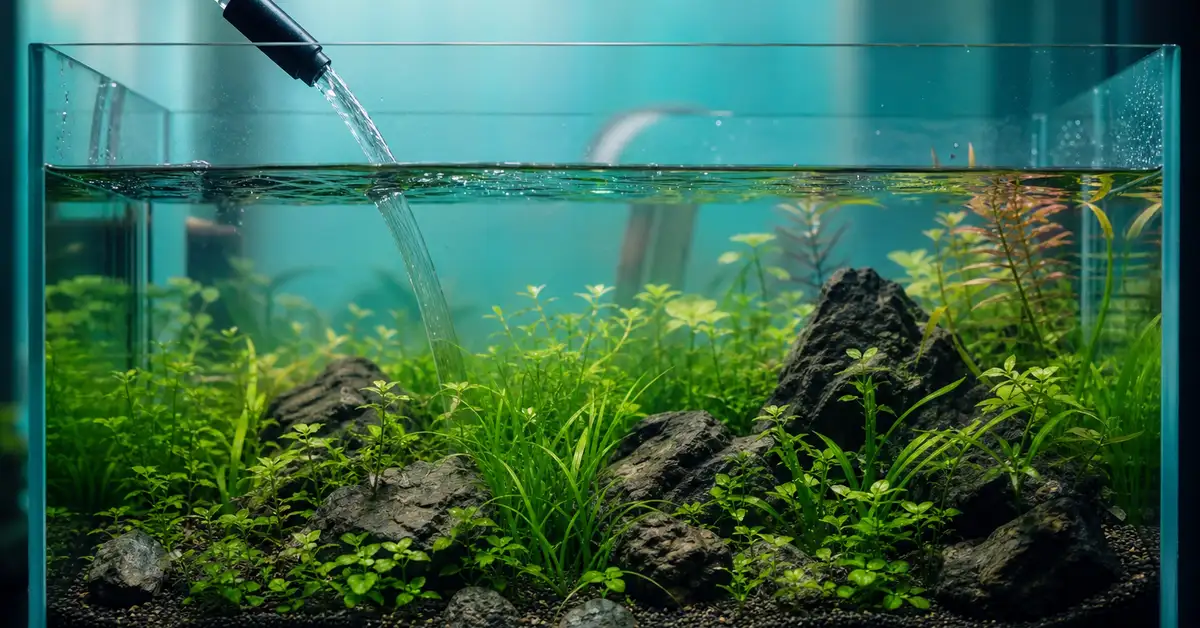
A 25-50% water change with dechlorinated, temperature-matched water is the standard, fastest response to elevated nitrate — see our best water conditioners guide if you need a dechlorinator. Unlike an ammonia or pH emergency, nitrate itself isn’t typically an acute crisis requiring extreme measures, but avoid replacing more than about half the water in a single change regardless, since a large shift in overall water chemistry can stress fish even when nitrate is the only number improving.
2. Reduce feeding and check for overstocking
Uneaten food and excess waste are a direct nitrate source upstream of the nitrogen cycle. Cut back to what your fish visibly finish within a couple of minutes, remove any obvious leftover food after feeding, and honestly assess whether your tank is stocked beyond what its filtration and water-change schedule can keep up with — a tank that’s simply carrying more bioload than its maintenance routine supports will keep drifting back up regardless of how often you change water.

3. Add or increase live plants
Live plants take up nitrate directly as a nutrient, and a densely planted tank measurably outperforms a sparse or unplanted one for long-term nitrate control. Fast-growing stem plants and floating plants tend to pull nitrate especially efficiently because of their rapid growth rate. This isn’t an instant fix — it’s a background level that improves over weeks as plant mass increases — but it’s one of the few methods that keeps working with no ongoing product cost.
4. Vacuum detritus from the substrate
Uneaten food and waste that settles into gravel or sand continues breaking down into ammonia and, eventually, nitrate, even after you’ve addressed feeding going forward. A gravel vacuum during routine water changes removes this buildup before it contributes further. Avoid an aggressive full substrate overhaul in one session, though — disturbing too much at once can release a slug of trapped waste back into the water column and briefly make readings worse before they improve.
5. Consider a nitrate-specific chemical filter media for a faster fix
Ion-exchange resin media (such as API Nitra-Zorb) actively pull nitrate, nitrite and ammonia from the water as it passes through, and can bring numbers down faster than water changes alone. The honest trade-off: these media need regular recharging or replacement (roughly every two weeks in an established, heavily-stocked tank, less often in a newer one) to keep working, and many are sized for canister filters rather than standard hang-on-back units. Treat this as a supplement to the steps above, not a substitute for addressing feeding, stocking and plant mass.
6. Consider a biological denitrifying media for a permanent fix
Porous biological media designed for very low-flow placement (a deep canister filter chamber or a static sump area) can host anaerobic bacteria that complete the nitrogen cycle’s final step, converting nitrate into nitrogen gas that leaves the water entirely. This is a genuinely permanent solution once established and needs no ongoing replacement, but it takes real time to mature and only works properly in the low-oxygen conditions it’s designed for — it won’t do much sitting in normal high-flow filtration.
7. Address high-nitrate source water directly, if that’s your actual problem
If your tap water tested high for nitrate in step one, none of the tank-side fixes above will get you below that floor on their own. Reverse osmosis (RO) or RO/DI-filtered water removes nitrate before it ever reaches the tank; you can blend RO/DI with tap water to dilute the nitrate load, or use it fully and remineralize it back to appropriate GH/KH for your fish afterward. This is a bigger investment than the steps above, but it’s the only real fix when the water going into your tank is the actual source of the problem.
8. Maintain a consistent schedule going forward
Nitrate is a slow accumulator, not a sudden spike like ammonia or nitrite — which means consistent, moderate maintenance beats occasional dramatic intervention. A steady weekly or biweekly water-change habit, reasonable stocking, and not overfeeding will keep nitrate from creeping back up between the corrective steps above.
Frequently Asked Questions
General information only — not veterinary advice. If your fish show ongoing signs of stress or illness despite nitrate testing within range, consult an aquatic veterinarian.
Sources: PetMD: Nitrate Poisoning in Fish · API: Nitra-Zorb Filtration Media · Seachem: Guide to Controlling Nitrate · Fresh Water Systems: Reverse Osmosis Water for Your Aquarium · AquariumScience.org: Aquarium Water Changes · Aquarium Co-Op: Beginner’s Guide to the Nitrogen Cycle