Short answer: glass is the pragmatic default for most beginners — cheaper, scratch-resistant, and won’t yellow with age — while acrylic earns its higher price for very large tanks, unusual shapes, or anywhere weight and impact resistance genuinely matter. Neither material is universally “better”; each is a different set of engineering trade-offs, and the right choice depends on your tank size, budget and how much scratch-care you’re willing to do.
How we researched this comparison
This isn’t a ranked product roundup — there’s no single “winner” between glass and acrylic, only better and worse fits for a given setup. We pulled material properties (light transmission, thermal conductivity, impact resistance, UV stability) from manufacturer and retailer technical pages and cross-checked against independent aquarium-supply and hobbyist sources, and we’ve flagged which claims are attributed opinion versus measurable material fact. Full method: How We Choose.
Last updated July 2026. Choosing a tank size first? See our sizing guide, our best 10-gallon tanks guide (mostly glass, with acrylic options noted), or our best nano & 5-gallon tanks guide, which covers acrylic nano tanks directly.
Quick comparison
| Property | Glass | Acrylic |
|---|---|---|
| Weight | Heavier — standard for the category | ~50% lighter than equivalent glass |
| Clarity | ~82% light transmission (standard); low-iron glass matches or exceeds acrylic | Up to ~93% light transmission |
| Scratch resistance | Highly scratch-resistant, unaffected by scrapers | Scratches easily; can be buffed out |
| Insulation | Lower — conducts heat faster | Better insulator, lower thermal conductivity |
| Impact resistance | Can crack or shatter on hard impact | More flexible, absorbs impact better |
| Long-term aging | Silicone seams need resealing (~10-15 yrs) | Can yellow with UV exposure over years |
| Typical cost | Lower, especially at common sizes | Higher, gap narrows at large custom sizes |
Glass aquariums
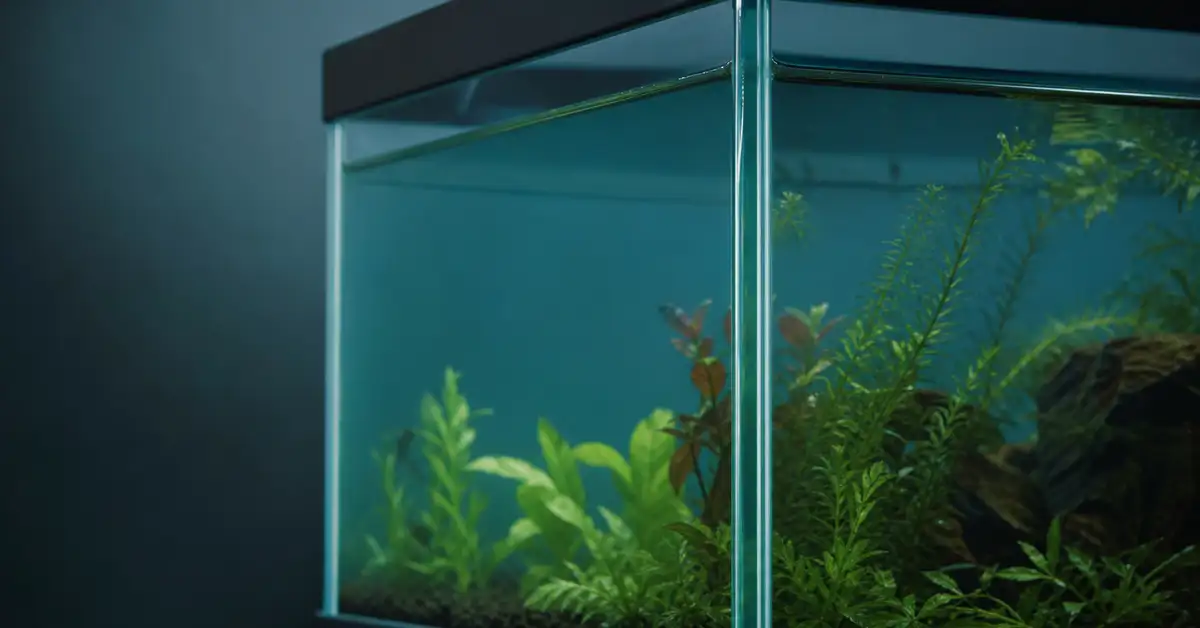
Glass is the default material for the overwhelming majority of tanks sold at common beginner sizes (5-55 gallons), typically framed rectangular panels bonded with silicone. It’s the material every tank in our 10-gallon guide and most of our kits guide is built from.
Clarity: standard float glass runs around 82% light transmission and carries a faint green tint from iron content, most visible on larger tanks or thicker panels. Low-iron (“ultra-clear” or “starfire”) glass removes most of that tint and can match or exceed acrylic’s clarity — several rimless tanks in our 10-gallon and nano guides use exactly this glass for that reason — but it costs meaningfully more than standard glass.
Scratch resistance: this is glass’s clearest structural win. Algae scrapers, gravel vacuums, decor and even rough-scaled fish don’t scratch glass the way they do acrylic, so a glass tank keeps its factory clarity indefinitely with normal maintenance.
Weight and impact: glass is heavier than acrylic at equivalent thickness, which matters for stand strength and moving a set-up tank, and it’s more prone to cracking or shattering under a hard, sharp impact rather than flexing.
Long-term aging: the glass panels themselves don’t degrade, but the silicone seams bonding them are the tank’s weakest point over time — independent aquarium-supply sources describe seams becoming brittle and needing a full reseal roughly every 10-15 years to prevent leaks. This is a maintenance fact worth knowing before buying secondhand.
Acrylic aquariums
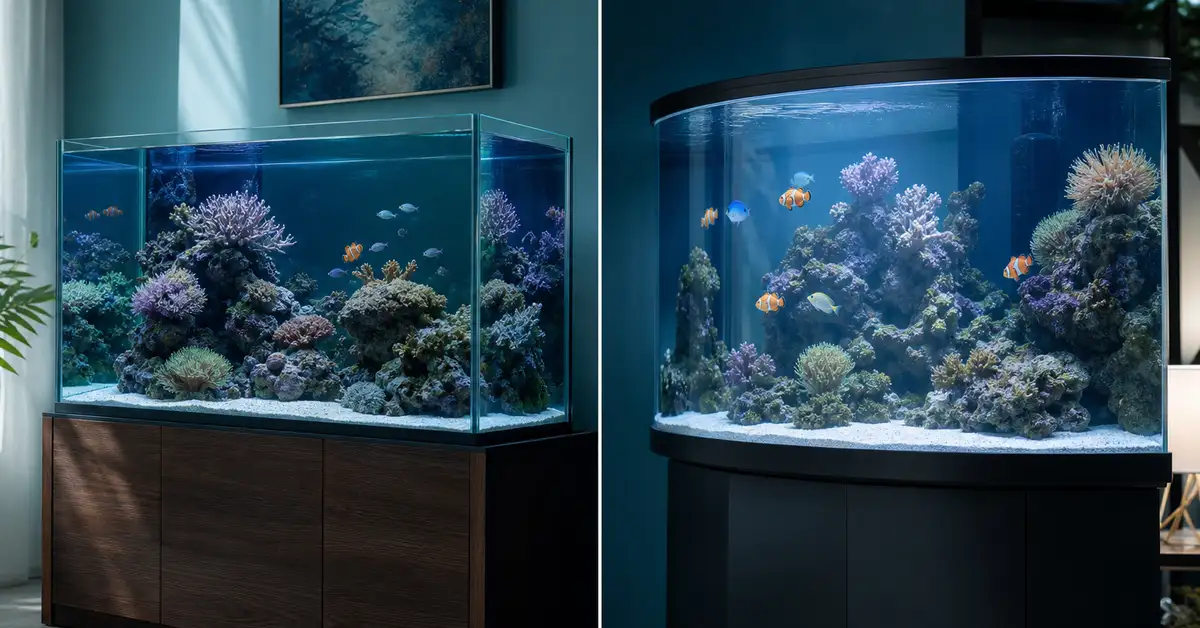
Acrylic is the material behind most curved-front, rimless and unusually-shaped tanks — the SeaClear and Clear-For-Life tanks in our 10-gallon guide, and premium nano cubes like the ones in our nano guide, are built from it specifically for the design and weight benefits below.
Clarity: acrylic transmits up to roughly 93% of light with no inherent tint, genuinely clearer than standard glass out of the box — though low-iron glass closes most of that gap at a comparable price point.
Weight: acrylic runs roughly half the weight of glass at an equivalent size, a real practical advantage for large tanks, upstairs rooms, or any setup you expect to move.
Insulation: acrylic’s lower thermal conductivity means it holds heat better than glass, which can modestly reduce how hard a heater has to work to maintain a stable temperature — a genuine, if secondary, benefit.
Impact resistance: acrylic flexes and absorbs impact rather than shattering outright, generally considered a safer profile around children or pets, though it’s not indestructible.
Scratches and yellowing — the real trade-offs: acrylic scratches easily during completely routine maintenance — a single trapped sand grain on an algae scraper is enough — and needs dedicated soft pads or acrylic-safe scraper tools rather than the metal or hard-plastic scrapers safe on glass. It also gradually yellows with UV exposure over years, though high-grade, UV-stabilized cast acrylic resists this far longer than cheaper material; independent hobbyist forum discussion (Reef2Reef) generally describes well-made modern acrylic holding up for years to decades before yellowing becomes visually obvious, rather than treating it as an immediate concern.
Which should you pick?
By tank size: for common beginner sizes (5-55 gallons), glass is the pragmatic default — it’s cheaper, more scratch-resistant, and the weight difference matters less at these volumes. For very large tanks (100+ gallons) or custom-shaped display setups, acrylic’s weight savings and impact resistance start to outweigh its higher price and scratch sensitivity.
By budget: glass wins clearly at standard sizes; the price gap narrows considerably at large, custom dimensions where acrylic manufacturing becomes more cost-competitive.
By maintenance tolerance: if you want to use metal or hard-plastic algae scrapers without a second thought, glass is the lower-maintenance choice. If you’re comfortable with soft acrylic-safe tools and occasional polishing, acrylic’s clarity and weight advantages become more attractive.
By design goals: want a curved front, an unusual shape, or the lightest possible large tank? Acrylic is usually the only practical route. Want the simplest, cheapest, most scratch-forgiving option for a standard rectangular community tank? Glass.
Frequently Asked Questions
General information only — not veterinary advice. If you’re weighing a large or heavy tank installation, also confirm your floor and stand can safely support the filled weight before committing to either material.
Sources: Champion Aquariums: Pros & Cons of Acrylic and Glass Aquariums · Custom Aquariums: Glass vs. Acrylic Aquariums · Fish Tank Advisor: Glass vs Acrylic Aquarium Guide · Reef2Reef: Acrylic Turning Yellow (forum discussion) · Aquarium Advice Forum: Does Modern Acrylic Turn Yellow