For cycling a new tank or investigating a problem, a liquid reagent master test kit is the honest answer — it resolves the low-level ammonia and nitrite readings that matter most, more reliably than dip strips. Strips have a real place for a quick sanity check once you know your tank, and digital checkers offer the tightest precision for a specific parameter at a price. We researched 10 real kits across all three types and compared them honestly, including where strips and titration kits fall short of lab precision.
How we chose these test kits
This is a specification-based selection: we pulled detection limits, test methods, reagent shelf life and parameter coverage directly from API, Seachem and Hanna Instruments product documentation, then cross-checked against aquarist consensus on liquid-vs-strip accuracy from Aquarium Co-Op forum discussion and independent testing comparisons. What we can’t verify: we haven’t run side-by-side lab-calibrated accuracy tests on every kit ourselves; where independent testing exists showing real discrepancies (strips reading differently from liquid kits on the same water, for instance), we’ve disclosed it rather than assuming the spec sheet tells the whole story. Full method: How We Choose.
New to testing? Our how to cycle a fish tank guide covers when and how often to test during cycling, and our water parameters reference covers what each reading actually means. If you dose conditioner before testing, see our best water conditioners guide for why that can temporarily skew an ammonia reading. Starting from scratch? Our best beginner aquarium kits guide covers what’s usually missing from a bundled kit, testing included.
Liquid vs. strips vs. digital: the honest trade-off
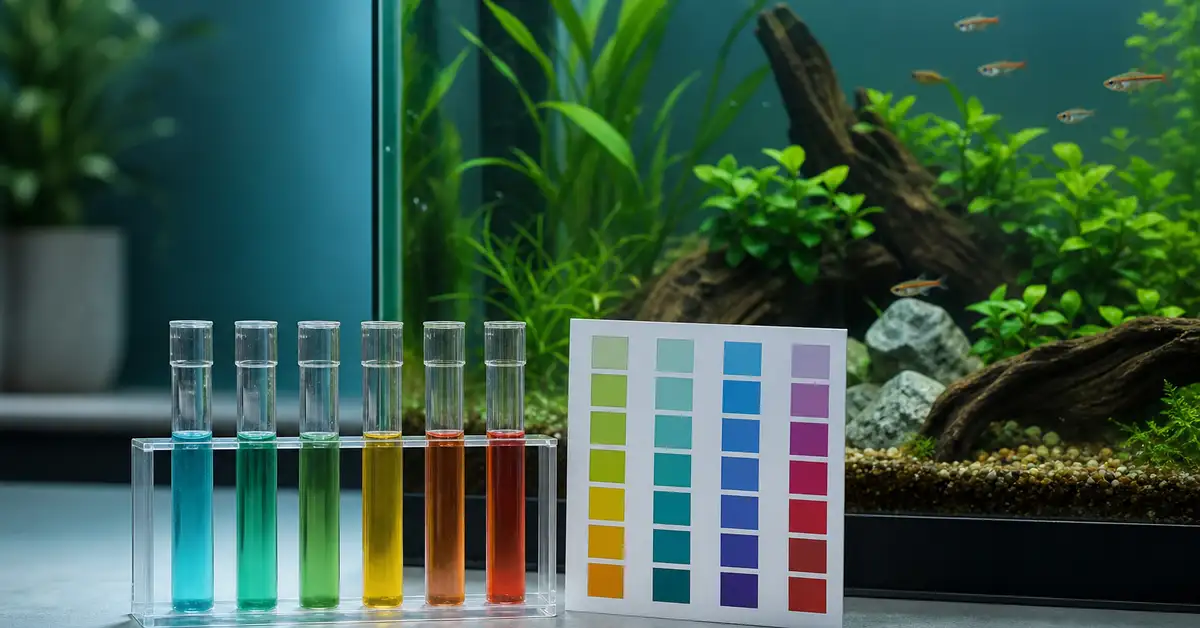
Aquarist consensus, backed by independent comparisons discussed on Aquarium Co-Op’s own forum, is consistent: liquid reagent kits resolve low ammonia and nitrite levels more reliably than dip strips, and strip accuracy can drift noticeably with humidity and age. Real discrepancies have been documented — one forum comparison found a strip reading roughly 40 ppm nitrate on water a liquid kit read as 0 ppm, and a strip pH reading over a full point off a liquid test on the same sample. That doesn’t make strips useless: they’re a legitimate, fast way to spot-check a tank you already understand well, or to triage quickly before running a more precise test. For cycling a new tank, or any time a reading actually matters for a decision, reach for a liquid kit first.
Quick comparison
| Test kit | Method | Parameters | Best for | Price band |
|---|---|---|---|---|
| 1. API Freshwater Master Test Kit | Liquid reagent | NH3, NO2, NO3, pH (hi/lo) | Overall / cycling | $$ |
| 2. Seachem MultiTest Ammonia | Liquid reagent | Total + free ammonia | Precise ammonia | $$ |
| 3. Seachem MultiTest Nitrite/Nitrate | Liquid reagent | NO2, NO3 | Precise nitrite/nitrate | $$ |
| 4. API GH & KH Test Kit | Liquid titration | GH, KH | Hardness/buffering | $ |
| 5. API Ammonia Test Kit | Liquid reagent | NH3 only | Single-parameter cycling | $ |
| 6. API 5-in-1 Test Strips | Dip strip | NO2, NO3, GH, KH, pH | Quick-check | $ |
| 7. Tetra EasyStrips 6-in-1 | Dip strip | 6 parameters | Budget quick-check | $ |
| 8. Hanna HI-715 Ammonia Checker | Digital colorimeter | Ammonia | Digital ammonia precision | $$$ |
| 9. Hanna High-Range Nitrate Checker | Digital colorimeter | Nitrate | Digital nitrate precision | $$$ |
| 10. TDS/EC Pen Meter | Digital electronic | Total dissolved solids | Trend monitoring | $ |
The 10 best aquarium test kits (2026)
Transparency first: This guide contains affiliate links. If we’re enrolled in an affiliate program, we may earn a commission at no extra cost to you — it never affects how we research or rank. Read our full affiliate disclosure policy.
1. API Freshwater Master Test Kit — Best Overall
The hobby’s default liquid reagent kit, testing ammonia, nitrite, nitrate and pH (both high and low range) with test tubes, a holding tray and a computer-calibrated color card. It’s the kit most aquarist sources recommend for cycling specifically, where precise low-level ammonia and nitrite readings genuinely matter.
Best for: the single kit most beginners should own, especially during cycling.
Key specs: tests ammonia, nitrite, nitrate, high-range pH, low-range pH · roughly 800 tests per kit · liquid reagent + color-chart comparison · reagent shelf life 3-5 years by parameter (printed lot code indicates manufacture date).
Pros: comprehensive parameter coverage in one kit, long-standing hobby standard, genuinely good value per test given the test count.
Cons: color-chart reading introduces some subjectivity between users; store away from temperature extremes, which can affect accuracy and shelf life.
Price band: $$ · Evidence: manufacturer spec confirms parameter coverage and reagent shelf life; no recall found for this product in our October 2026 CPSC search.
2. Seachem MultiTest Ammonia — Best for Precise Ammonia Monitoring
A liquid reagent kit that separately reports total ammonia (NH3 + NH4+) and free ammonia (NH3 only, the genuinely toxic form), resolving down to less than 0.05 mg/L — tighter than most general-purpose master kits. It includes a reference sample so you can validate the kit itself is performing correctly if you suspect an odd reading.
Best for: aquarists who want the most precise ammonia picture, including the toxic-vs-total distinction, during cycling or a suspected ammonia spike.
Key specs: resolves total and free ammonia to <0.05 mg/L · includes reference sample for self-validation · liquid reagent + color comparison.
Pros: genuinely more precise than most general kits, distinguishes toxic free ammonia from total, built-in validation feature.
Cons: single-parameter, so you’ll want it alongside a nitrite/nitrate kit rather than as your only test.
Price band: $$ · Evidence: manufacturer spec sheet confirms detection limit and reference-sample feature; no recall found for this product in our October 2026 CPSC search.
3. Seachem MultiTest Nitrite & Nitrate — Best for Precise Nitrite/Nitrate
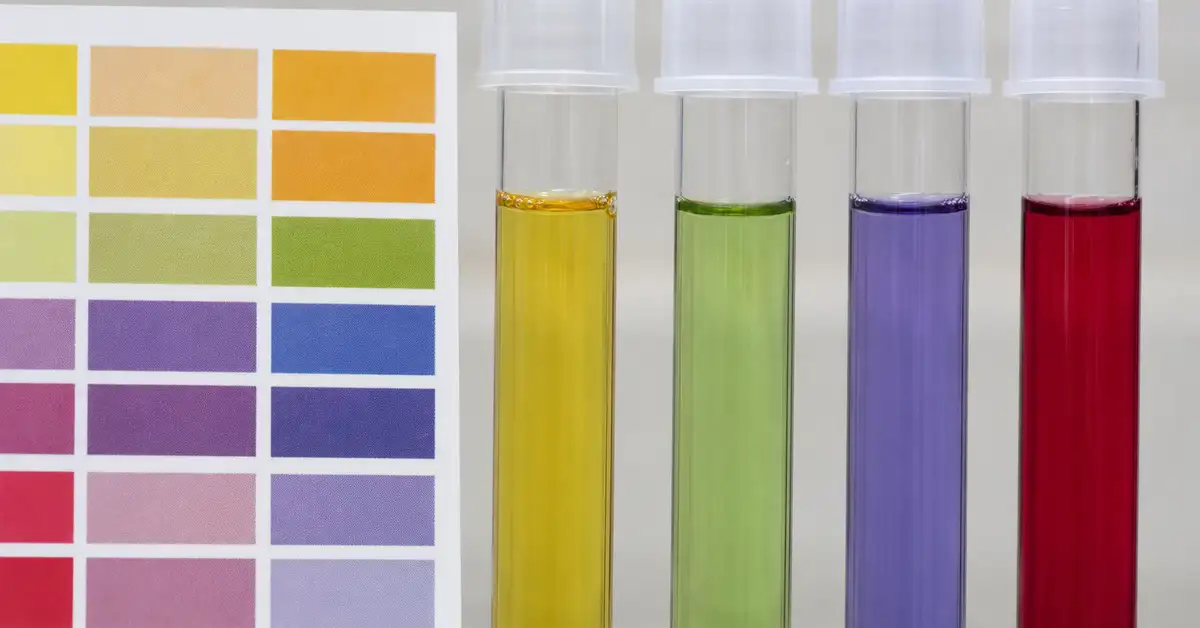
The companion kit to Seachem’s ammonia test, resolving nitrite below 0.1 mg/L and nitrate below 0.2 mg/L, with a wider useful range (0-25 mg/L nitrite, 0-50 mg/L nitrate) than many strip-based alternatives. Honest limitation: the manufacturer notes that a pronounced nitrite reading will interfere with getting an accurate nitrate reading in the same test — worth knowing if your numbers look off during an active cycle.
Best for: aquarists who want tighter nitrite/nitrate precision than a general master kit, especially once past the ammonia-spike stage of cycling.
Key specs: nitrite resolution <0.1 mg/L, nitrate resolution <0.2 mg/L · 75+ tests per kit · includes reference sample.
Pros: tighter precision than general kits, good test count, validation feature built in.
Cons: high nitrite genuinely interferes with the nitrate reading — a real limitation disclosed by the manufacturer, not a flaw unique to this kit.
Price band: $$ · Evidence: manufacturer spec sheet confirms detection limits and the nitrite/nitrate interference note; no recall found for this product in our October 2026 CPSC search.
4. API GH & KH Test Kit — Best for Hardness and Buffering
A liquid titration kit measuring general hardness (GH) and carbonate hardness (KH) by counting reagent drops until the water’s color changes — each drop representing a degree of hardness. Honest disclosure: aquarist discussion generally agrees this titration method is good enough for aquarium purposes but isn’t as precise as a lab-grade titration test; treat the result as a solid working number, not a decimal-precision reading.
Best for: tracking hardness and KH buffering capacity, especially relevant for African cichlids or any species with specific hardness needs.
Key specs: liquid titration (drop-count) method · measures both GH and KH · suitable for freshwater use.
Pros: covers a parameter most other kits skip, straightforward drop-counting method, affordable.
Cons: less precise than more rigorous lab titration, and counting drops accurately takes a steady hand and good lighting.
Price band: $ · Evidence: manufacturer/retailer listings and aquarist discussion confirm method and its precision limitations; no recall found for this product in our October 2026 CPSC search.
5. API Ammonia Test Kit — Best Single-Parameter Kit for Cycling
A standalone liquid ammonia test for aquarists who want to track just this one parameter closely (typically during the first stage of fishless cycling) without paying for a full master kit, or as a cheaper way to keep a spare ammonia test on hand.
Best for: the first weeks of a fishless cycle, when ammonia is the parameter you’re watching most closely.
Key specs: liquid reagent, single-parameter (ammonia only) · color-chart comparison · multi-year reagent shelf life similar to the master kit’s ammonia component.
Pros: inexpensive way to track the most cycling-critical parameter, good as a backup to a master kit.
Cons: single-parameter only — you’ll need a separate kit for nitrite and nitrate as the cycle progresses.
Price band: $ · Evidence: manufacturer/retailer listing confirms single-parameter scope and reagent format; no recall found for this product in our October 2026 CPSC search.
6. API 5-in-1 Test Strips — Best Quick-Check Strips
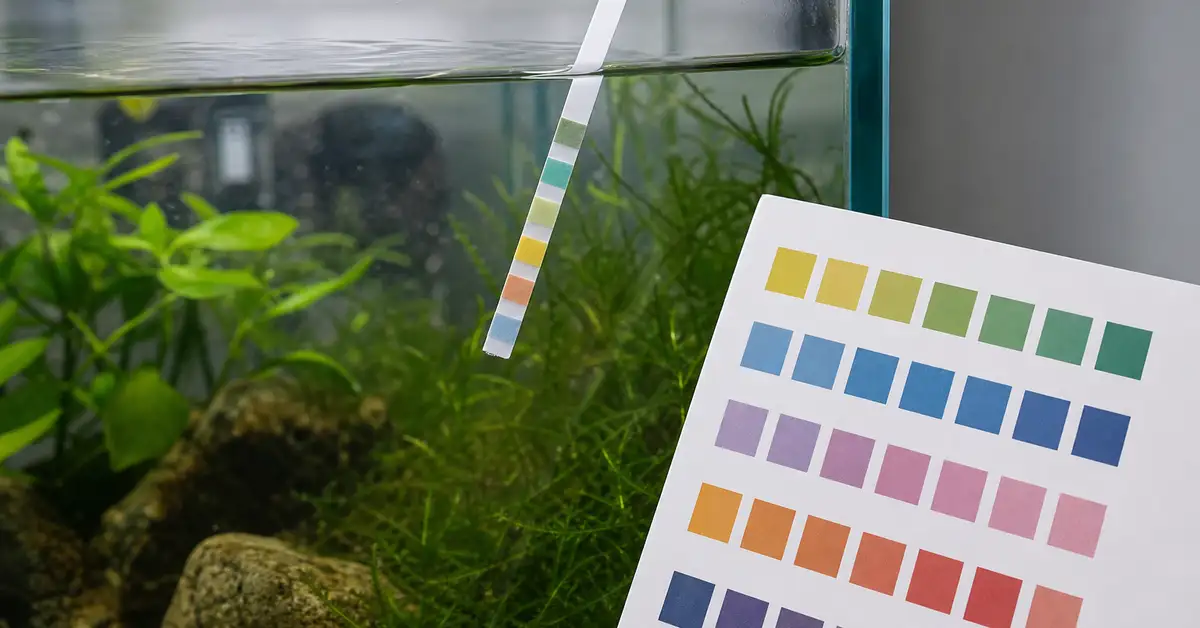
A dip strip testing five parameters (nitrite, nitrate, GH, KH and pH) in about a minute, from a brand whose liquid kits set the hobby standard. Honest disclosure: as with all dip strips, this format is genuinely less precise than liquid reagent testing for critical low-level readings — use it for a fast general check, not for a cycling decision.
Best for: a quick weekly sanity check on an established, already-understood tank.
Key specs: dip-strip format · tests nitrite, nitrate, GH, KH, pH · results in about 60 seconds · color-chart comparison.
Pros: fast, no test tubes or measuring, covers five parameters at once.
Cons: strip accuracy is genuinely more variable than liquid reagent testing, and doesn’t test ammonia at all — not a substitute for a liquid kit during cycling.
Price band: $ · Evidence: manufacturer/retailer listing confirms parameter coverage; aquarist consensus on strip-vs-liquid accuracy disclosed above; no recall found for this product in our October 2026 CPSC search.
7. Tetra EasyStrips 6-in-1 — Best Budget Strips
A six-parameter dip strip from an established fishkeeping brand. Honest disclosure: owner reviews are genuinely mixed on this one — several report the nitrate pad specifically as the least reliable parameter on the strip, and the KH and pH color blocks can be hard to read precisely against the included chart. Established-tank users report results reasonably close to liquid testing for some parameters, but we’d treat any single reading from this strip as approximate.
Best for: budget-conscious spot-checking where you’re watching for a trend rather than needing a precise number.
Key specs: dip-strip format · tests 6 parameters · color-chart comparison.
Pros: inexpensive, fast, six parameters on one strip.
Cons: owner-reported accuracy issues specifically on nitrate; color blocks for KH/pH can be difficult to distinguish precisely.
Price band: $ · Evidence: retailer review aggregation (Chewy, Walmart) and owner feedback confirm the accuracy limitations disclosed above; no recall found for this product in our October 2026 CPSC search.
8. Hanna Instruments HI-715 Ammonia Checker — Best Digital Ammonia Precision
A dedicated digital colorimeter that removes color-chart subjectivity entirely, giving a numeric ammonia readout instead of asking you to match a shade by eye. This category of device is generally regarded as one of the more accurate and consistent ways to monitor a single parameter, provided the test is run correctly and consistently each time.
Best for: aquarists who want a precise, repeatable numeric ammonia reading and don’t mind paying more for a dedicated instrument.
Key specs: digital colorimeter, ammonia-specific · numeric digital readout · requires reagent packets/vials per test (an ongoing consumable cost beyond the initial unit).
Pros: removes color-matching subjectivity, consistent and repeatable when used correctly, genuinely precise for this one parameter.
Cons: single-parameter and pricier than a liquid kit; ongoing reagent cost per test adds up if you test frequently.
Price band: $$$ · Evidence: manufacturer product documentation confirms digital colorimeter design; no recall found for this product in our October 2026 CPSC search.
9. Hanna High-Range Nitrate Checker — Best Digital Nitrate Precision
The nitrate-focused counterpart to Hanna’s ammonia checker, with a published accuracy tighter than most liquid or strip alternatives and a measurement range extending well beyond what most freshwater tanks will ever need.
Best for: aquarists tracking nitrate trends precisely over time, particularly in planted or heavily-stocked tanks where nitrate management matters.
Key specs: digital colorimeter, nitrate-specific · measures up to roughly 75 ppm · published accuracy around ±0.04 ppm per manufacturer.
Pros: tight published accuracy, numeric digital readout removes color-matching guesswork, wide useful range.
Cons: single-parameter, premium price, and ongoing reagent cost per test like other digital checkers.
Price band: $$$ · Evidence: manufacturer spec confirms accuracy and range; no recall found for this product in our October 2026 CPSC search.
10. TDS/EC Pen Meter — Best for Overall Water-Quality Trend Monitoring
A simple digital pen that measures total dissolved solids (or electrical conductivity) as a single number — not a substitute for ammonia, nitrite or nitrate testing, but a genuinely useful trend indicator for tracking your tap water’s baseline, spotting an unusual water-change source, or watching general mineral buildup over time between water changes.
Best for: a quick, cheap way to spot an unusual change in your source water or overall dissolved mineral trend, alongside (not instead of) proper parameter testing.
Key specs: digital electronic probe · reads TDS (ppm) or conductivity · instant readout, no reagents required.
Pros: no consumable reagents, instant reading, useful for catching source-water changes early.
Cons: tells you nothing about ammonia, nitrite, nitrate, pH or hardness specifically — it’s a general trend tool, not a replacement for parameter-specific testing.
Price band: $ · Evidence: general TDS meter specifications from multiple retailer listings; a generic product with no single brand, so our October 2026 CPSC search (run by brand) does not cover it.
How often should you test?
During fishless cycling, test every day or two — our cycling guide covers the full schedule and what the ammonia-then-nitrite-then-nitrate sequence should look like. Once a tank is established, weekly testing is a reasonable baseline, stepping up to daily any time you add new stock, do a larger-than-usual water change, or notice a fish behaving oddly. Reagent shelf life matters here too: most liquid reagents are rated for several years, but heat, cold and age all degrade accuracy over time — check bottles periodically and replace kits that are well past their rated life, especially before relying on a reading for a real decision.
Frequently Asked Questions
General information only — not a substitute for following manufacturer instructions for any test kit or reagent.
Sources: API: Freshwater Master Test Kit · Seachem: MultiTest Ammonia · Seachem: MultiTest Nitrite & Nitrate · Aquarium Co-Op Forum: Test Strips vs Liquid Test · Aquarium Co-Op Forum: Strips and Liquid Test Reading Differently · Tetra: EasyStrips 6-in-1 · Hanna Instruments: Aquarium Testing Equipment · Bulk Reef Supply: Are Hanna Checkers Worth It?