The seven parameters that matter in a freshwater tank are ammonia, nitrite, nitrate, pH, general hardness (GH), carbonate hardness (KH), and temperature. Ammonia and nitrite should always read 0 ppm; nitrate should stay under roughly 40–50 ppm; pH should be stable near neutral (6.5–7.5 for most community fish and bettas); GH and KH should match your fish’s needs and buffer pH against swings; and temperature should sit in the mid-to-upper 70s°F for most tropical species. Here’s what each one means, how they interact, and what to do when a reading is off.
Quick reference
| Parameter | Community tank target | Betta tank target |
|---|---|---|
| Ammonia | 0 ppm | 0 ppm |
| Nitrite | 0 ppm | 0 ppm |
| Nitrate | Under 40–50 ppm | Under 40 ppm |
| pH | 6.5–7.5, stable | 6.5–7.5, stable |
| GH | 4–8 dGH | ~6–8 dGH (100–150 ppm) |
| KH | 4–8 dKH (3 dKH minimum) | ~100–150 ppm |
| Temperature | 74–78°F | 76–80°F |
These are guides, not rigid rules — always check the specific needs of the species you keep. New to fishkeeping? Start with our betta fish care guide, our fishless cycling guide, or our best aquarium kits for beginners hub if you haven’t picked a tank yet. Going planted? Live plants interact directly with these parameters — see our best aquarium plants for beginners guide.
Ammonia: the primary toxic waste
Ammonia comes from fish waste, gill excretion and decomposing food, and it’s the most immediately dangerous compound in a new or overstocked tank. It exists in two forms — toxic un-ionized ammonia (NH3) and much less harmful ammonium (NH4+) — and the balance between them shifts with pH and temperature: warmer, more alkaline water pushes more ammonia into its toxic form. Mainstream aquarist and veterinary sources agree the practical target is 0 ppm at all times; any detectable reading in an established tank signals overstocking, overfeeding, or a filtration problem, and in a new tank it’s simply expected until the nitrogen cycle finishes establishing. Even a reading as low as 0.1 ppm is treated as an actionable signal in new-tank contexts.
Nitrite: the intermediate toxin
Nitrite is what ammonia becomes once the first group of nitrifying bacteria gets to work, and it’s still dangerous — it interferes with a fish’s ability to carry oxygen in its blood, a condition sometimes called “brown blood disease.” Like ammonia, the target is 0 ppm at all times. Any measurable nitrite means the biological filter isn’t yet keeping pace, whether that’s because the tank is still cycling or because something has disrupted the bacteria (a filter clean that was too thorough, a big temperature swing, or an antibiotic treatment).
Nitrate: the end product, and a genuine debate
Nitrate is what nitrite becomes once the second group of bacteria finishes the job, and it’s meaningfully less toxic than ammonia or nitrite — but it still accumulates over time and needs managing through water changes or plant uptake. Here’s where sources genuinely disagree: mainstream aquarist guidance and veterinary sources recommend keeping nitrate under about 20–50 ppm, while more skeptical technical sources point to studies where fish tolerated levels as high as 440 ppm without measurable harm, arguing many water-change habits are more tradition than necessity. We think the honest, conservative answer for a beginner is to aim for nitrate under 40–50 ppm — it costs you very little extra effort, it’s what the veterinary literature supports, and it gives you a safety margin while you’re still learning to read your tank. As you gain experience, you can decide for yourself whether to loosen that target. If your nitrate is already running high, see our how to lower nitrates guide.
pH: stability matters more than the exact number
pH measures acidity on a scale where 7.0 is neutral. Most common community fish and bettas do fine within 6.5–7.5, and the truth most beginner guides skip is that a stable pH slightly outside the “ideal” range is safer than an unstable pH bouncing around inside it. Sudden pH swings can kill off your beneficial bacteria (contributing to ammonia spikes) and stress fish directly. The practical approach: test your tap water’s natural pH, pick fish suited to it, and focus on stability rather than chasing a specific number with chemical additives.
GH and KH: hardness and buffering
General hardness (GH) measures dissolved calcium and magnesium — minerals fish need for healthy bone, muscle and nerve function, and that plants need too. Carbonate hardness (KH, sometimes called alkalinity) measures the water’s buffering capacity against pH swings — think of it as insurance that keeps pH from crashing as acids build up from fish waste. Most community tanks do well around 4–8 dGH and 4–8 dKH (with at least 3 dKH as a floor); bettas prefer roughly 100–150 ppm of each. If your KH reads near zero, your pH is at real risk of a sudden crash — the fix is adding a carbonate source like crushed coral, or carefully dosing baking soda, gradually rather than all at once.
Temperature: metabolism, oxygen, and cycling speed
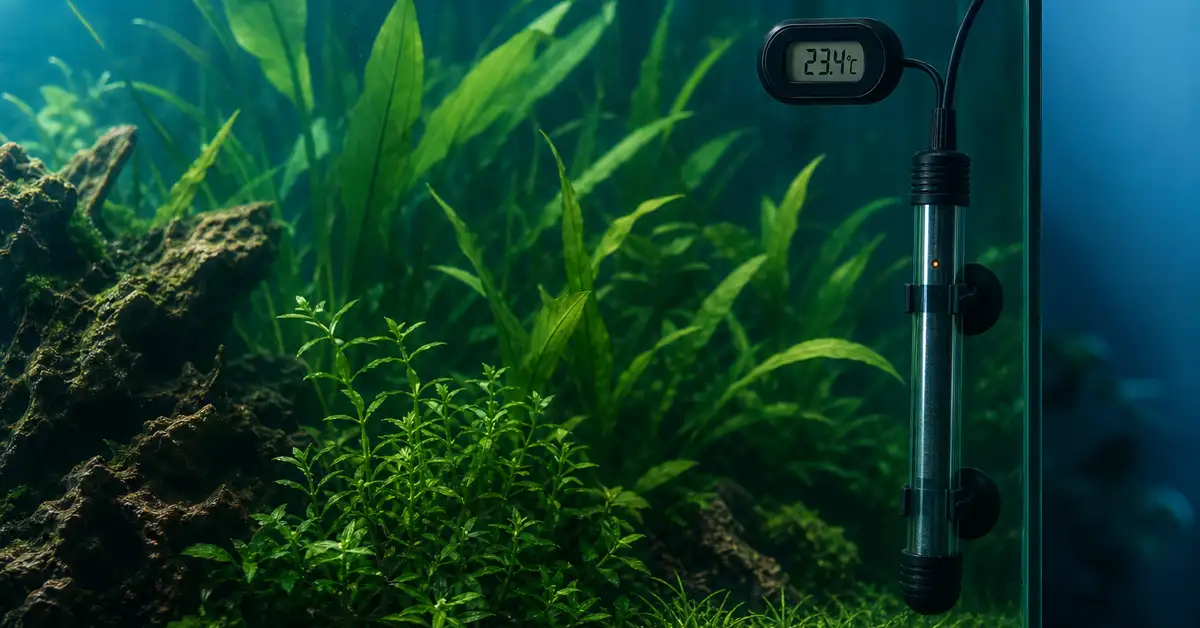
Most tropical community fish do best around 74–78°F; bettas prefer it slightly warmer, at 76–80°F. Temperature isn’t just about comfort — warmer water speeds up the nitrogen cycle (which is why some fishless-cycling methods deliberately run a tank warm), but it also reduces how much oxygen the water can hold and increases the fraction of toxic ammonia at a given pH. A reliable heater and a separate thermometer to double-check it are non-negotiable for anything but genuinely cold-water fish. See our best aquarium heaters guide for picks with reliable thermostats and genuine safety features, and our best aquarium thermometers guide for how to verify the reading independently.
How these parameters interact
None of these numbers exist in isolation. KH buffers pH, so a KH crash is usually what’s behind a sudden pH crash. pH and temperature together determine how much of your total ammonia reading is in the dangerous un-ionized form — the same ammonia number is more dangerous in warm, alkaline water than in cooler, slightly acidic water. And the nitrogen cycle ties ammonia, nitrite and nitrate together in sequence: during cycling, you’ll typically see ammonia rise and fall first, then nitrite rise and fall, then nitrate climb and hold — each stage marking a different bacterial population getting established. Our fishless cycling guide walks through that process step by step.
How to test your water
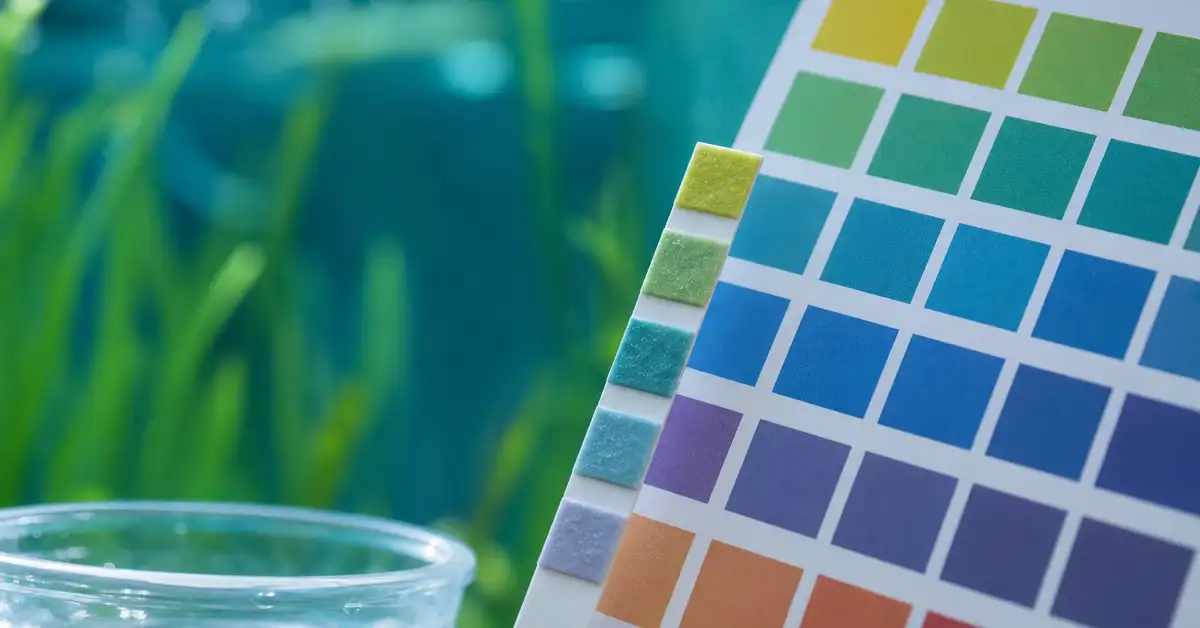
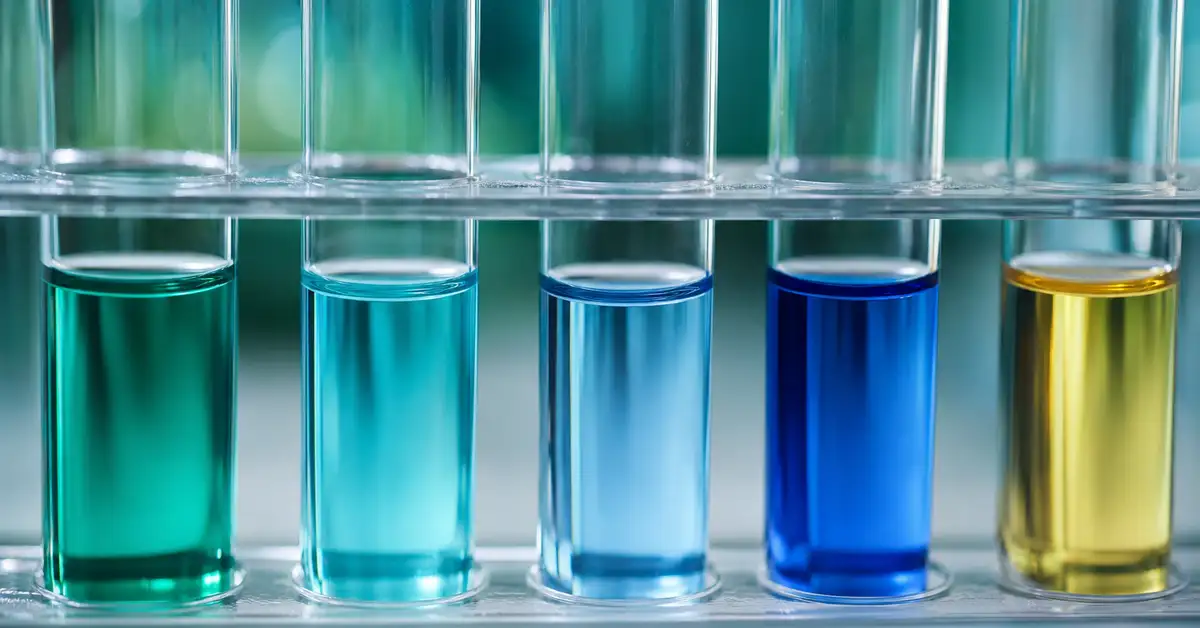
Test strips (dip-and-read, results in under a minute) are convenient and fine for routine monitoring of multiple parameters at once. Liquid reagent kits, like the API Freshwater Master Test Kit, take longer but are generally considered more accurate (see our best aquarium test kits guide for picks) — veterinary sources specifically note that strips aren’t reliable enough for diagnosing a genuine water-quality problem, so it’s worth having a liquid kit on hand even if you use strips day to day. Test daily during cycling, weekly once the tank is established, and immediately any time a fish seems off or you’ve made a big change (new stock, a filter clean, a bigger-than-usual water change).
What to do when a parameter is out of range
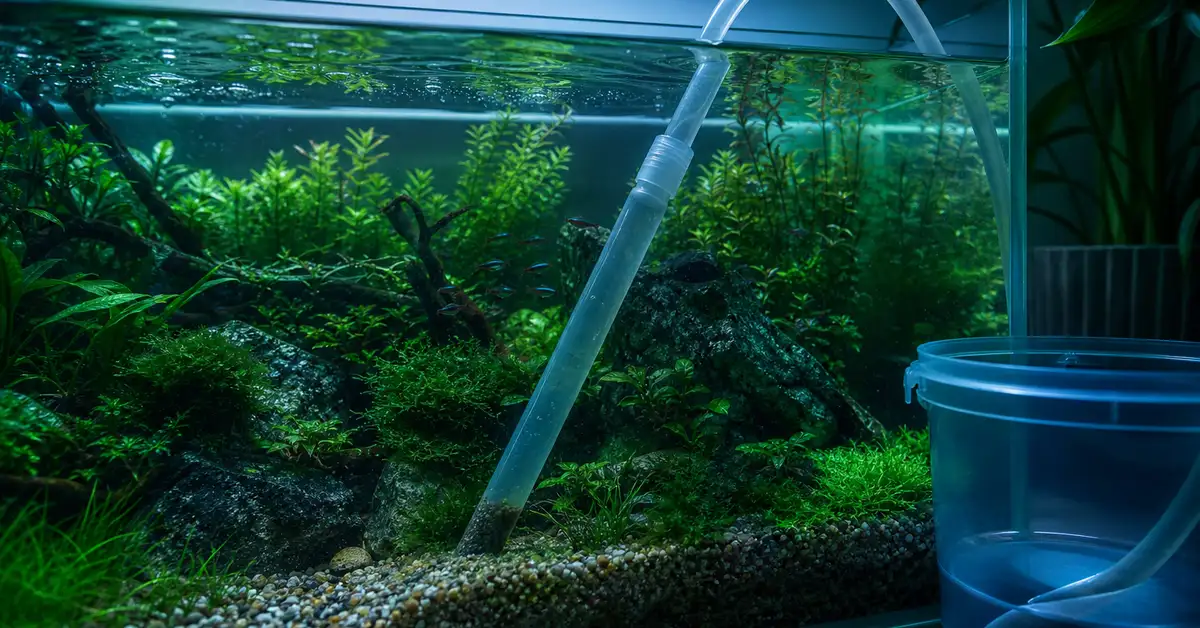
For high ammonia or nitrite, a 25–50% water change with dechlorinated, temperature-matched water is the standard first response — don’t replace more than half at once, since a big shift in water chemistry can shock fish on top of the original problem. For nitrite specifically, a small dose of aquarium salt can help by competing with nitrite for uptake at the gills. For rising nitrate, water changes and more (or healthier) live plants are the long-term fix — treat 40–50 ppm as your cue to change water, not a hard emergency line. For a pH crash, check KH first: raising it gradually (crushed coral, a slow-dosed buffer) is more sustainable than repeatedly dosing pH adjusters directly. Whatever the issue, avoid the instinct to “fix” everything in one big correction — gradual, repeated small interventions are safer than a single drastic one. Poor or unstable water quality is also a common trigger for fish illness — if you notice white spots specifically, see our guide on white spot (ich) — what to observe; if you notice fraying or discolored fin edges instead, see our guide on fin rot — what to observe.
Tap water: what to know before it goes in the tank
US municipal tap water is treated with chlorine or chloramine, both of which are toxic to fish and to the beneficial bacteria your filter depends on — every fill and every water change needs a dechlorinating conditioner, no exceptions (see our best water conditioners guide for picks, including the honest debate on “ammonia detoxifying” claims). Tap water also varies a lot region to region in pH, GH and KH, so it’s worth testing yours directly rather than assuming a number. If you’re on well water, test specifically for heavy metals and agricultural chemical residue, since municipal treatment doesn’t apply. In most cases, properly conditioned tap water is a perfectly good foundation — reach for bottled spring water or RO water only if testing shows your source water is genuinely unsuitable, not as a default precaution.
A note on conditioner claims
Conditioners like Seachem Prime reliably do one thing very well: neutralize chlorine and chloramine. Manufacturer claims that the same products can “detoxify” nitrite and nitrate get more pushback from technical aquarist sources, which argue the underlying toxicity mechanism isn’t something a water conditioner can meaningfully reverse. Our take: use a conditioner every time you add tap water, full stop — but don’t treat it as a substitute for water changes and proper cycling when nitrite or nitrate actually spike.
Frequently Asked Questions
General information only — not veterinary advice. If your fish show ongoing signs of illness despite parameters testing within range, consult an aquatic veterinarian.
Sources: LiveAquaria: Proper Water Parameters for Home Aquariums · Aquarium Co-Op: How (and How Often) to Test Aquarium Water · Aquarium Co-Op: Beginner’s Guide to the Nitrogen Cycle · PetMD: Nitrate Poisoning in Fish · PetMD: New Tank Syndrome · AquariumScience.org: Safe Nitrite Levels · AquariumScience.org: Aquarium Water Changes · Bettafish.org: What Kind of Water for Betta Fish? · Seachem: Prime · Aqueon: Aquarium Water Basics