Every fill and every water change needs a dechlorinating conditioner — that part isn’t in dispute. What’s genuinely debated is whether the “ammonia detoxifying” claim on the bottle means what it sounds like. We researched 10 real conditioners, sourced every dosing figure to the manufacturer, and included the more skeptical technical view on ammonia-detox claims rather than repeating marketing language as fact.
How we chose these conditioners
This is a specification-based selection: dosing rates, active ingredients and claimed functions come directly from Seachem, API/Mars Fishcare, Tetra, Fluval and Kordon product documentation. What we can’t verify: we haven’t run our own chemistry tests on any of these products. Where a genuine technical disagreement exists — specifically around whether “ammonia detoxifying” conditioners really neutralize ammonia or just affect how test kits read it — we’ve represented both the manufacturer position and the more skeptical technical-source view rather than picking a side for you. Full method: How We Choose.
Last updated July 2026. New tank? Our how to cycle a fish tank guide covers when conditioner matters most, and our water parameters reference covers what your test kit readings actually mean.
The honest debate: does conditioner really “detoxify” ammonia?
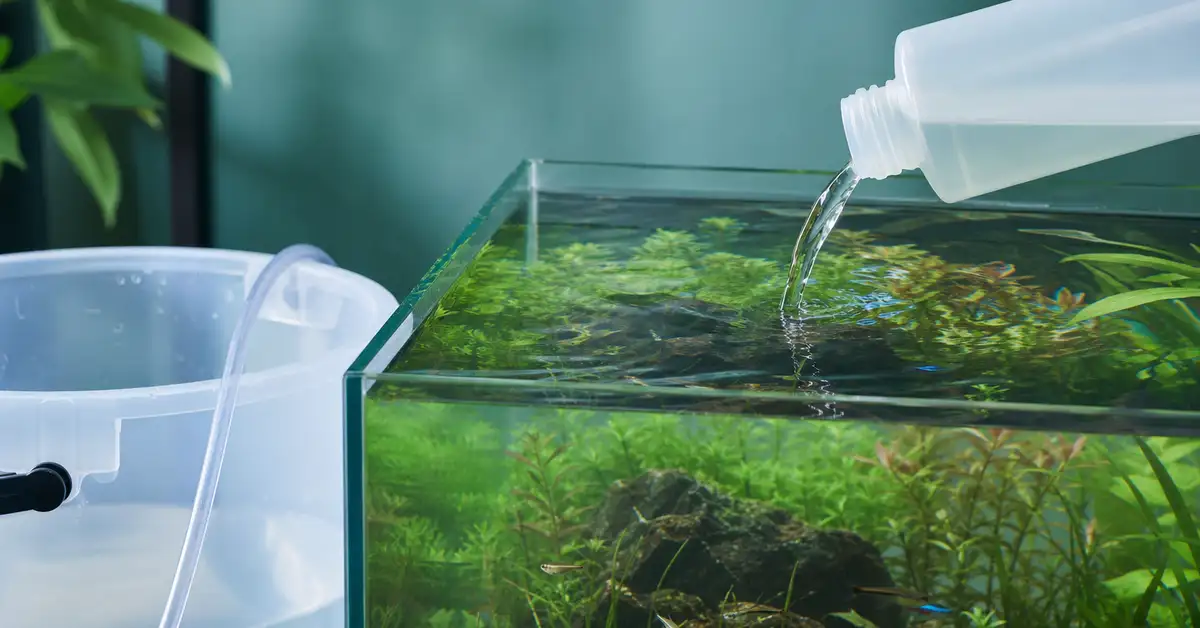
Every conditioner in this guide reliably does one thing: neutralize chlorine and chloramine, which are genuinely toxic to fish and to your beneficial bacteria. That part is undisputed and is the reason to use one every single time you add tap water. Where things get more contested is the “detoxifies ammonia and nitrite” claim printed on many bottles, including Seachem Prime and Kordon’s AmQuel line. Manufacturer and mainstream aquarist sources describe this as binding ammonia into a less-toxic form until your bacteria can process it. The technical site aquariumscience.org takes a considerably more skeptical position, arguing from chemistry that these products don’t meaningfully detoxify ammonia, nitrite or nitrate at all beyond the reaction involved in breaking down chloramine itself — and citing independent lab testing they say supports that view. We can’t independently referee this chemistry dispute, so we’re presenting it straight: use a conditioner for its proven dechlorinating function every time, and don’t treat any conditioner’s “ammonia detox” claim as a substitute for water changes or a completed nitrogen cycle if you have an actual ammonia problem.
A related, more practical point that’s easier to verify: ammonia-binding conditioners like Prime and AmQuel Plus are widely reported to cause false or elevated readings on standard liquid ammonia test kits for a period after dosing, because the test reagent can react with the bound ammonia complex. If you dose conditioner and then test ammonia, don’t be alarmed by an unexpectedly high reading — either test before dosing, or wait roughly 24 hours after dosing before trusting an ammonia result.
Quick comparison
| Conditioner | Core function | Manufacturer dosing | Price band |
|---|---|---|---|
| 1. Seachem Prime | Dechlorinate + claimed ammonia/nitrite binding | 1 capful per 50 gal | $$ |
| 2. API Tap Water Conditioner | Dechlorinate | 5 mL per 10 gal | $ |
| 3. API Stress Coat | Dechlorinate + slime coat/wound care | 5 mL per 10 gal (double for wounds) | $ |
| 4. Kordon AmQuel Plus | Dechlorinate + claimed ammonia binding | Per label, by volume | $$ |
| 5. Kordon NovAqua Plus | Heavy-metal binding, slime coat, vitamins | Per label; paired with AmQuel Plus | $$ |
| 6. Fluval Aqua Plus | Dechlorinate + herbal stress reduction | 5 mL per 10 gal (chlorine); 10 mL per 10 gal (chloramine) | $$ |
| 7. Seachem Safe (dry) | Dechlorinate + claimed ammonia binding | 1/4 tsp per 300 gal (chlorine) or 60 gal (chloramine) | $ |
| 8. API Betta Water Conditioner | Dechlorinate, nano-sized bottle | Per label, betta-tank scaled | $ |
| 9. Seachem StressGuard | Slime-coat/electrolyte support (not primary dechlorinator) | Per label, stress events | $$ |
| 10. Tetra AquaSafe Plus | Dechlorinate + biopolymers + vitamin B1 | 5 mL per 10 gal | $ |
The 10 best aquarium water conditioners (2026)
Transparency first: This guide contains affiliate links. If we’re enrolled in an affiliate program, we may earn a commission at no extra cost to you — it never affects how we research or rank. Read our full affiliate disclosure policy.
1. Seachem Prime — Best Overall
The hobby’s most widely used conditioner, dechlorinating tap water and, per the manufacturer, temporarily binding ammonia and nitrite until your biological filter can process them. Highly concentrated, so a single bottle treats a large volume relative to its size. Honest disclosure: the ammonia/nitrite-binding claim is the specific subject of the technical debate covered above — the dechlorinating function is not in dispute.
Best for: the single conditioner most aquarists should keep on hand as their default.
Key specs: dechlorinates chlorine and chloramine · manufacturer-stated dose roughly 1 capful (5 mL) per 50 gallons · also detoxifies hydrogen sulfide per manufacturer.
Pros: highly concentrated (low cost per gallon treated), long track record in the hobby.
Cons: can cause a temporary false or elevated reading on standard liquid ammonia test kits — test before dosing, or wait about 24 hours after.
Price band: $$ · Evidence: manufacturer dosing and function claims from Seachem’s product page; ammonia-detox chemistry debate and test-kit interference sourced to aquariumscience.org and independent forum-corroborated testing, disclosed above.
2. API Tap Water Conditioner — Best Value Basic Dechlorinator
A straightforward, no-frills dechlorinator from one of the hobby’s longest-standing brands — if you just want chlorine and chloramine reliably neutralized without extra claimed benefits, this covers the core job at a low cost per treatment.
Best for: aquarists who want the essential dechlorinating function without paying for slime-coat or vitamin add-ons.
Key specs: neutralizes chlorine and chloramine · manufacturer-stated dose 5 mL per 10 gallons.
Pros: inexpensive, simple, does the core job reliably.
Cons: no additional slime-coat or stress-support ingredients if you want those benefits during a stressful event.
Price band: $ · Evidence: manufacturer dosing instructions and function claim; no recall found for this conditioner in our October 2026 CPSC search.
3. API Stress Coat — Best for New or Stressed Fish
Adds aloe vera and a synthetic polymer that forms a protective slime-coat layer over fish skin, alongside standard dechlorination, plus electrolytes intended to reduce loss through skin and gills. A reasonable choice for newly introduced fish, transport stress, or minor fin/skin damage.
Best for: new fish acclimation, or supporting a fish recovering from minor physical damage or handling stress.
Key specs: dechlorinates + aloe vera slime-coat support + electrolytes · manufacturer-stated dose 5 mL per 10 gallons, doubled for slime-coat/wound support.
Pros: genuine dual function (dechlorination + slime-coat support), well-established brand, doseable at a higher rate for acute situations.
Cons: the slime-coat and healing benefits are harder to verify empirically than the dechlorination function; treat as supportive care, not a treatment for an actual infection or disease.
Price band: $ · Evidence: manufacturer label and product page confirm ingredients and dosing; no recall found for this conditioner in our October 2026 CPSC search.
4. Kordon AmQuel Plus — Best Heavy-Duty Ammonia/Chloramine Removal
A long-standing conditioner (the original formula patented decades ago) that dechlorinates and, per the manufacturer, detoxifies ammonia and chloramine specifically, with the Plus version also addressing pheromone buildup. The same technical debate covered above applies to its ammonia-detox claim.
Best for: aquarists who want a heavy-duty conditioner marketed specifically around ammonia and chloramine removal, often paired with NovAqua Plus.
Key specs: dechlorinates + claimed ammonia detoxification · manufacturer states no pH alteration and full compatibility with cycling · dosing per label by tank volume.
Pros: long track record, manufacturer states it doesn’t interfere with cycling, pairs with NovAqua Plus for a fuller conditioning routine.
Cons: same ammonia-detox chemistry debate as Prime applies here; don’t treat it as a substitute for addressing an actual ammonia source.
Price band: $$ · Evidence: manufacturer product page confirms function claims and cycling-compatibility statement; ammonia-detox debate disclosed above; no recall found for this conditioner in our October 2026 CPSC search.
5. Kordon NovAqua Plus — Best Companion Conditioner
Designed to be used alongside AmQuel Plus, this one focuses on heavy-metal binding, a protective slime-coat layer, pH buffering, and added vitamins rather than ammonia detox specifically. Kordon markets the two as a complementary pair rather than either being a complete solution alone.
Best for: aquarists already using AmQuel Plus who want the fuller Kordon conditioning routine.
Key specs: heavy-metal binding + slime-coat protection + pH buffering + vitamins · manufacturer states full compatibility with AmQuel Plus · dosing per label by tank volume.
Pros: broader supportive function set than a basic dechlorinator, manufacturer-confirmed compatibility with its companion product.
Cons: best understood as a complement to a primary dechlorinator rather than a standalone product for most routine use.
Price band: $$ · Evidence: manufacturer product page confirms function claims and companion-product compatibility; no recall found for this conditioner in our October 2026 CPSC search.
6. Fluval Aqua Plus — Best Herbal-Extract Formula
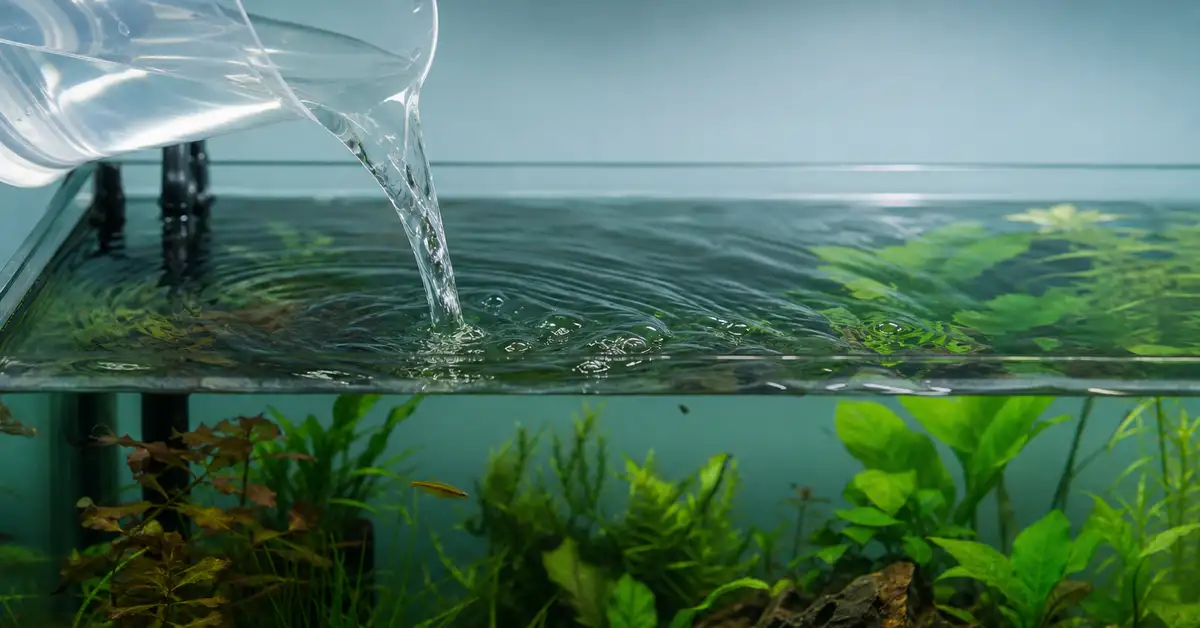
Combines standard dechlorination with a blend the manufacturer describes as pure herbal extracts intended to reduce stress during transport, handling and acclimation, alongside a protective coating claim for scales and fins.
Best for: aquarists who prefer Fluval’s product ecosystem or want an herbal-extract-based stress-support formula alongside dechlorination.
Key specs: dechlorinates chlorine (5 mL per 10 gal) and chloramine (10 mL per 10 gal) per manufacturer · herbal extract blend for stress reduction · claimed scale/fin protective coating.
Pros: clear, differentiated manufacturer dosing for chlorine vs. chloramine specifically, established equipment brand.
Cons: the specific herbal-extract stress-reduction claim is harder to independently verify than the core dechlorinating function.
Price band: $$ · Evidence: manufacturer FAQ confirms dual dosing rates and formula description; no recall found for this conditioner in our October 2026 CPSC search.
7. Seachem Safe (Dry Powder) — Best Value Per Gallon
The dry, concentrated powder version of Seachem’s ammonia-binding conditioner chemistry, designed to treat an unusually large volume of water relative to its size and shelf space — genuinely useful for larger tanks, multiple tanks, or fish rooms where liquid conditioner cost per gallon adds up.
Best for: aquarists managing larger volumes or multiple tanks who want the lowest cost per gallon treated.
Key specs: dry powder concentrate · manufacturer-stated dose roughly 1/4 tsp (1.25g) per 300 gallons for chlorine, or per 60 gallons for chloramine/full detox function · same claimed ammonia-binding chemistry as Prime, and the same technical debate applies.
Pros: genuinely excellent cost-per-gallon at scale, doesn’t take up much storage space, long shelf life as a dry product.
Cons: measuring small powder doses accurately takes more care than a liquid capful; same ammonia-detox chemistry debate as Prime.
Price band: $ · Evidence: manufacturer dosing chart confirms treatment volumes; no recall found for this conditioner in our October 2026 CPSC search.
8. API Betta Water Conditioner — Best Betta-Specific, Nano-Scaled Bottle
Functionally a standard dechlorinator, sold in a smaller bottle and marketed specifically toward betta and small-tank owners — the core active ingredients follow the same principles as API’s general conditioners, packaged and dosed for nano-tank convenience rather than a fundamentally different formula.
Best for: betta or nano-tank owners who don’t need a large bottle and prefer betta-specific packaging and dosing guidance.
Key specs: dechlorinates chlorine and chloramine · bottle size and dosing scaled for small/nano tanks per manufacturer label.
Pros: convenient sizing for small tanks, familiar API brand, straightforward small-tank dosing.
Cons: cost per gallon treated is typically higher than buying a larger general-purpose bottle, if you keep multiple tanks.
Price band: $ · Evidence: manufacturer product listing confirms formulation and small-tank dosing scale; no recall found for this conditioner in our October 2026 CPSC search.
9. Seachem StressGuard — Best for Acute Stress and Slime-Coat Repair
Not primarily a dechlorinator — this is a supportive product meant to reduce stress and support slime-coat and electrolyte balance during genuinely stressful events: transport, netting, fin damage, new introductions, or alongside a disease treatment. Aquarists typically dose it in combination with a standard conditioner like Prime, not as a replacement for one.
Best for: acute stress events (moving fish, injury, illness support) rather than routine weekly water changes.
Key specs: slime-coat and electrolyte support formula · manufacturer positions it as a stress-response product, used alongside routine dechlorination · dosing per label for the specific stress event.
Pros: genuinely useful for a specific acute-stress use case, well-regarded companion to Seachem’s core Prime conditioner.
Cons: not a substitute for a dechlorinator on routine water changes, and not a treatment for an actual disease or infection.
Price band: $$ · Evidence: manufacturer product page confirms intended use case and companion-product positioning; no recall found for this conditioner in our October 2026 CPSC search.
10. Tetra AquaSafe Plus — Best Big-Box Option
A dechlorinator with added biopolymers (the manufacturer’s BioExtract formula, derived from seaweed extract) intended to support beneficial filter bacteria, plus a vitamin B-complex blend including thiamine (vitamin B1). Broadly available at big-box pet retailers, making it an easy default if you’re shopping in person rather than online.
Best for: aquarists who want a conditioner with an added bacteria-support and vitamin claim.
Key specs: dechlorinates chlorine, chloramine and binds some heavy metals · BioExtract biopolymer blend + vitamin B-complex · manufacturer-stated dose 5 mL (1 tsp) per 10 gallons, with a marked bottle cap for measuring.
Pros: genuinely convenient measuring cap, established Tetra brand.
Cons: the biopolymer bacteria-support and vitamin claims are harder to independently verify than the core dechlorinating function.
Price band: $ · Evidence: manufacturer product listing confirms formulation and dosing; no recall found for this conditioner in our October 2026 CPSC search.
Frequently Asked Questions
General information only — not veterinary advice. Always follow the manufacturer’s label instructions for dosing, and consult an aquatic veterinarian for genuine fish-health concerns.
Sources: Seachem: Prime · Aquarium Science: Prime, Safe and Ammonia · Aquarium Science: Water Conditioner Chemistry · API: Stress Coat · Kordon: AmQuel Plus · Kordon: NovAqua Plus · Fluval: Aqua Plus Water Conditioner FAQ · Seachem Safe Dry Conditioner (retailer listing) · Tetra AquaSafe Plus (Chewy listing)