Written by Michael Probert, a research-led fishkeeper — not a lab or an aquatic vet. See our How We Choose methodology. This guide is general information, not veterinary advice.
Betta fish care means a heated tank of at least 5 gallons with gentle filtration, water that’s fully cycled before you add your fish, a high-protein betta pellet fed in small daily portions, and — for most bettas — a home of their own rather than a crowded community tank. Get those basics right and a healthy betta will typically live 2–4 years, sometimes longer.
What makes bettas different
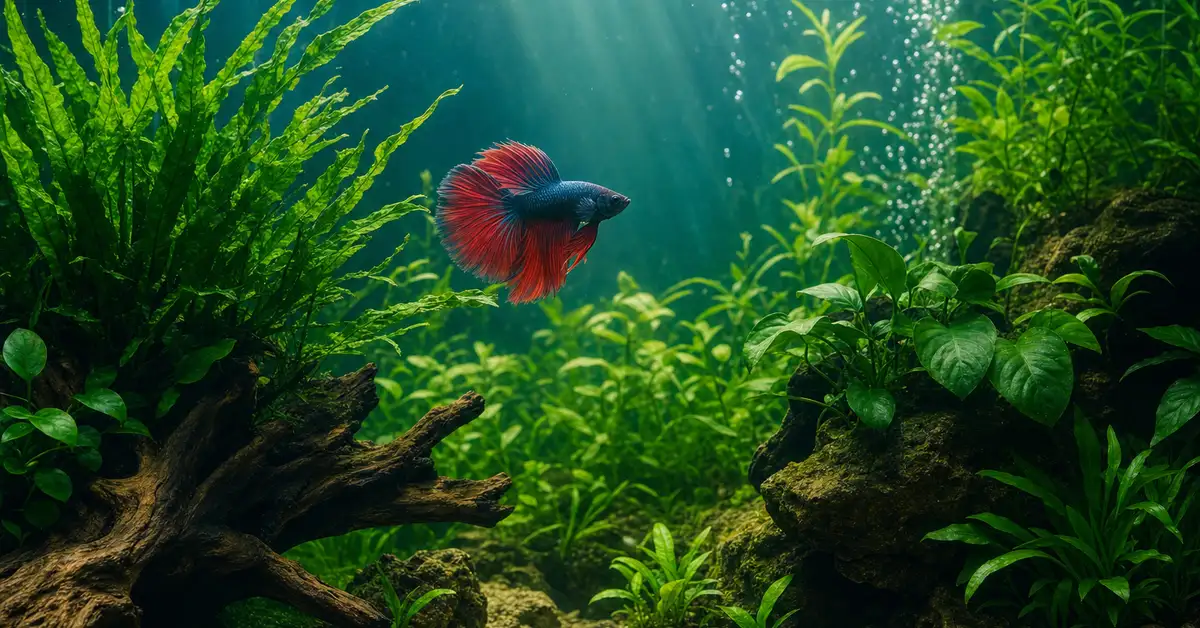
Betta splendens — the Siamese fighting fish — comes from slow-moving, warm waters in Thailand and neighboring countries, and it’s built for that environment in a way that shapes almost everything about keeping one well. Its most famous feature is the labyrinth organ, which lets it gulp air directly from the surface instead of relying purely on gills. That’s a genuine adaptation to low-oxygen water, and retailers have long used it to imply bettas can get by in a cup or a bowl with no filter. They can survive that way for a while. They don’t do well that way — the labyrinth organ helps a betta tolerate poor conditions, it doesn’t remove its need for clean, warm, stable water.
Most pet-store bettas are also older than they look — commonly six months to a year old by the time they’re sold — which is worth knowing before you’re disappointed by a shorter-than-expected lifespan later on. None of this makes bettas difficult. It just means “beginner-friendly” applies once a betta has a properly sized, heated, filtered home, not before.
Setting up the right home
The short version: 2.5 gallons is the absolute floor most care guides will cite, but 5–10 gallons is what Aquarium Co-Op, Bettafish.org, PetMD and Chewy all actually recommend, because the extra water volume buffers against the mistakes every beginner makes and keeps day-to-day maintenance manageable. A 2024 peer-reviewed welfare study backs this up from a different angle: bettas kept in small, barren jars showed significantly more inactivity and abnormal behavior than bettas in larger, furnished tanks, which is part of why we treat bowls and vases under about a gallon as something to avoid rather than a starter option.
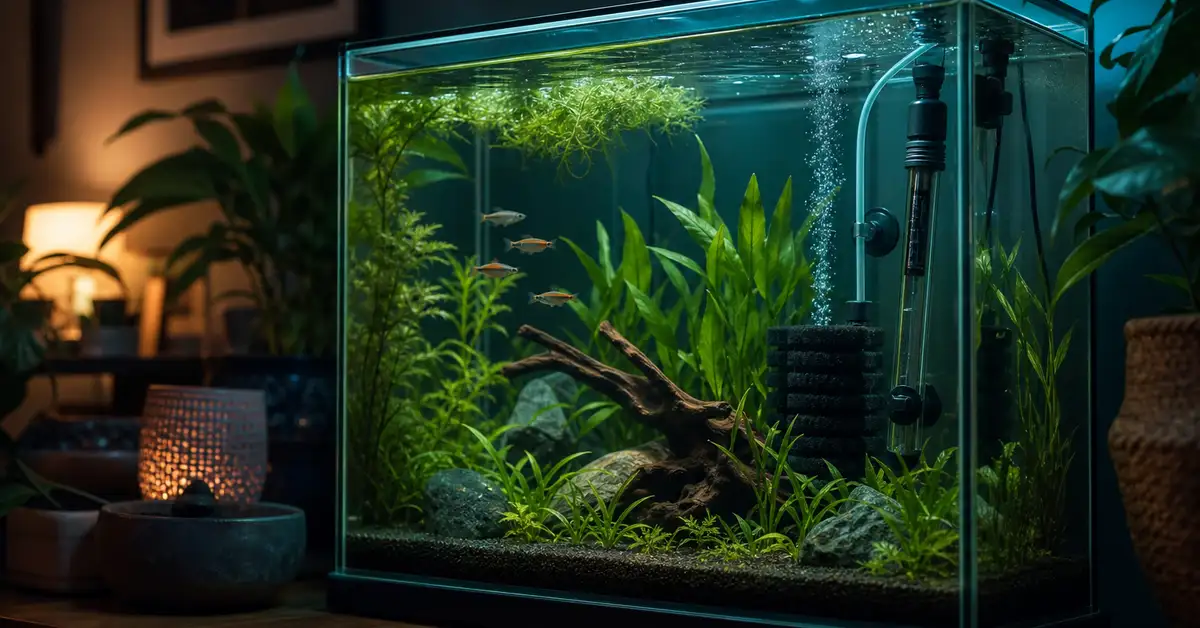
Alongside the tank itself, you’ll need a heater (bettas need stable water in the 76–81°F range, and a room that “feels warm enough” rarely holds that steady), gentle filtration (bettas come from calm water and their fins don’t cope well with a strong current), and a secure lid — bettas are enthusiastic jumpers. We’ve ranked 16 real, currently-sold betta tanks and kits if you want the specifics on volume, filtration and price, and see our best gentle-flow filters for a betta tank guide for the filtration side. If you’d rather follow the whole process in order, our step-by-step betta tank setup guide walks through it end to end. Haven’t picked a heater yet? See our best aquarium heaters guide for picks by tank size, thermostat type and safety features.
Water parameters and the nitrogen cycle
This is the part beginners most often skip, and it’s the one that causes the most early losses. A brand-new tank has no beneficial bacteria yet, which means it can’t safely process fish waste — adding a betta on day one is the single most common reason a “healthy” fish dies within its first couple of weeks. The tank needs to be cycled first, ideally without a fish present, until ammonia and nitrite both read zero and nitrate stays low.
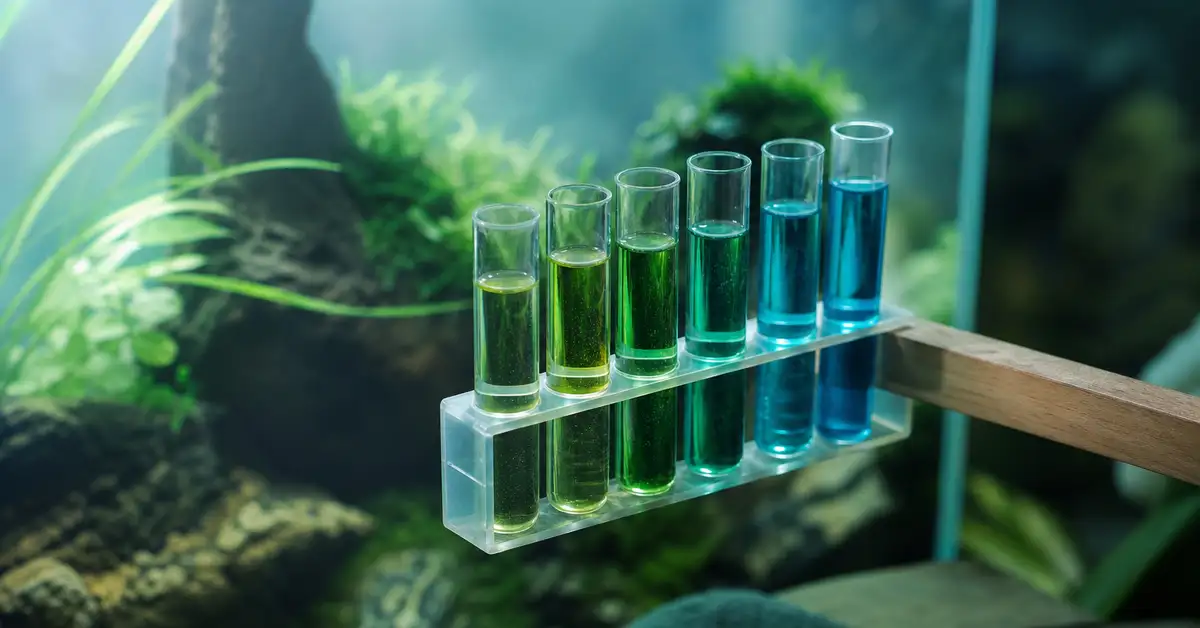
Day to day, the targets are consistent across the sources we trust: ammonia and nitrite at 0 ppm, nitrate kept low (most guides suggest under roughly 20–40 ppm), and a pH somewhere in the 6.5–7.5 range, ideally stable rather than “perfect.” Our full walkthrough of how to cycle a tank from scratch is live now, and our deeper reference guide to water parameters is live now too — for now, the practical takeaway is: test before you trust, and don’t rush the first few weeks.
Feeding your betta
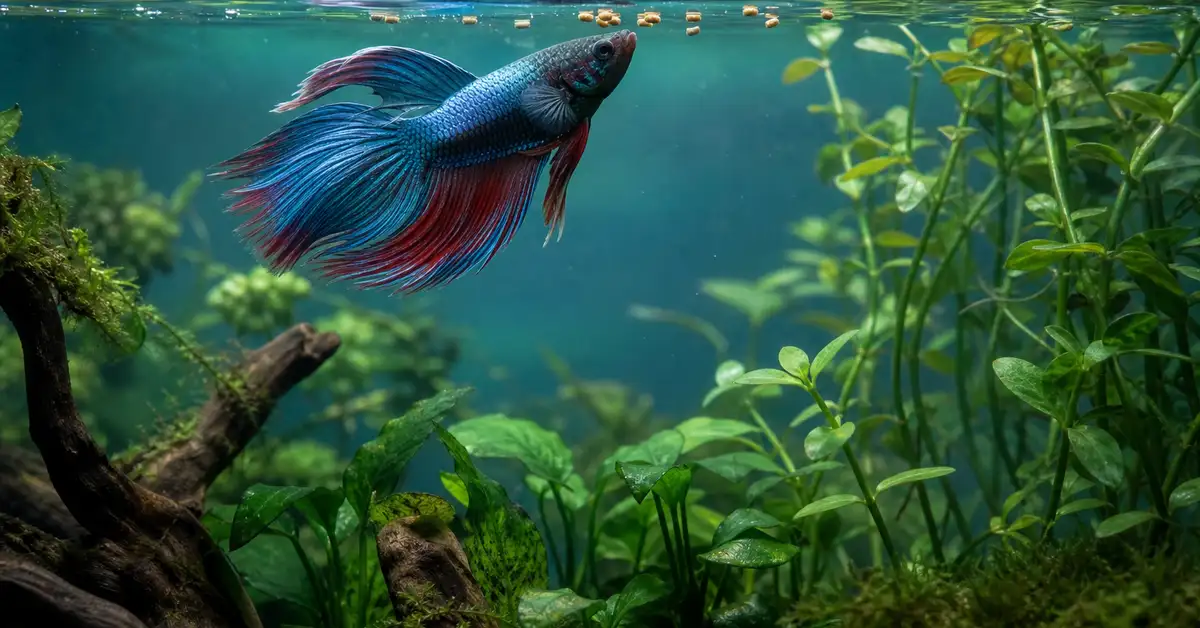
Bettas are carnivores, and a betta-formulated pellet — not generic tropical flakes, which most bettas will actually turn their nose up at — should be the staple. A useful rule of thumb from Chewy’s care guide: a betta’s stomach is roughly the size of its eye, so two to four pellets, once or twice a day, is plenty for most adults. For the full breakdown — including community fish, bottom feeders, the two-minute rule and fasting days — see our complete guide to feeding aquarium fish. Freeze-dried or frozen bloodworms, brine shrimp or daphnia make good treats once or twice a week (thaw or soak them first), but they’re a supplement, not a replacement for a proper pellet diet.
Overfeeding is far more common than underfeeding, and it’s not a trivial mistake — excess food (especially dry pellets that expand) is a well-documented contributor to bloating and swim bladder problems, on top of fouling the water faster than your filter and water changes can keep up with. If your betta’s belly looks noticeably rounded, skip a day or two rather than cutting back gradually.
Temperament, fin types and behavior
“Fighting fish” isn’t a marketing name — bettas are genuinely territorial, males especially, and two bettas (or a betta and anything that resembles one) sharing a tank is a real fighting risk rather than a curiosity. That territoriality also shows up as flaring at reflections or at other fish through the glass, which is normal display behavior, not a sign of distress on its own.
Day to day, a settled betta is a moderately active, curious fish that spends real time near the surface (that’s the labyrinth organ at work, not a symptom of anything), explores its plants and decor, and responds to feeding. Fin type matters more than most beginners expect: long-finned varieties like veiltails and halfmoons are more prone to fin damage and struggle more in any real current, while shorter-finned plakats are closer to the wild type and generally hardier swimmers. Whatever the fin type, handle your betta as little as possible — chasing one around the tank with a net to move it is stressful and, for long-finned fish, a genuine tearing risk.

Tank mates: does a betta need company?
Most bettas do best on their own, and that’s a completely reasonable choice, not a compromise — especially while you’re still learning. If you do want to try a community setup, it generally only works in a larger, heavily planted tank (think 10–20 gallons, not 5), started only once the betta is settled in, and even then it depends heavily on that individual fish’s temperament.
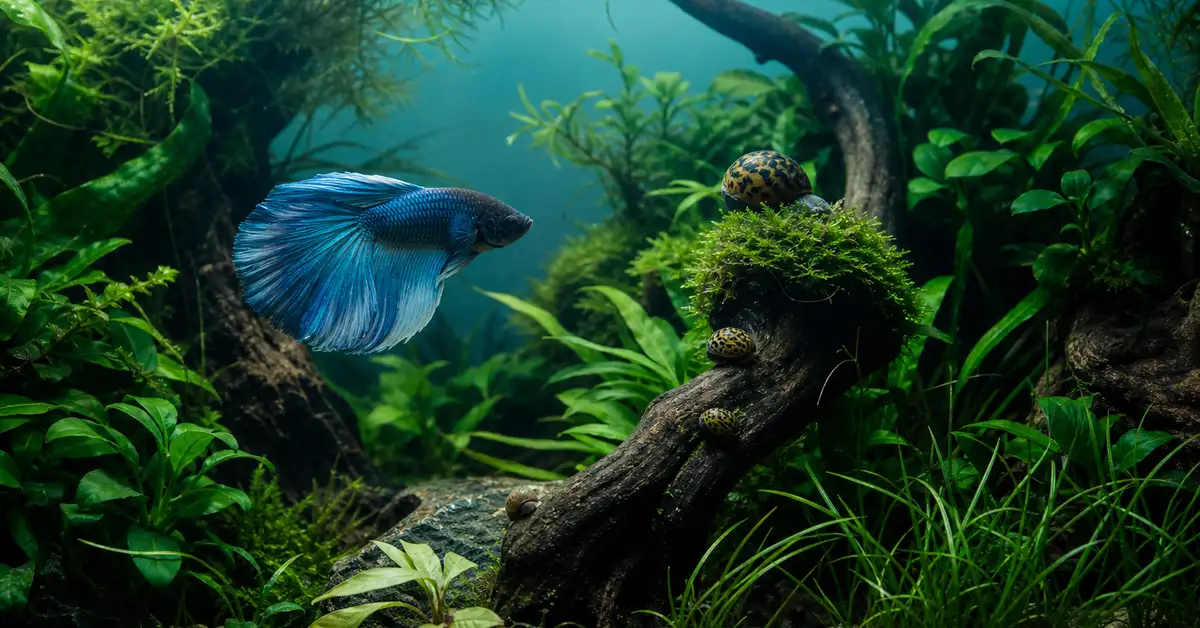
When it works, it’s usually with hardy invertebrates like nerite snails or shrimp, or small, peaceful, non-nippy fish such as corydoras catfish or certain schooling species — many keepers test the water (so to speak) with snails first, since a betta that harasses a snail is unlikely to tolerate fish. Species to avoid are fairly consistent across the sources we checked: other bettas, known fin-nippers like tiger barbs, showy long-finned or brightly colored fish that can be mistaken for a rival (fancy guppies are the classic example), and larger aggressive or territorial fish such as cichlids, gouramis or red-tail sharks. Quarantining any new tank mate for several weeks before introducing it is also worth the patience. See our full betta tank mates compatibility guide for the specifics.
Common beginner mistakes
- Skipping the nitrogen cycle. Adding a betta to brand-new, uncycled water is the single most common cause of an early, preventable death.
- Letting temperature swing. A heater alone isn’t a guarantee — check it against a separate thermometer, since heaters do fail.
- Overcleaning. Scrubbing decor and filter media with tap water, or replacing media too often, strips out the beneficial bacteria that keep ammonia in check. Rinse filter media in old tank water, not the sink.
- Mishandling. Repeated net-chasing or unnecessary moves are stressful and, for long-finned bettas, a real injury risk.
- Picking the wrong tank mates on the assumption that any small, colorful fish will get along with a betta.
- Using untreated tap water. Chlorine and chloramine are toxic to fish and to your beneficial bacteria — always use a conditioner, and skip distilled water, which lacks minerals bettas need.
Signs of a healthy betta (and when to get help)
A betta in good condition has fully spread fins, steady color, clear eyes, a good appetite and a body that holds its position normally in the water. Watch for — but don’t try to self-diagnose from — clamped fins, lethargy or appetite loss, fading or darkening color, unusual spots or cottony growths, and trouble staying upright or swimming normally.
This is general information, not veterinary advice: if you notice any of the above, the right next step is an aquatic veterinarian or a reputable fish-health resource, not a guess at a treatment from a forum thread. We’ll never tell you we’ve “tested” a cure, because we haven’t — we’re not a lab, and we’re not a vet practice.
How long do betta fish live?
Most bettas in reasonably well-kept home aquaria live around two to four years, with three years a realistic average to plan around. Genetics, water quality, diet and stress levels all move that number — excellent, consistent care can stretch it to five to seven years, and there are credible reports of exceptional individuals reaching a decade. Worth remembering: most store-bought bettas are already six months to a year old at purchase, so the lifespan you get at home is usually a little shorter than the fish’s total lifespan from hatching.
Where to go next
This page is the hub for our whole betta cluster. Here’s everything it connects to:
Frequently Asked Questions
Sources: Bettafish.org Care Guide · Bettafish.org: How Long Do Betta Fish Live? · PetMD Betta Fish Care Sheet · Chewy: Betta Fish Care Guide · Chewy: 5 Fascinating Betta Fish Facts · Chewy: What Size Betta Tank Do I Need · Aquarium Co-Op Betta Care Guide · Aquarium Co-Op: 5 Wild Betta Species · Fishkeeping World: Betta Fish Care · AquariumScience.org: Aquarium Bettas · USA Today: How Long Do Betta Fish Live? · Sevenports: Top Betta Fish Tank Mates · Bettaaquatic: Swim Bladder Treatment · Peer-reviewed betta tank-size welfare study (PMC)