The best plants and decor for a betta tank are soft, broad-leaved and low-light-friendly — think Java fern, Anubias and marimo moss balls, plus silk (never hard plastic) plants and smooth ceramic hides. Bettas’ long fins tear easily on sharp edges, so we’ve ranked 13 real, currently-sold plants and decor pieces that are genuinely gentle on fins, budget-friendly, and easy to keep alongside a beginner setup.
How we chose these plants and decor
We’re not a testing lab — Honest Aquarium is written by a real fishkeeper doing real research. For this guide we pulled specs and care requirements directly from plant and product retailers (Aquarium Co-Op, BucePlant, Chewy, Penn-Plax listings), cross-checked against betta-specific guidance on fin safety, and weighed light requirements against what a typical beginner betta setup can provide. Every artificial item was checked for material (silk/soft plastic vs. hard, sharp-edged plastic) since that distinction is the single biggest factor in whether decor is safe for a betta’s fins. Full method: How We Choose.
Last updated July 2026 — all 13 picks below are confirmed still sold as of this year. We favor soft, broad-leaved live plants and genuine silk over hard plastic, because that’s what fin-safety evidence and betta-specific retailer guidance both point to.
New to bettas? Start with our complete betta fish care guide, or see our best betta fish tanks if you haven’t picked a tank yet. Keeping a broader planted community tank instead? See our best aquarium plants for beginners hub for a wider low-light, no-CO2 plant roundup.
Quick comparison
| Plant / decor | Best for | Type | Price band |
|---|---|---|---|
| 1. Java Fern | Best overall easy live plant | Live | $ |
| 2. Anubias Nana Petite | Best beginner epiphyte | Live | $ |
| 3. Marimo Moss Ball | Best low-maintenance pick | Live | $ |
| 4. Java Moss Mat | Best carpet cover | Live | $ |
| 5. Water Wisteria | Best versatile stem plant | Live | $ |
| 6. Cryptocoryne Wendtii ‘Green’ | Best midground plant | Live | $$ |
| 7. Amazon Sword | Best background plant | Live | $$ |
| 8. Anubias Nana ‘Pangolino’ | Best nano specialty plant | Live | $$$ |
| 9. Bucephalandra ‘Arrogant Blue’ | Best premium accent | Live | $$$ |
| 10. Marina Ecoscaper Silk Plant | Best silk plant | Artificial | $$ |
| 11. Penn-Plax Aqua-Plant Driftwood | Best artificial ornament | Artificial | $$ |
| 12. Penn-Plax Betta Resting Cave | Best fin-safe hide | Decor | $ |
| 13. Betta Leaf Bed Hammock | Best resting hammock | Decor | $ |
The 13 best plants and decor for betta tanks (2026)
Transparency first: This guide contains affiliate links. If we’re enrolled in an affiliate program, we may earn a commission at no extra cost to you — it never affects how we research or rank. Read our full affiliate disclosure policy.
1. Java Fern — Best Overall Easy Live Plant
A slow-growing epiphyte with tough, rippled leaves that thrives even under the modest lighting typical of a betta tank. It attaches to driftwood or rock rather than needing substrate, so it’s a genuinely no-fuss first live plant.
Best for: beginners who want one reliable, low-light live plant that just works.
Key specs: low light · attaches to hardscape (no substrate needed) · tolerant of a wide range of water conditions.
Pros: extremely hardy, broad smooth leaves are gentle on fins, resists nibbling from shrimp/snails.
Cons: slow growth means a sparse tank takes a while to fill in.
Price band: $ (budget) · Evidence: sold directly by Aquarium Co-Op with explicit low-light, beginner-friendly billing; used in BucePlant’s published low-tech betta aquascape.
2. Anubias Nana Petite — Best Beginner Epiphyte
A compact Anubias cultivar with tiny, round, rubbery leaves that stays small enough to avoid overwhelming a 5–10 gallon tank. Like Java fern, it attaches to hardscape rather than rooting in substrate.
Best for: small tanks and aquascapers who want a compact accent plant near driftwood or rock.
Key specs: low light · attaches with aquarium-safe glue gel · very slow growth.
Pros: broad smooth leaves double as a betta resting platform, stays compact, minimal care.
Cons: very slow growth, so it won’t quickly fill a bare tank.
Price band: $ (budget) · Evidence: sold directly by Aquarium Co-Op with attachment and care instructions specific to nano/beginner setups.
3. Marimo Moss Ball — Best Low-Maintenance Pick
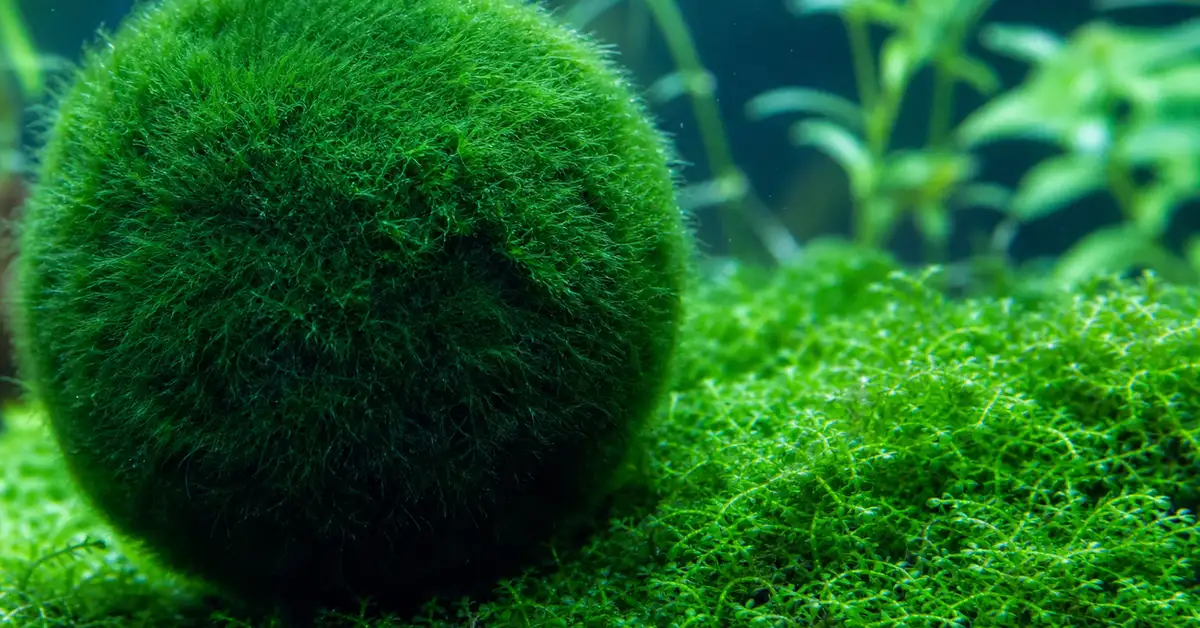
Not a true moss but a velvety ball of filamentous algae that needs almost nothing from you beyond an occasional roll during water changes. Its soft, cushion-like texture makes it a natural “pillow” bettas can rest against.
Best for: anyone who wants a foolproof, soft, green addition with zero risk to fins.
Key specs: low–medium light · tolerates betta tank temperatures up to about 80°F · essentially zero maintenance.
Pros: impossible to kill with normal care, genuinely soft texture, doubles as a mild biological filter surface.
Cons: very slow growth; purely decorative rather than a major water-quality contributor.
Price band: $ (budget) · Evidence: Aquarium Co-Op’s dedicated marimo care guide explicitly notes betta-tank compatibility up to ~80°F.
4. Java Moss Mat — Best Carpet Cover
Java moss pre-attached to a flexible mesh mat, so you get an instant soft carpet or moss-draped hardscape without handling loose fragments. Fine, feathery fronds pose no snagging risk at all.
Best for: softening a bare substrate or hardscape without any planting skill required.
Key specs: low–medium light · no CO2 needed · trims easily with scissors.
Pros: extremely forgiving of beginner mistakes, fine soft texture is completely fin-safe, easy to trim and reshape.
Cons: can trap detritus if not paired with a clean-up crew or occasional rinsing.
Price band: $ (budget) · Evidence: sold directly by Aquarium Co-Op as a mat-format product designed for exactly this beginner use case.
5. Water Wisteria — Best Versatile Stem Plant
A fast, adaptable stem plant that can be rooted for fine, lacy midground foliage or left floating to form a broad-leaved surface canopy that shades the tank and gives a betta somewhere to hide near the top.
Best for: owners who want one plant that can be used two different ways as their scape evolves.
Key specs: low–medium light · can be planted or floated · benefits from root tabs or liquid fertilizer.
Pros: thin flexible leaves are completely fin-safe, doubles as floating cover, fast-growing so it fills in quickly.
Cons: needs occasional trimming so it doesn’t block surface access, which bettas need for air.
Price band: $ (budget) · Evidence: sold directly by Aquarium Co-Op, explicitly marketed as beginner-friendly cover for small fish.
6. Cryptocoryne Wendtii ‘Green’ — Best Midground Plant
A classic rosette plant that grows to about 6–8 inches, making it ideal for framing a cave or hardscape feature without blocking the view. Broad, smooth-margined leaves double as resting surfaces.
Best for: adding midground structure and depth around caves or driftwood.
Key specs: low light · prefers nutrient-rich substrate or root tabs · can experience temporary “crypt melt” after transplanting.
Pros: smooth broad leaves are fin-safe, manageable size for a 5–10 gallon tank, long-lived once settled.
Cons: may shed older leaves for a few weeks after planting while it adjusts — this is normal, not a sign it’s dying.
Price band: $$ (budget-to-mid) · Evidence: sold by Aquarium Co-Op and Aqualaba Aquaria with matching size and care specs.
7. Amazon Sword — Best Background Plant
A tall, broad-leaved centerpiece plant for the back corners of a 10-gallon betta tank, giving height and a sense of enclosure behind shorter midground plants.
Best for: 10-gallon (or larger) tanks where you want a dramatic background anchor.
Key specs: low–medium light · benefits from root tab fertilizer · grows large, so size the tank accordingly.
Pros: broad thick leaves are gentle on fins and make good resting surfaces, striking centerpiece look.
Cons: can get large in bigger tanks — avoid in tanks under about 10 gallons to protect swimming space.
Price band: $$ (budget-to-mid) · Evidence: sold directly by Aquarium Co-Op with explicit root-tab feeding guidance.
8. Anubias Nana ‘Pangolino’ — Best Nano Specialty Plant
A rare, extra-tiny-leaved Anubias cultivar built for nano aquascapes where a standard Anubias would look oversized. Slow, compact growth suits a tightly planned betta scape.
Best for: aquascapers building a detailed nano layout in a smaller betta tank.
Key specs: low light · attaches to hardscape · very slow, compact growth.
Pros: intricate fine texture, fully fin-safe smooth leaves, stays genuinely tiny.
Cons: premium price for a rare cultivar; more sensitive to rough handling than common Anubias.
Price band: $$$ (premium) · Evidence: sold by BucePlant, a specialist aquascaping retailer, as a named rare cultivar.
9. Bucephalandra ‘Arrogant Blue’ — Best Premium Accent Plant
A Borneo-native epiphyte prized in aquascaping for its subtle blue-green sheen. Used to add color and texture in cracks and crevices of hardscape without dominating the layout.
Best for: aquascapers wanting a premium accent plant alongside more common Anubias and Java fern.
Key specs: low–medium light · attaches to hardscape · slow growth, appreciates stable conditions.
Pros: small smooth leaves are fin-safe, distinctive color, very slow growth means low maintenance.
Cons: pricier and slightly less forgiving than Anubias or Java fern.
Price band: $$$ (premium) · Evidence: featured in BucePlant’s own published low-tech betta tank build.
10. Marina Ecoscaper Hydrocotyle Silk Plant — Best Silk Plant
A genuine silk (not hard plastic) plant with soft fabric leaves that move naturally in the water flow. The right choice if you want foliage with zero lighting or fertilizing requirements.
Best for: owners who want plant-like cover without any live-plant maintenance.
Key specs: no lighting/fertilizer needed · soft silk-fabric leaves · trailing/creeping style.
Pros: genuinely soft and flexible (unlike older hard plastic plants), zero maintenance, safe to combine with live plants.
Cons: doesn’t contribute to water quality or biofiltration the way live plants do.
Price band: $$ (budget-to-mid) · Evidence: sold via Chewy, explicitly marketed as silk (not rigid plastic) aquarium décor.
11. Penn-Plax Aqua-Plant Driftwood Fish Plant — Best Artificial Ornament
A combined driftwood-and-foliage ornament that adds structure and greenery in one piece — useful as a centerpiece while live epiphytes like Anubias get established attached to it.
Best for: a ready-made centerpiece that still leaves room to attach live plants later.
Key specs: ~15in ornament · no lighting/fertilizer needed · combines driftwood-style base with integrated foliage.
Pros: instant structure and cover, doubles as an anchor point for live epiphytes, no maintenance.
Cons: check the surface by hand on arrival for smoothness before adding a betta, as with any hard ornament.
Price band: $$ (budget-to-mid) · Evidence: sold directly via Chewy’s freshwater artificial plant catalog.
12. Penn-Plax Betta Resting Cave — Best Fin-Safe Hide
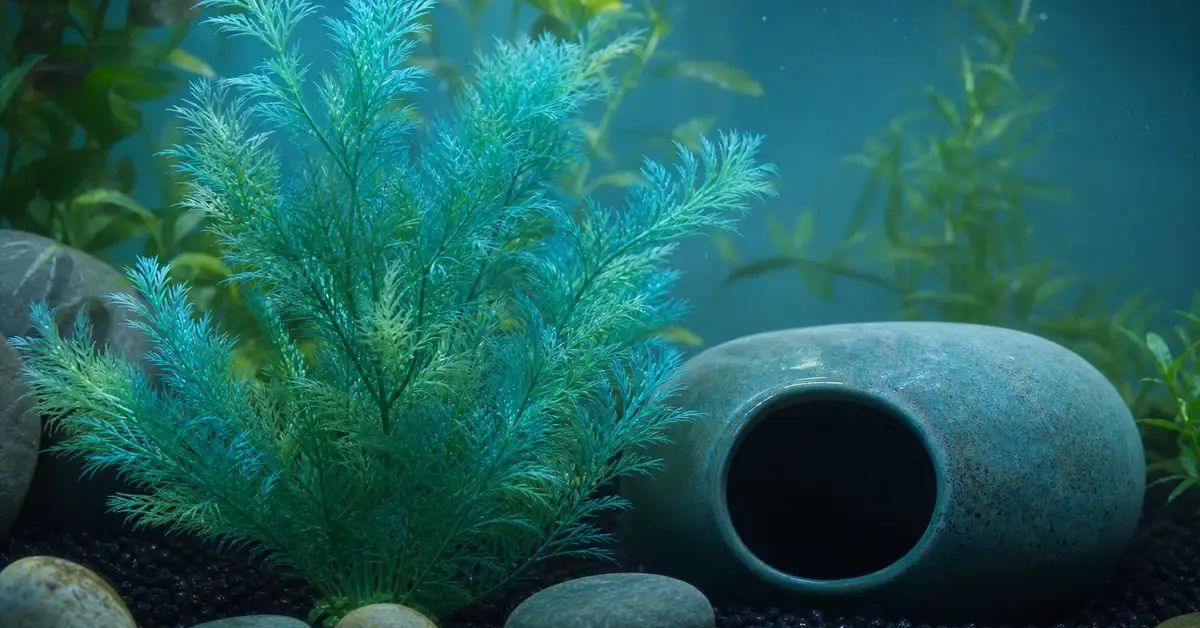
A ceramic cave purpose-built for bettas: soft, light material, smooth interior walls, and breathing holes so it doesn’t trap stale water. A dedicated hideout beats improvising with a generic cave meant for tougher fish.
Best for: giving a betta a genuine retreat, especially in a lightly-planted tank.
Key specs: soft ceramic construction · integrated breathing holes · suction cup for placement.
Pros: explicitly designed and marketed for betta fin safety, easy to clean, flexible placement.
Cons: purely functional decor rather than a plant — best paired with live or silk foliage around it.
Price band: $ (budget) · Evidence: sold via Pet Supermarket with explicit “soft on fins” betta-specific marketing.
13. Betta Leaf Bed Hammock — Best Resting Hammock
A soft, curved leaf-shaped hammock that suction-cups to the tank wall near the surface, giving a betta a dedicated place to rest close to the air it periodically needs to breathe.
Best for: tanks that don’t yet have enough broad-leaved plants for natural resting spots.
Key specs: soft polypropylene construction · suction-cup mount · positions near the surface.
Pros: inexpensive, purpose-built resting spot, easy to reposition as your scape changes.
Cons: best used to complement real plants, not replace them entirely.
Price band: $ (budget) · Evidence: widely sold as a betta-specific accessory described as safe, soft PP material with a suction mount.
What to avoid
Skip anything explicitly plastic with rigid, sharp-edged leaves — the classic “hard plastic plant” sold in generic decor aisles. Bettas’ long fins can catch and tear on stiff plastic edges and mold seams, and repeated small tears are a common, avoidable path to fin rot. The same goes for rough, unglazed rocks or caves designed for tougher fish like cichlids: run a finger over any hardscape before it goes in the tank, and if it snags a cloth, it can snag a fin.
How to choose for your situation
If you want the simplest possible start, pick two or three items from the top of this list — Java fern or Anubias attached to a piece of driftwood, plus a marimo ball or a Java moss mat on the substrate. That combination needs no fertilizer routine beyond the occasional dose and gives your betta real cover on a beginner’s budget. If you’d rather skip live-plant care entirely, a genuine silk plant plus a Penn-Plax Betta Resting Cave covers the fin-safety basics with zero maintenance. Save the pricier specialty plants (Pangolino, Bucephalandra) for once you’ve got the basics running and want to build out the aquascape.
Frequently Asked Questions
General information only — not veterinary advice. If your betta shows fin damage that doesn’t improve with better decor and clean water, consult an aquatic veterinarian.
Sources: Aquarium Co-Op: Top 10 Betta Fish Plants · Aquarium Co-Op: Java Fern · Aquarium Co-Op: Anubias Nana Petite · Aquarium Co-Op: Marimo Moss Ball Care Guide · BucePlant: Low-Tech Planted Betta Tank · Bettafish.org: Betta Fish Plants · Chewy: Marina Ecoscaper Silk Plant · Pet Supermarket: Penn-Plax Betta Resting Cave