The right substrate depends entirely on what you’re keeping: inert gravel or sand for a standard community tank, nutrient-rich planted soil for a heavily-planted aquascape, fine soft sand for corydoras and other barbel-sensitive bottom-dwellers, or pH-buffering aragonite for African cichlids and livebearers that need harder, more alkaline water. We spec-verified 10 real, currently-sold substrates across all four categories, with an honest flag on the one product here that actually needs a cycling-style wait before fish go in.
How we chose these substrates
We pulled composition, grain size, pH effect and cation exchange capacity (CEC, a measure of nutrient retention) directly from CaribSea, Fluval, ADA, Seachem and Estes/Spectrastone product documentation, cross-checked against Aquarium Co-Op and AquariumScience.org’s technical guidance on plant substrates and sand suitability. Our October 2026 search of the US CPSC recall database found no recall for any of the nine branded substrates recommended below (the pool filter sand at pick 7 is generic, with no brand to search). Full method: How We Choose.
Last updated July 2026. Choosing your tank first? See our best aquarium kits hub or our best 10-gallon fish tanks guide. Setting up for the first time? Our how to cycle a fish tank guide and water parameters reference both interact directly with substrate choice, covered below. Planning a planted tank? See our best aquarium plants for beginners guide for which species pair well with which substrate category.
Why substrate isn’t just decoration
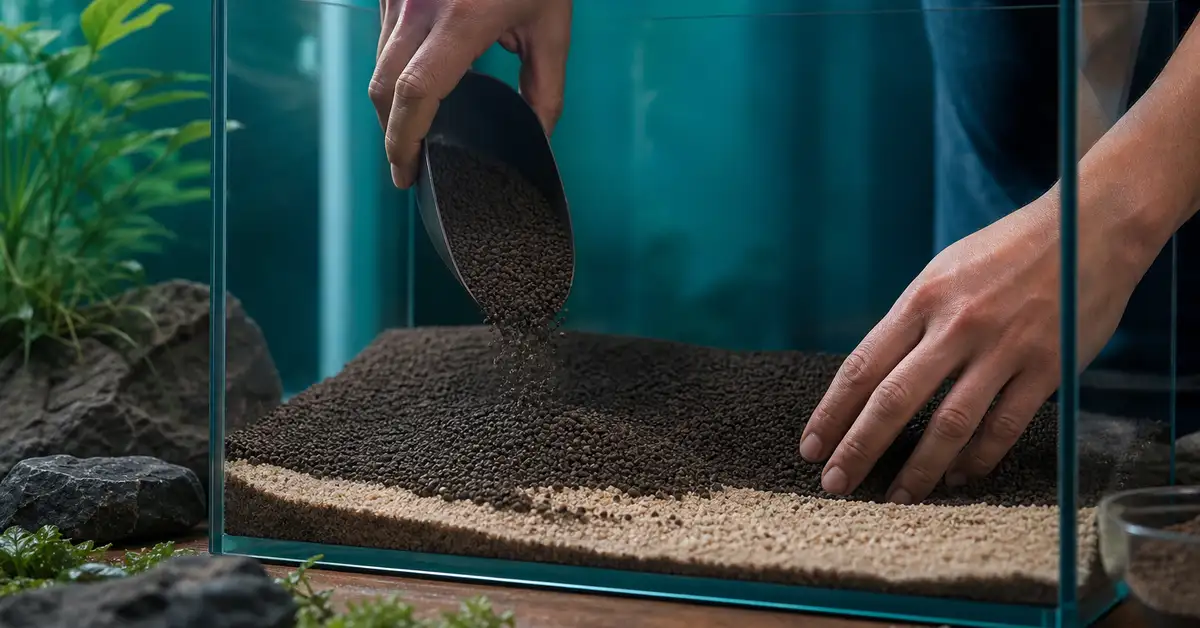
Substrate does real biological and chemical work beyond looking good. It’s a major surface area for the beneficial bacteria your nitrogen cycle depends on — porous planted soils and aragonite sands in particular offer far more colonizable surface than smooth gravel. Some substrates are chemically inert (Seachem Flourite, most standard gravel), leaving your water’s pH and hardness essentially unaffected; others actively change water chemistry — aragonite-based substrates raise pH and hardness for cichlids, while some planted soils lower pH slightly and release ammonia during an initial break-in period. Choosing the wrong category for your stock isn’t just aesthetic — an inert-substrate community tank with African cichlids on top will fight a losing battle against their preferred high pH, for example.
Quick comparison
| Substrate | Category | pH effect | Best for | Price band |
|---|---|---|---|---|
| 1. CaribSea Eco-Complete | Planted soil | Inert | Beginner planted tanks | $$ |
| 2. Fluval Stratum | Planted soil | Slightly acidic | Budget planted/shrimp tanks | $ |
| 3. ADA Aqua Soil Amazonia | Planted soil | Lowers pH, leaches ammonia early | Serious aquascaping | $$$ |
| 4. Seachem Flourite | Planted substrate | Inert | Root anchoring, no ammonia spike | $$ |
| 5. Seachem Onyx Sand | Planted sand | Mild rise (0.1-0.5) | Black sand look, mild buffering | $$ |
| 6. CaribSea Super Naturals Sand | Community sand | Neutral | Corydoras, bottom-dwellers | $ |
| 7. Pool Filter Sand | Community sand | Neutral | Budget large tanks | $ |
| 8. Spectrastone Premium Gravel | Community gravel | Neutral | Standard community tanks | $ |
| 9. CaribSea Eco-Complete Cichlid Sand | Cichlid sand | Raises pH to ~8.2 | African cichlids, livebearers | $$ |
| 10. CaribSea Super Naturals blended gravel | Community gravel | Neutral | Natural multi-tone look | $ |
The 10 best aquarium substrates (2026)
Transparency first: This guide contains affiliate links. If we’re enrolled in an affiliate program, we may earn a commission at no extra cost to you — it never affects how we research or rank. Read our full affiliate disclosure policy.
1. CaribSea Eco-Complete Planted — Best All-in-One Planted Substrate
Eco-Complete is a blend of basaltic volcanic soil in two grain sizes, pre-loaded with beneficial bacteria and liquid fertilizer held within its porous structure for gradual plant uptake, while remaining inert in terms of pH impact — a rare combination for a nutrient-rich substrate that won’t also swing your water chemistry.
Best for: beginners setting up their first planted tank who want real nutrient content without pH or ammonia surprises.
Key specs: basaltic volcanic soil, two grain sizes · pre-loaded beneficial bacteria · embedded liquid fertilizer · pH-neutral · high iron content, favors red-toned plants.
Pros: genuinely balances nutrient availability with pH neutrality, jump-starts cycling with live bacteria, high iron content benefits red plant species.
Cons: less premium nutrient depth than ADA Aqua Soil for advanced aquascaping; darker grain color may not suit every aesthetic.
Price band: $$ · Evidence: manufacturer specs confirm composition, pH neutrality and embedded fertilizer/bacteria; no recall found for this substrate in our October 2026 CPSC search.
2. Fluval Stratum — Best Budget Planted Soil
Stratum is a porous volcanic soil aimed squarely at beginners entering planted tanks or shrimp keeping: it’s genuinely forgiving to work with, offers real root penetration for demanding plant species, and typically costs roughly half of premium aquascaping soils like ADA Aqua Soil while covering most of the same basic function.
Best for: a first planted or shrimp tank where budget matters and premium aquascaping-grade nutrient control isn’t the priority.
Key specs: porous volcanic soil · supports root development and mineral uptake · significantly lower cost than premium aquasoils.
Pros: genuinely more affordable than ADA-tier soils, forgiving for beginners, widely available in stores.
Cons: less refined nutrient-release engineering than premium aquascaping soils; grain breaks down and compacts somewhat faster over time than harder substrates.
Price band: $ · Evidence: manufacturer and independent hobbyist comparison (UK Aquatic Plant Society forum) confirm composition and relative pricing; no recall found for this substrate in our October 2026 CPSC search.
3. ADA Aqua Soil Amazonia — Best Premium Aquascaping Soil
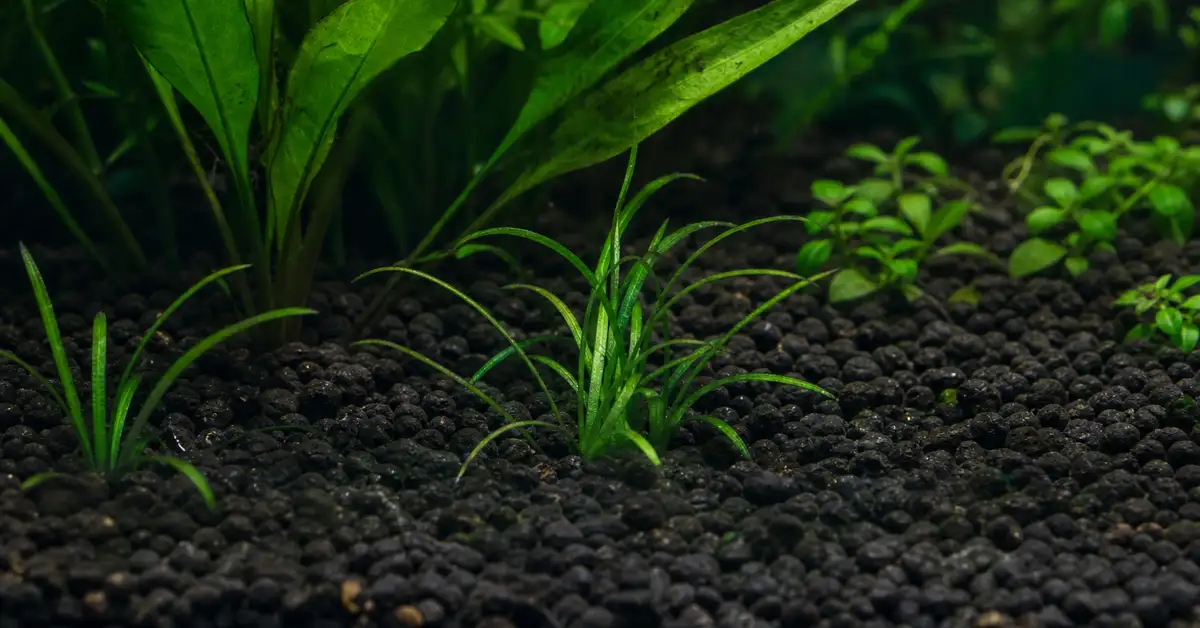
ADA’s Aqua Soil is the substrate most serious aquascapers reach for, offering a high cation exchange capacity (CEC roughly 45-50 versus Flourite’s roughly 1.7) that retains and releases nutrients far more actively than inert substrates. Honest disclosure — this one needs cycling-style patience: unlike the inert or pre-buffered options above, Aqua Soil genuinely leaches ammonia — commonly cited at roughly 0.5-2 ppm, though independent hobbyist reports document readings as high as 8+ ppm in some tanks — over a window that’s commonly 3-4 weeks but can run considerably longer, in documented cases out to 10-14 weeks, and will lower your water’s pH. Test, don’t count days. It’s excellent for the tank’s eventual nitrogen cycle, but it means you should treat setup exactly like our fishless cycling guide describes — test before assuming it’s safe, and don’t add fish until ammonia has genuinely settled to zero.
Best for: aquascapers who want the highest nutrient-retention substrate available and are prepared to treat the initial weeks as an active cycling period, not a shortcut around one.
Key specs: high-CEC aquasoil (~45-50) · lowers pH · leaches ammonia — commonly 3-4 weeks, but can run considerably longer (documented cases out to 10-14 weeks) · breaks down gradually over 1-2 years.
Pros: genuinely superior nutrient retention for demanding plant species, widely regarded as a gold standard in the aquascaping hobby, actively supports the nitrogen cycle once past the initial ammonia period.
Cons: the ammonia-leaching period is a real safety consideration — do not add fish until you’ve confirmed 0 ppm ammonia via testing; premium price; softens and breaks down faster than inert gravel over the long term.
Price band: $$$ · Evidence: independent hobbyist forum data (Fishlore, Aquatic Plant Central) and technical comparison sources consistently describe the CEC figures and ammonia-leaching timeline cited above; no recall found for this substrate in our October 2026 CPSC search.
4. Seachem Flourite — Best Inert Planted Substrate, No Ammonia Spike
Flourite is a porous clay gravel marketed for planted tanks, but its real value is being essentially chemically inert (a low CEC of roughly 1.7) — it won’t leach ammonia or swing pH the way ADA Aqua Soil does, while still offering good root anchoring and surface area for beneficial bacteria.
Best for: planted tanks where you want good root-holding substrate without any ammonia-leaching or pH-swing risk during setup.
Key specs: porous clay gravel · low CEC (~1.7), effectively inert · good root anchoring · does not require a break-in period for ammonia.
Pros: genuinely predictable, no ammonia-leaching surprise, solid root anchoring for most plant species.
Cons: minimal nutrient contribution of its own compared with ADA or Eco-Complete — plan on root tabs or liquid fertilizer for demanding species.
Price band: $$ · Evidence: independent technical comparison sources confirm the low CEC figure and inert behavior; no recall found for this substrate in our October 2026 CPSC search.
5. Seachem Onyx Sand — Best Black Sand With Mild Buffering
Onyx Sand is a naturally dark gray, carbonate-rich clay sand that isn’t chemically coated, giving it a genuine (if mild) buffering effect — the manufacturer states it can raise pH by roughly 0.1-0.5 units depending on your source water, a smaller and gentler shift than a dedicated cichlid substrate but worth knowing before you add soft-water species.
Best for: planted or community tanks wanting a dark sand aesthetic with a mild, natural pH lift rather than fully inert behavior.
Key specs: naturally dark gray clay sand · carbonate-rich, mild pH buffering (+0.1 to +0.5) · not chemically coated · long-lasting, no replacement needed.
Pros: genuinely attractive dark, natural sand look, mild buffering benefits many community species, doesn’t need replacing over the tank’s life.
Cons: the pH lift, while mild, isn’t zero — test your water if you’re keeping soft-water species that prefer a lower, unbuffered pH.
Price band: $$ · Evidence: manufacturer specs confirm carbonate content and stated pH-buffering range; no recall found for this substrate in our October 2026 CPSC search.
6. CaribSea Super Naturals Sand — Best Sand for Corydoras & Bottom-Dwellers
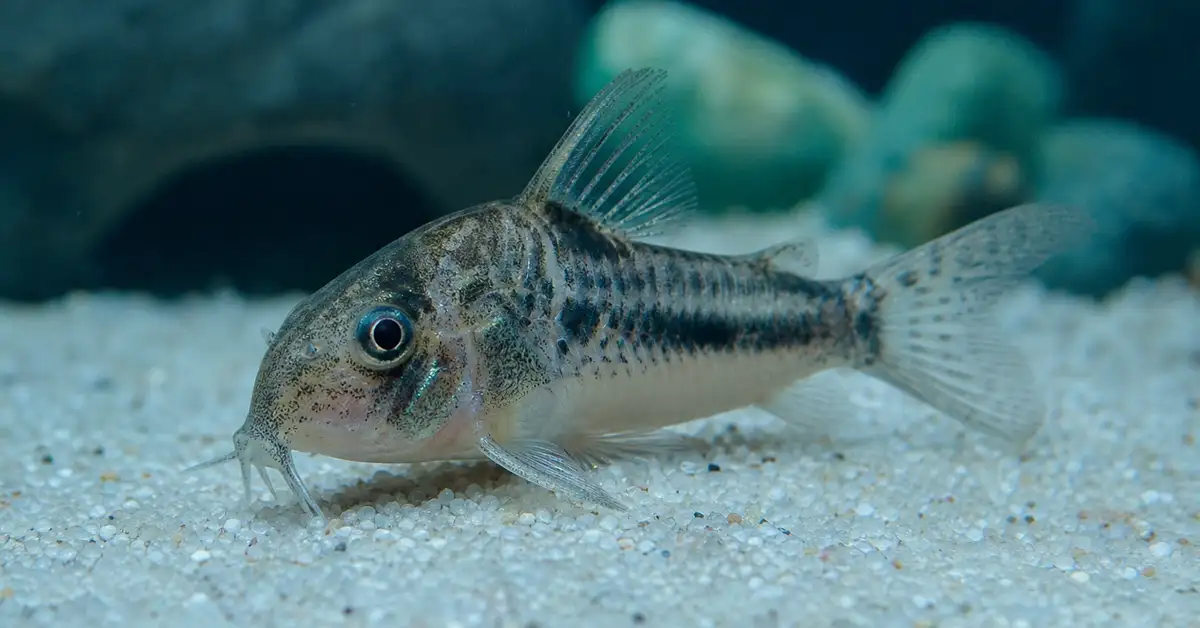
Super Naturals sand is fine-grained (roughly 0.5-1mm), pH-neutral and won’t raise carbonate hardness, with rounded grains gentle enough for corydoras and other barbel-sensitive bottom-dwellers or sand-sifting species to work through without abrasion.
Best for: community tanks with corydoras, kuhli loaches, or other species that root through the substrate with sensitive barbels.
Key specs: ~0.5-1mm grain size · pH-neutral, doesn’t raise KH · rounded, barbel-safe grains · requires rinsing before use.
Pros: genuinely gentle on delicate bottom-dwellers, pH-neutral so it won’t fight your target parameters, attractive natural coloring.
Cons: needs a thorough rinse before adding to avoid initial cloudiness; no inherent plant nutrient content.
Price band: $ · Evidence: manufacturer and retailer (Petco) specs confirm grain size and pH-neutral claim; independent forum sources corroborate corydoras suitability. No recall found for this substrate in our October 2026 CPSC search.
7. Pool Filter Sand — Best Ultra-Budget Sand Alternative
Pool filter sand, sold in bulk at hardware stores, is well-sieved and washed with few problematic fine or oversized particles, and Aquarium Co-Op’s own forum guidance confirms it performs comparably to purpose-marketed aquarium sand at a fraction of the per-pound cost — a genuinely practical choice for larger tanks where branded sand gets expensive fast. Important distinction: this is different from play sand, which is too fine, tends to clump, and can cloud water even after rinsing — don’t substitute one for the other.
Best for: larger tanks where covering the whole footprint in branded aquarium sand would be expensive, and a hardware-store bulk bag does the same job.
Key specs: well-sieved, washed silica sand · sold in 50-lb bags at hardware/pool-supply stores · pH-neutral · not the same product as play sand.
Pros: genuinely dramatic cost savings over branded aquarium sand at scale, comparable grain quality per independent aquarist testing, widely available.
Cons: not sold as an aquarium product, so there’s no manufacturer aquarium-specific quality guarantee; confirm the exact product with your hardware store, since formulations can vary by region and supplier.
Price band: $ · Evidence: Aquarium Co-Op forum discussion and independent aquarist sources (AquariumScience.org) confirm grain-size suitability and cost comparison versus branded sand; a generic product with no single brand, so our October 2026 CPSC search (run by brand) does not cover it.
9. CaribSea Eco-Complete African Cichlid Sand — Best pH-Buffering Substrate for Cichlids & Livebearers
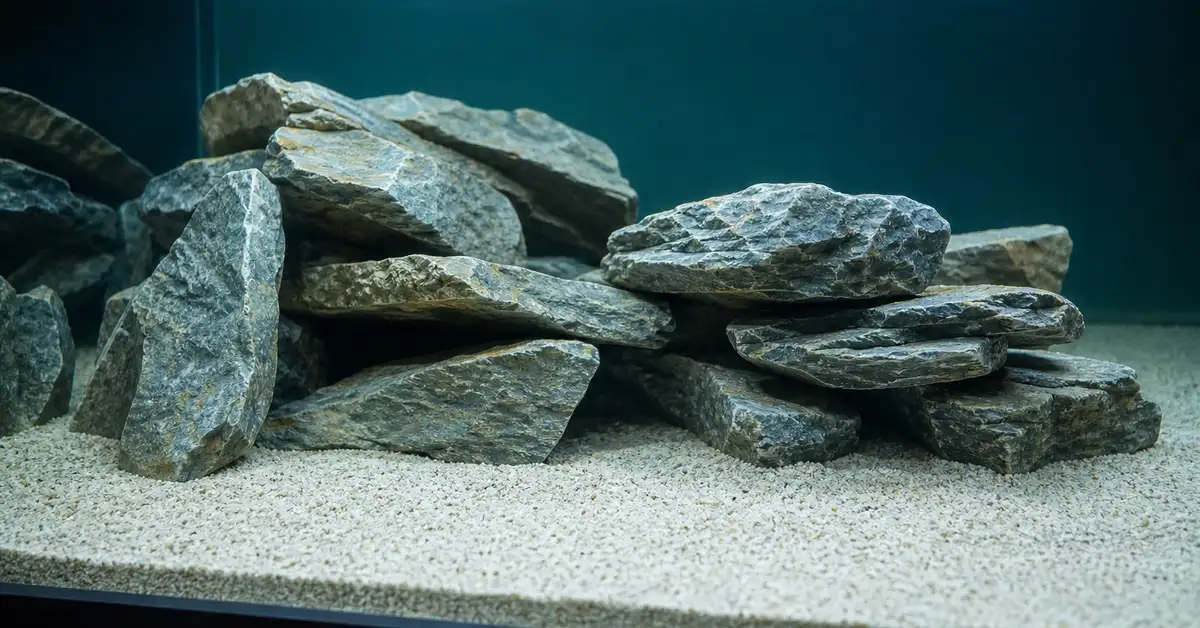
This is the substrate to reach for when your stock needs the opposite of what most planted substrates provide: aragonite content (up to 98% calcium carbonate) that actively buffers water toward the high pH (around 8.2) and elevated hardness African Rift Lake cichlids evolved in, with immense surface area (CaribSea cites up to 100,000 square inches per pound) hosting beneficial bacteria.
Best for: African cichlids, livebearers (mollies, platies, guppies), or any species needing consistently hard, alkaline water without constant chemical dosing.
Key specs: aragonite-based sand, ~98% calcium carbonate · buffers toward pH ~8.2 · ~1.0-2.5mm grain size · pre-loaded with beneficial bacteria.
Pros: genuinely reduces or eliminates the need for chemical pH buffering additives, huge bacterial surface area speeds cycling, purpose-built for a real and common stocking need.
Cons: actively raises pH and hardness — wrong choice entirely for soft-water or planted community setups; not a general-purpose substrate.
Price band: $$ · Evidence: manufacturer specs confirm aragonite composition, buffering target and surface-area figures; no recall found for this substrate in our October 2026 CPSC search.
10. CaribSea Super Naturals Blended Gravel — Best Natural-Look Multi-Tone Gravel
Where Spectrastone favors single, solid colors, CaribSea’s Super Naturals gravel line blends multiple natural tones (river-stone-style mixes like Peace River or Crystal River) for a more naturalistic substrate look, while keeping the same basic pH-neutral, community-safe profile.
Best for: owners who want a more natural, river-bed aesthetic than a single flat gravel color, without moving to a functional planted or cichlid substrate.
Key specs: blended multi-tone natural gravel · pH-neutral · various grain-size blends by product line · requires rinsing before use.
Pros: genuinely more naturalistic look than single-color gravel, pH-neutral so it won’t fight your target parameters, wide range of blend styles.
Cons: like most gravel, contributes no meaningful plant nutrients; multi-tone blends can show detritus more visibly between the lighter grains than a solid dark color would.
Price band: $ · Evidence: manufacturer and retailer specs confirm pH-neutral formulation and blended composition; no recall found for this substrate in our October 2026 CPSC search.
How much substrate do you need?
A common rule of thumb for gravel is roughly 1.5-2 lbs per gallon for a standard 2-3 inch bed depth; planted soils are typically sold by bag volume calibrated to specific tank footprints on the manufacturer’s own sizing chart, since aquascaping depth (often deeper at the back, shallower at the front) varies by layout. Always check the specific product’s coverage chart rather than assuming gravel and soil scale the same way.
What we can’t verify
We haven’t run side-by-side ammonia or pH measurements ourselves across these substrates — the CEC figures, ammonia-leaching timelines and pH-buffering ranges above come from manufacturer documentation and independent hobbyist/technical sources (AquariumScience.org, aquatic plant forums), cross-checked where more than one source was available. Individual tank results can vary with source water chemistry, stocking and maintenance.
Frequently Asked Questions
General information only — not veterinary advice. If your fish show signs of stress or illness, consult an aquatic veterinarian.
Sources: AquariumScience.org: Plant Substrates · AquariumScience.org: Sand · CaribSea · Fluval · Seachem: Flourite · Seachem: Onyx Sand · Aquarium Co-Op Forum: Pool Filter Sand or Play Sand · Planted Tank Forum: Aquasoil vs. Seachem Flourite · Fishlore Forum: ADA Amazonia ammonia spike reports · US CPSC: Recalls