Cycling a fish tank means growing a colony of beneficial bacteria strong enough to turn toxic ammonia into harmless nitrate before you add fish — not just running the filter for a day or two. Done properly as a fishless cycle, it takes several weeks: you feed the tank an ammonia source, test every few days, and wait for the classic ammonia-up, nitrite-up, nitrate-up pattern to settle at zero ammonia and zero nitrite. Skip it, and you’re gambling with what vets call new tank syndrome — the most common cause of fish deaths in brand-new aquariums. Here’s the honest, numbers-based version of how to do it right.
What’s actually happening during the cycle
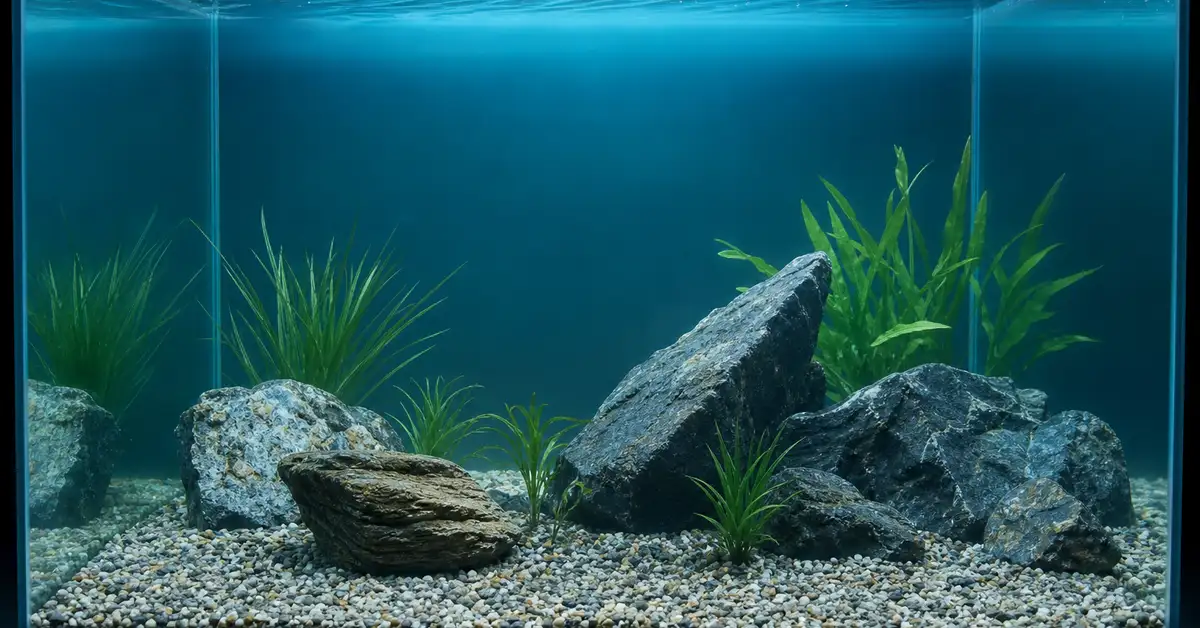
Every fish tank needs a working nitrogen cycle before it can safely hold fish. Fish waste and leftover food break down into ammonia, which is toxic even in small amounts. Two groups of naturally occurring bacteria then take over: one converts ammonia into nitrite (also toxic), and a second converts that nitrite into nitrate, which is far less harmful and easy to manage with regular water changes. A brand-new tank has essentially none of these bacteria yet — they don’t live free-floating in the water, but form thin biofilms on your filter media, gravel, decor and even the glass. Running an empty tank for a day or two doesn’t build this colony; it only grows once there’s an ammonia source to feed it, and that takes real time — typically four to six weeks from a cold start. For the full reference chart on what’s safe at each stage, see our aquarium water parameters guide.
Fishless cycling is worth the wait
You can cycle a tank two ways: fishless, where you feed the bacteria with fish food or bottled ammonia before any fish arrive, or fish-in, where the fish themselves supply the ammonia while you manage the risk. We recommend fishless whenever you have the choice — it lets the inevitable ammonia and nitrite spikes happen in an empty tank instead of one with a living animal in it. The steps below walk through a fishless cycle. If you’ve already got fish and can’t rehome them elsewhere while you cycle, the numbers and testing habits are the same — jump to our fish-in section below for the tighter safety margins that approach needs.
1. Set up and dechlorinate before anything else
Get your tank, filter, heater and substrate rinsed and running with dechlorinated water first — our tank setup guide walks through the full sequence in detail, our best aquarium kits for beginners hub covers picking the tank itself if you haven’t already, and our substrate guide flags the one common planted-soil choice that needs cycling-style patience of its own before fish go in. Tap water almost always contains chlorine or chloramine, both toxic to fish and lethal to the very bacteria you’re trying to grow, so treat every fill and every future water change with a dechlorinating conditioner (see our best water conditioners guide for picks). Get the heater holding steady in the mid-to-upper 70s°F; nitrifying bacteria grow fastest in roughly that range and noticeably slower below about 70°F.
2. Seed the tank if you possibly can
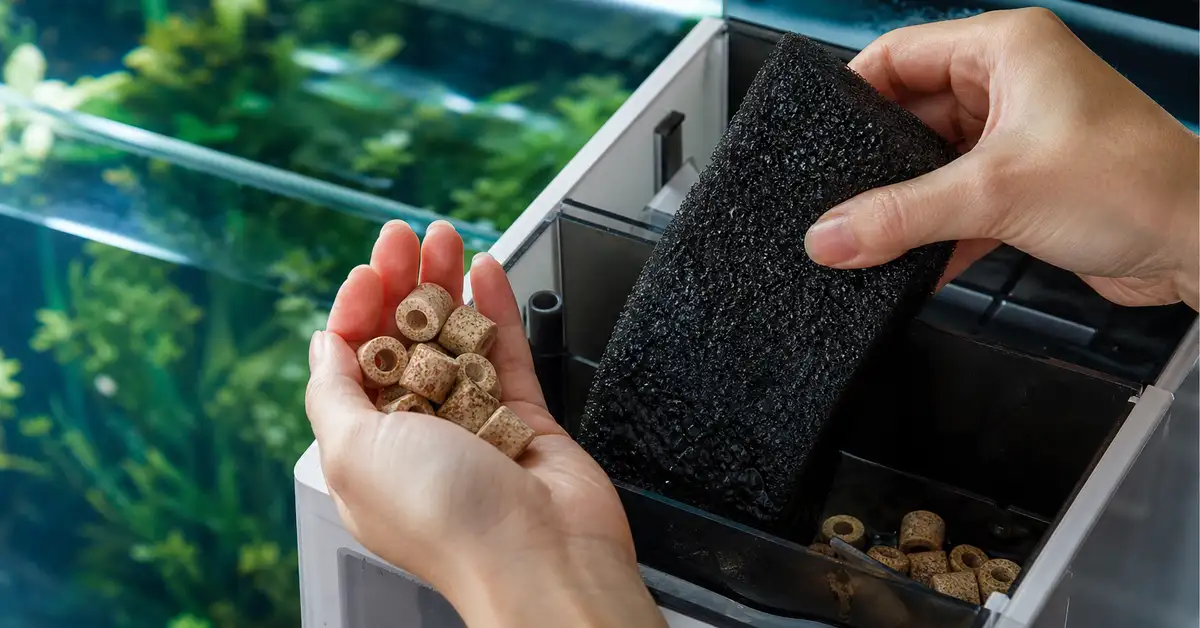
This is the single biggest shortcut available: if you or a friend has an established, healthy aquarium, take a handful of filter media, sponge, or gravel from it and add it to your new filter or substrate. Bacteria live on surfaces, not free-floating in the water, so transplanting mature media brings a working colony with it. A seeded tank can cycle in days to a couple of weeks instead of the four-to-six-week timeline of an unseeded one. No donor tank available? That’s fine — it just means the steps below will take longer, not that they won’t work.
3. Add an ammonia source
Choose one of two approaches. Ghostfeeding means adding fish food to the empty tank on the same schedule you’d eventually feed real fish, letting it decompose into ammonia. Pure ammonia dosing means adding a few drops of fragrance-free ammonium chloride solution to reach roughly 2-3 ppm on a test kit. Both work; pure ammonia is easier to control precisely, while ghostfeeding is more intuitive if you’d rather not buy a separate product. Either way, avoid pushing ammonia much above 3 ppm — counterintuitively, too much can slow down the very bacteria you’re trying to grow.
4. Test every two or three days and track the rise
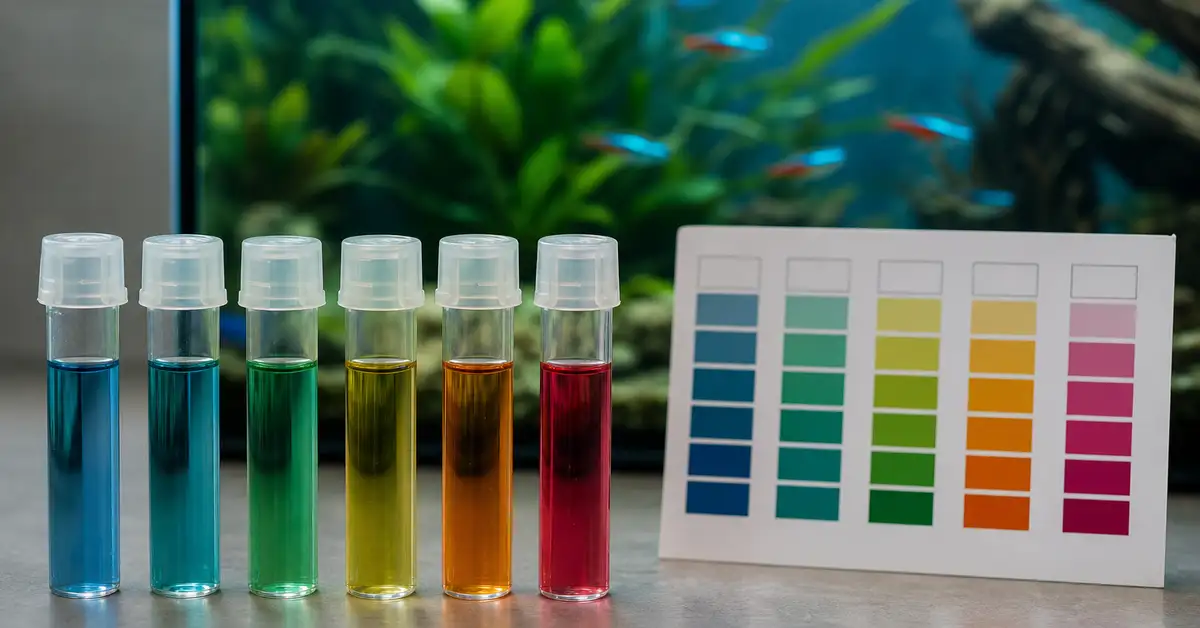
Use a liquid test kit rather than relying only on strips — the resolution matters here, and a strip’s color bands are harder to read precisely at the low levels you’re tracking. See our best aquarium test kits guide if you need to pick one. In the first week or two you should see ammonia climbing as your added food or ammonia builds up, with nitrite still at zero. That’s expected; it means the tank has an ammonia source, but the first group of bacteria hasn’t caught up yet.
5. Watch nitrite appear, then keep feeding the cycle
Somewhere around one to two weeks in, nitrite will start to appear as the first bacteria group establishes and begins converting ammonia. As ammonia falls, top it back up to your original 2-3 ppm target (or resume ghostfeeding) so the bacteria have a continued food source — don’t let the tank run dry of ammonia for long stretches, or you’ll stall your own progress. Nitrite often climbs for a week or two before it peaks; that’s normal and not a sign anything has gone wrong.
6. Wait for nitrite to fall as nitrate rises
Nitrite drops once the second bacteria group — the ones that convert nitrite into nitrate — has grown enough to keep pace. You’ll see nitrate readings climbing at the same time, which is a good sign: it means both halves of the cycle are working. Keep testing every couple of days and resist the urge to do large water changes at this stage unless nitrite spikes very high (above about 5 ppm), since diluting things too aggressively can slow the bacteria down further.
7. Confirm the cycle is actually complete
Don’t just eyeball it — dose a full test amount of ammonia (2-3 ppm) and check back 24 hours later. A cycled tank will show 0 ppm ammonia, 0 ppm nitrite, and measurable nitrate. If you get that result reliably, your biological filter is established and ready for its first fish.
8. Add fish gradually and keep testing
Add only a few hardy fish to start rather than your full stocking list, and keep feeding lightly for the first couple of weeks — the bacteria colony you’ve built is sized for the ammonia you were dosing, not necessarily a fully stocked tank overnight. Test ammonia and nitrite every day or two through this settling-in period, and only add more fish once readings stay at zero under the new bioload.
If you already have fish: a safer fish-in cycle
Sometimes fish-in cycling isn’t a choice — you’ve inherited fish, bought them before learning about cycling, or had a tank fail and need somewhere for them to go today. It’s riskier because ammonia and nitrite rise while your fish are actually in the water, but you can make it much safer. Stock very lightly at first (a single hardy fish per ten gallons is a reasonable starting point), feed sparingly, and test daily. Do a 25-50% water change any time ammonia climbs above about 0.2-0.25 ppm or nitrite becomes detectable at all — don’t wait for a scheduled water-change day. A dechlorinating conditioner that also temporarily binds ammonia and nitrite (check the label) buys your fish some safety margin between changes, though it isn’t a substitute for the water changes themselves. Seeding with established media, exactly as in step 2 above, helps enormously here too, since it shortens the whole risky window. If you’re setting up specifically for a betta, our betta care guide covers stocking and timeline specifics.
Signs your cycle has stalled — and how to fix it
If ammonia or nitrite readings sit unchanged for several weeks with no sign of progress, something in the tank’s environment is probably holding the bacteria back rather than the cycle being broken. The usual culprits are low pH (nitrifying bacteria slow down sharply below about pH 6.5 and stop almost entirely below 6.0), low temperature, chlorine or chloramine that wasn’t fully neutralized, overuse of ammonia-binding conditioners that starve the bacteria of their food source, or poor oxygenation. The fixes are generally the same things that support cycling in the first place: a partial water change to dilute toxins and restore some buffering capacity, nudging temperature back into the high 70s°F, adding aeration, and seeding with mature media if you can get hold of any. Avoid the temptation to deep-clean or replace filter media during a stall — that removes the bacteria you’re waiting on, not just the mess. If you’re mid fish-in cycle and see fish gasping at the surface, resting on the bottom, or breathing rapidly, that’s a sign of ammonia or nitrite stress specifically — vets call this pattern new tank syndrome — and it calls for an immediate water change, not more patience. A new or already-stressed tank is also a common trigger for outbreaks like ich or fin rot — see our guides on white spot (ich) — what to observe if you notice white spots, or fin rot — what to observe if you notice fraying or discolored fin edges.
Common cycling mistakes
- Adding fish the same day the tank is filled. Running equipment for 24-48 hours is not the same as cycling; there’s no bacteria colony yet regardless of how clear the water looks.
- Overdosing ammonia. More is not faster — pushing much past 3-5 ppm can inhibit the same bacteria you’re trying to grow.
- Cleaning filter media in tap water. Chlorine kills the colony you’ve built; rinse media in old tank water instead.
- Skipping the conditioner on a “just this once” basis. Every fill and every water change needs it, not just the first one.
- Giving up on a slow cycle. Most stalls have an identifiable, fixable cause (see above) rather than meaning the process has failed.
Frequently Asked Questions
General information only — not veterinary advice. If your fish show ongoing signs of stress or illness during or after cycling, consult an aquatic veterinarian.
Sources: Aquarium Co-Op: The Nitrogen Cycle · DrTim’s Aquatics: Fishless Cycling · PetMD: New Tank Syndrome · Chewy: Freshwater Aquarium Tank Cycling · Aqueon: Freshwater Water Quality & the Nitrogen Cycle · Aquarium Science: Bacteria in a Bottle, In Depth · Seachem: Stability · API Freshwater Master Test Kit