Most low-tech beginner tanks are limited by light and CO2 long before they’re limited by fertilizer — and over-dosing a dim, slow-growing tank buys algae, not growth. If your plants are melting or stalling and you haven’t checked your light and CO2 first, more fertilizer usually isn’t the fix. That said, once light and carbon are sorted, a genuine nutrient gap will cap your plants’ growth no matter what else you do right. We spec-verified 10 real fertilizer products against each manufacturer’s own guaranteed analysis, screened every one for CPSC recalls, and built this guide around the actual decision that matters: comprehensive liquid vs. a macro/micro split system, water-column feeding vs. root feeding, and whether your tank has shrimp or other copper-sensitive invertebrates in it.
Fertilizer probably isn’t your first bottleneck
Before spending on fertilizer, it’s worth saying plainly: in a typical beginner tank running a stock LED hood with no CO2 injection, light and carbon dioxide availability limit plant growth long before nutrients do. Adding more fertilizer to a light-starved tank doesn’t make plants grow faster — it just leaves unused nutrients in the water column for algae to use instead. If your plants are pale, stunted or covered in algae, check your light level and photoperiod (see our low-light plants guide for real PAR numbers) before assuming you need a stronger fertilizer. Once light and nutrients are sorted and you’re ready to add pressurized CO2, see our CO2 systems guide for how to do that safely.
Estimative Index vs. lean dosing — no tribal side, just the tradeoff
The two dominant philosophies for feeding a planted tank take opposite approaches to the same problem: how do you make sure plants never run short of a nutrient, when testing every parameter every day isn’t realistic?
Estimative Index (EI), developed and popularized by Tom Barr, deliberately doses nutrients in excess of what plants are likely to use, then resets the water chemistry with a large (typically 50%) weekly water change rather than chasing exact test-kit numbers. The logic: in a healthy, well-lit, CO2-supplemented tank, an excess of nitrate, phosphate and micronutrients isn’t what causes algae — instability and genuine deficiency are the more common triggers, and a weekly reset keeps any one nutrient from climbing indefinitely.
Lean dosing (the philosophy behind ADA’s Green Brighty line and most “just enough” liquid all-in-ones) takes the opposite bet: dose smaller amounts, closer to what the tank is actually expected to use, and rely on more frequent smaller doses rather than a big weekly correction. This suits lower-light, lower-CO2 tanks especially well, since a low-light tank’s plants simply can’t use EI-scale nutrient loads — the excess just sits in the water.
Neither approach is “right.” EI suits higher-light, CO2-injected tanks where consistent big water changes are already part of the routine; lean dosing suits low-tech, low-light and beginner tanks where smaller, steadier inputs are easier to manage and less likely to outpace what the plants can use. If you’re not sure which you are, you’re almost certainly in the lean-dosing category — start there.
The shrimp-and-copper question, answered honestly
Copper is an essential micronutrient for both plants and animals — it isn’t automatically dangerous to include in a fertilizer. The real question is concentration. Shrimp and other freshwater invertebrates (and snails) are more copper-sensitive than fish, which is why “shrimp-safe” claims exist as a real, meaningful distinction and not just marketing.
A commonly-cited toxicology reference (Chen & Lin, studying Penaeus monodon shrimp) found sub-lethal growth and molting effects starting around 0.45 mg/L copper and a maximum acceptable toxicant concentration near that level, with mortality effects emerging around 1.0 mg/L in that study. That’s a marine shrimp species, not a freshwater ornamental like Neocaridina or Caridina, so treat it as a directional reference point, not a precise freshwater-shrimp threshold — direct experimental data on copper toxicity in the shrimp species aquarium keepers actually stock is genuinely sparse. What we can say with more confidence, sourced to the manufacturers themselves: Seachem states directly that the copper in Flourish (0.0001% by weight) is small enough that “you would have to massively overdose before you would begin to approach an amount of copper that is toxic to even the most sensitive animals,” and notes tap water commonly contains more copper than the product itself. NilocG formulates Thrive S as explicitly copper-free for exactly this reason — not because trace copper is inherently unsafe, but because it removes the variable entirely for anyone keeping sensitive invertebrates who’d rather not do the math.
The practical rule: if you keep shrimp, snails, or other invertebrates and want one less thing to think about, choose an explicitly copper-free or invertebrate-safe product (Thrive S below, or Flourish/Flourish Trace, which Seachem states are shrimp-safe at labeled doses). If you’re using a comprehensive all-in-one that does contain trace copper, dose as labeled and don’t stack multiple copper-containing products at once.
Nitrate as fertilizer vs. nitrate as a waste metric — the confusion that trips up beginners
New planted-tank keepers often carry over a rule from fishless-cycling and community-tank care: “nitrate should be low.” That rule exists because in a non-planted tank, nitrate is purely a waste product of the nitrogen cycle, and letting it climb unchecked stresses fish. In a planted tank, nitrate is also a primary plant macronutrient — the same molecule, but now serving double duty as both a fish-safety metric and a fertilizer input your plants are actively consuming. A heavily-planted, well-fertilized tank can show near-zero nitrate not because nothing is producing it, but because plants are absorbing it as fast as it’s dosed (2Hr Aquarist calls this “zero-bound stability” on their nitrate-limiting APT3 formula, and treats a 0 ppm reading on that product as a sign of balance, not deficiency). The takeaway: in a planted tank, don’t chase a universal “nitrate should be under X” number the way you would in a non-planted community tank — read it in the context of your plant mass and dosing routine, not in isolation.
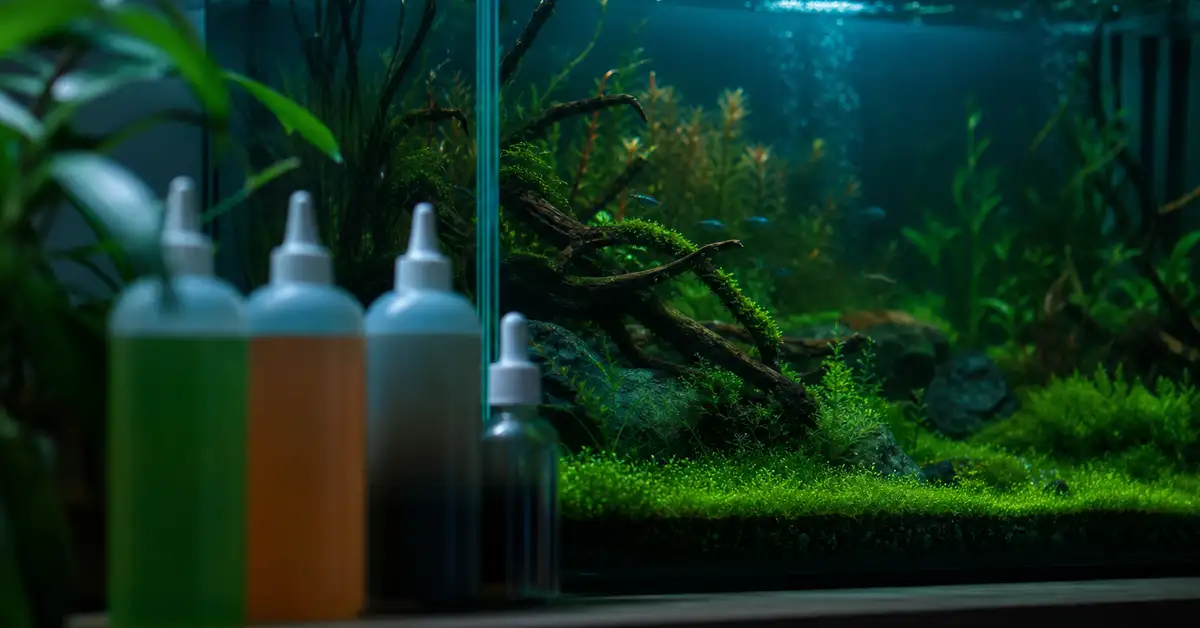
Last updated August 2026. This guide sits alongside our substrate guide (the other half of feeding root-feeding plants), our low-light plants guide and beginner plants guide (know what you’re feeding before you decide how), and our water parameters reference (for the nitrogen-cycle context above). New tank? Cycle it first — see how to cycle a fish tank.
Quick comparison
| Fertilizer | Type | Shrimp/invert safe? | Best for | Price band |
|---|---|---|---|---|
| 1. Aquarium Co-Op Easy Green | Liquid all-in-one | Yes (labeled) | Best overall / easiest start | $$ |
| 2. NilocG Thrive | Liquid all-in-one (EI-based) | Contains trace Cu (0.0002%) | Best value all-in-one | $ |
| 3. Seachem Flourish + Flourish Trace | Macro/micro split | Yes (labeled) | Best for building your own system | $$ |
| 4. 2Hr Aquarist APT3 | Liquid all-in-one (nitrate-limiting) | Contains trace Cu (not disclosed) | Best for algae control & color | $$ |
| 5. NilocG Thrive S | Liquid all-in-one | Yes — copper-free by design | Best shrimp-safe all-in-one | $ |
| 6. Aquarium Co-Op Easy Root Tabs | Root tabs | Yes (labeled) | Best root tabs | $$ |
| 7. API Root Tabs | Root tabs | Not specifically labeled | Best budget root tabs | $ |
| 8. NilocG NPK + CSM+B Dry Salt Package | Dry salts (DIY EI) | Depends on mix — CSM+B contains Cu | Best dry-salt DIY EI option | $$ |
| 9. ADA Green Brighty Neutral K | Potassium-only liquid | Not specifically labeled | Best potassium-only, high-tech add-on | $$ |
| 10. API Leaf Zone | Iron + potassium liquid | Not specifically labeled | Best budget liquid supplement | $ |
The 10 best aquarium plant fertilizers (2026)
Transparency first: This guide contains affiliate links. If we’re enrolled in an affiliate program, we may earn a commission at no extra cost to you — it never affects how we research or rank. Read our full affiliate disclosure policy.
1. Aquarium Co-Op Easy Green — Best Overall
Easy Green is the single easiest recommendation for a first fertilizer: one bottle, one measuring cap, dosed weekly, no separate macro/micro juggling. It’s explicitly labeled fish-, shrimp- and snail-safe, and the manufacturer’s guaranteed analysis (water-soluble nitrogen 2.66%, available phosphate 0.46%, soluble potash 9.21%, water-soluble magnesium 0.036%, plus iron and trace elements) puts it squarely in comprehensive all-in-one territory.
Best for: beginners who want one product, one dosing schedule, and don’t want to think about macro/micro ratios yet.
Key specs: comprehensive liquid all-in-one · labeled safe for fish, shrimp and snails · dosed weekly via the bottle’s built-in measuring cap · sold in a 500 mL bottle.
Pros: genuinely simple dosing, strong brand track record in the hobby.
Cons: a single all-in-one can’t be tuned per-nutrient the way a split system can if you outgrow it.
Price band: $$ · Evidence: guaranteed analysis and safety claims verified against Aquarium Co-Op’s own product page (aquariumcoop.com); no recall found for this product in our October 2026 CPSC search.
2. NilocG Thrive — Best Value All-in-One
Thrive is built around EI-style comprehensive dosing in a single bottle, at a lower per-bottle price than several comparable all-in-ones. NilocG publishes a full guaranteed analysis directly on the product page — total nitrogen 2.56%, available phosphate 1.58%, soluble potash 9.74%, iron 0.42%, plus magnesium, calcium, sulfur, boron, manganese, molybdenum, zinc and a disclosed copper level of 0.0002%.
Best for: budget-conscious beginners and intermediate keepers who want EI-style dosing without buying separate macro and micro bottles.
Key specs: comprehensive liquid, EI-based formulation · full nutrient breakdown published by the manufacturer, including disclosed trace copper (0.0002%) · available in 500 mL, 2 L and 4 L sizes.
Pros: genuinely detailed, manufacturer-published label data; scales well from a single nano tank to a large collection via the bigger refill sizes.
Cons: contains disclosed trace copper — fine for most tanks, but choose Thrive S instead (below) for a dedicated shrimp/invert tank.
Price band: $ · Evidence: full guaranteed analysis published on nilocg.com (manufacturer’s own site); no recall found for this product in our October 2026 CPSC search.
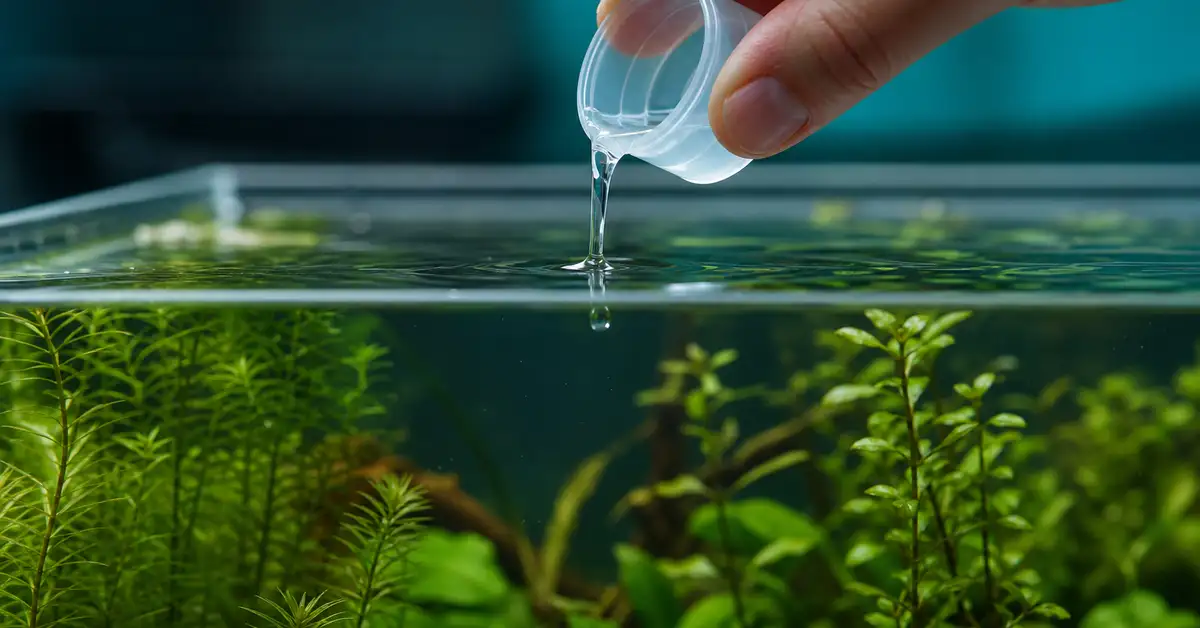
3. Seachem Flourish + Flourish Trace — Best for Building Your Own Macro/Micro System
Flourish is Seachem’s comprehensive micro/trace-element base — deliberately light on nitrogen and phosphorus so you add macro nutrients separately with Flourish Nitrogen, Flourish Phosphorus or Flourish Potassium as your tank needs them, rather than getting a fixed ratio baked into one bottle. Flourish Trace supplies the fast-depleting trace elements (boron, cobalt, copper, manganese, molybdenum, zinc, plus rubidium, nickel and vanadium) on a separate, more frequent dosing schedule, letting you dose trace elements without doubling up on Flourish’s organic base. This is the honest entry point into a real macro/micro split system rather than an all-in-one.
Best for: keepers who want to dose macro and micro nutrients independently and tune each based on what their specific tank actually needs.
Key specs: Flourish: comprehensive micro/trace base, low N-P-K by design (per Seachem: phosphate content is low enough to be “completely negligible” for algae risk at labeled doses) · Flourish Trace: concentrated trace-element supplement dosed on alternate days from Flourish · both explicitly labeled safe for invertebrates including shrimp by the manufacturer.
Pros: full manufacturer-published guaranteed analysis for both products, genuine flexibility to under- or over-dose specific nutrients as your tank’s plant mass changes, one of the longest track records in the hobby.
Cons: two bottles and two schedules instead of one; you do need to add a macro supplement (Flourish Nitrogen/Phosphorus/Potassium) separately if your tank is nitrogen- or phosphorus-limited.
Price band: $$ · Evidence: guaranteed analysis for both products published on seachem.com (manufacturer’s own site), including Seachem’s own FAQ confirming shrimp safety and the specific copper content (Flourish 0.0001%, Flourish Trace 0.0032%); no recall found for this product in our October 2026 CPSC search.
4. 2Hr Aquarist APT3 — Best for Color & Algae Control
APT3 is a comprehensive macro/micro/trace all-in-one with a deliberately nitrate-limiting ratio, engineered (per the manufacturer) to bring out deeper reds in species like Rotala rotundifolia while keeping algae risk low in tanks with a moderate-to-high plant mass. The manufacturer’s published guaranteed analysis: total nitrogen 0.75%, available phosphoric acid 0.69%, soluble potash 4.52%, magnesium 1.10%, chelated iron 0.12%.
Best for: plant-heavy, fish-light tanks where color and algae control matter more than raw growth speed; 2Hr Aquarist explicitly positions their APT1 formula instead for newer, more heavily-stocked tanks.
Key specs: comprehensive liquid, nitrate-limiting formulation · manufacturer states a well-planted tank on APT3 will often read 0 ppm nitrate by design (“zero-bound stability”), not deficiency · dosed daily rather than weekly.
Pros: published guaranteed analysis directly from the manufacturer, genuinely different positioning from a flat all-in-one (color + algae control, not just growth), daily small doses are gentler on a stable tank than one big weekly dose.
Cons: daily dosing is more routine than a once-a-week product; the manufacturer’s page does not disclose a copper percentage, so we can’t spec-verify trace copper content the way we can for Flourish or Thrive.
Price band: $$ · Evidence: guaranteed analysis and dosing philosophy verified against 2hraquarist.com (manufacturer’s own site); no recall found for this product in our October 2026 CPSC search.
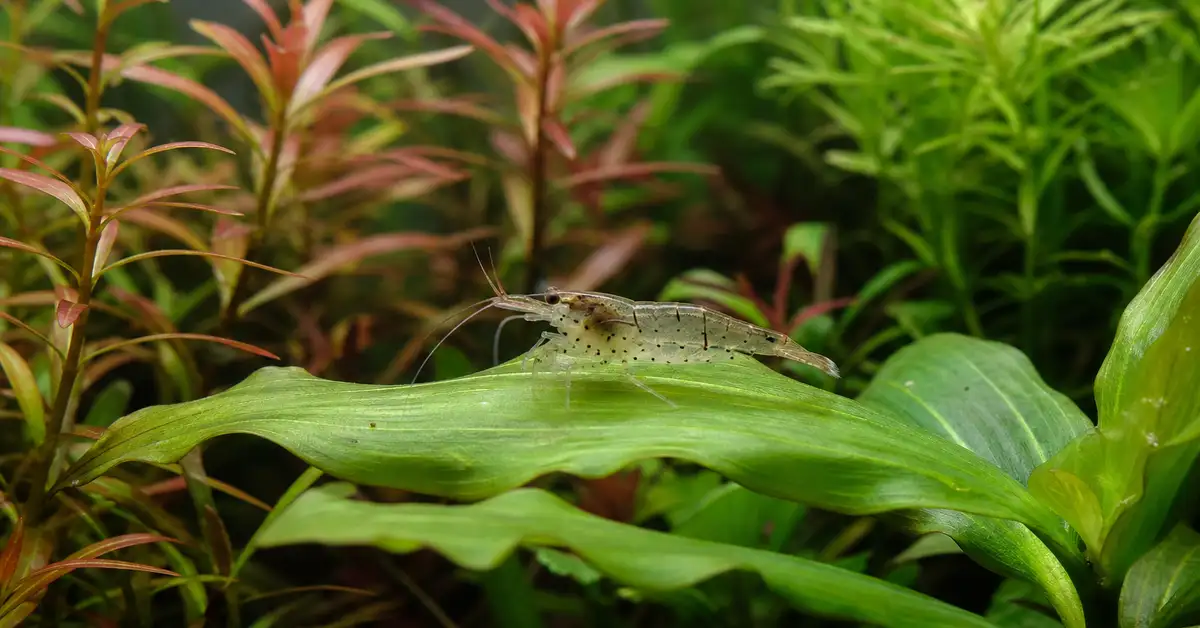
5. NilocG Thrive S — Best Shrimp-Safe All-in-One
Thrive S is NilocG’s comprehensive all-in-one reformulated specifically for shrimp tanks: the manufacturer states plainly that while copper is a required nutrient for shrimp too, they’re unusually sensitive to excess, and a well-fed shrimp typically gets what it needs from diet — so Thrive S removes copper from the formula entirely rather than relying on a “trace amount is fine” argument. The published guaranteed analysis (total nitrogen 0.43%, available phosphate 0.14%, soluble potash 5.5%, iron 0.38%, plus magnesium, calcium, sulfur, boron, manganese, molybdenum and zinc) lists no copper compound in the derived-from ingredient list.
Best for: dedicated shrimp tanks, or any planted tank where you’d rather not think about copper math at all.
Key specs: comprehensive liquid all-in-one, explicitly copper-free formulation · dosed 1 pump per 5 gallons, 1–3× weekly · available in 500 mL, 2 L and 4 L sizes.
Cons: a genuinely copper-deficient tank (rare, but possible in a heavily-planted, no-water-change system) would need copper from another source eventually — not a concern for the vast majority of shrimp keepers doing normal water changes.
Pros: removes the one variable shrimp keepers worry about most, same easy single-bottle dosing as standard Thrive.
Price band: $ · Evidence: guaranteed analysis and copper-free formulation confirmed on nilocg.com (manufacturer’s own site); no recall found for this product in our October 2026 CPSC search.
6. Aquarium Co-Op Easy Root Tabs — Best Root Tabs
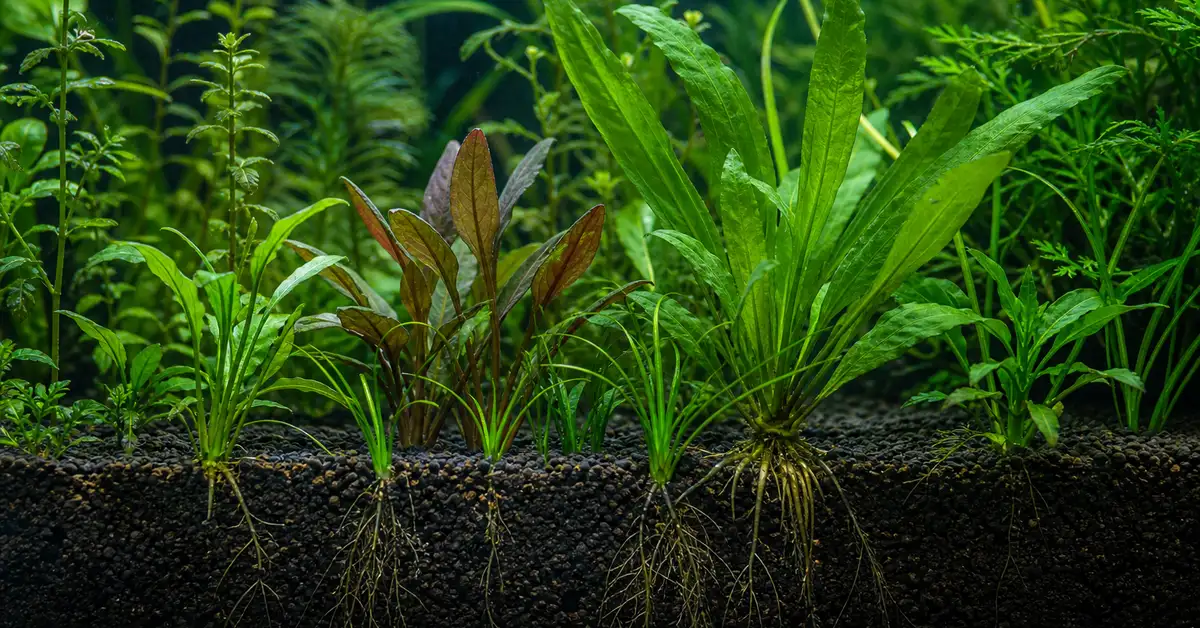
Root tabs solve a real problem liquid fertilizer can’t: root-feeding plants (crypts, swords, vallisneria) pull nutrients directly from the substrate, and a liquid dosed into the water column doesn’t reliably reach root zones, especially in a deep or heavily-capped substrate. Easy Root Tabs are pressed with mineralized topsoil (including red clay) rather than ammonia-based binders, which the manufacturer states avoids the harmful water-column spike some root tabs cause if a bottom-dwelling fish or shrimp uncovers one.
Best for: any tank with root-feeding plants in a plain gravel or thin substrate that doesn’t already carry nutrients (see our substrate guide for which substrates already handle this for you).
Key specs: pressed mineralized-topsoil root tabs, no ammonia-based ingredients · labeled safe for fish, shrimp and snails · sold as 60 tablets, typically replaced monthly.
Pros: addresses root feeders specifically rather than hoping water-column dosing reaches the substrate, non-ammonia formulation reduces the water-column-spike risk if uncovered.
Cons: doesn’t help epiphyte or floating plants at all — pair with a water-column liquid (picks 1–5 above) for a mixed-planting tank.
Price band: $$ · Evidence: formulation and safety claims verified against Aquarium Co-Op’s own product page (aquariumcoop.com); no recall found for this product in our October 2026 CPSC search.
7. API Root Tabs — Best Budget Root Tabs
API Root Tabs are a budget root tab sold in small 10-count boxes that make them easy to buy exactly as many as you need for a single tank. The product’s printed guaranteed-analysis label — N-P-K-Fe 3-1-1 with 5% chelated iron — is reproduced verbatim on That Pet Place’s own product listing, the same retailer whose label reproduction we cite for API Leaf Zone (pick 10) elsewhere on this list, so treat that figure as sourced to a named retailer’s label reproduction and confirm on your own box before dosing precisely.
Best for: a first root-tab purchase, or topping off a single small tank without committing to a 60-count bag.
Key specs: reported N-P-K 3-1-1 with ~5% water-soluble iron (see sourcing caveat above) · sold in small 10-tablet boxes.
Pros: cheap, small-commitment package size.
Cons: not specifically labeled shrimp/invert-safe the way Aquarium Co-Op’s or Seachem’s products are; the guaranteed-analysis figures above come from a named retailer’s label reproduction (That Pet Place), not a manufacturer-hosted label page.
Price band: $ · Evidence: existence and current availability confirmed via multiple US pet retailers; guaranteed-analysis figures (N-P-K-Fe 3-1-1, 5% Fe) verified against That Pet Place’s product listing, which reproduces the printed label verbatim; no recall found for this product in our October 2026 CPSC search.
8. NilocG NPK + CSM+B Dry Salt Package — Best Dry-Salt DIY EI Option
For keepers who’ve done the arithmetic, dry salts are the cheapest way to dose by a wide margin — you’re buying the raw nutrient compounds instead of paying for bottling, water and shipping weight. NilocG’s package ships exactly what a DIY Estimative Index mix needs: potassium nitrate (KNO3) for nitrogen and potassium, monopotassium phosphate (KH2PO4) for phosphorus, potassium sulfate (K2SO4), and a CSM+B (Chelated Micronutrient Mix + Boron) trace-element blend, with an optional GH booster.
Best for: higher-light, CO2-injected tanks already running true EI dosing, or anyone maintaining several tanks where bottled liquid cost adds up fast.
Key specs: raw dry-salt macro and micronutrient package (KNO3, KH2PO4, K2SO4, CSM+B) · sized for EI-style dosing with weekly ~50% water changes · requires you to dissolve and dose your own solutions rather than pump from a bottle.
Pros: dramatically lower cost per dose than any bottled liquid on this list, full control over exact nutrient ratios.
Cons: CSM+B micronutrient blends do contain copper as a standard trace ingredient — not disclosed at a specific percentage on this package’s page, so if you’re mixing this into a shrimp tank, verify the CSM+B copper content or use a copper-free trace mix instead; not remotely beginner-friendly if you’ve never mixed your own solutions before.
Price band: $$ · Evidence: package contents (KNO3/KH2PO4/K2SO4/CSM+B) confirmed on nilocg.com (manufacturer’s own site); no recall found for this product in our October 2026 CPSC search.
9. ADA Green Brighty Neutral K — Best Potassium-Only, High-Tech Add-On
Aqua Design Amano’s Green Brighty Neutral K is a single-nutrient potassium supplement built for lean-dosing, high-tech aquascapes — the manufacturer states it supplies potassium without raising pH or carbonate hardness (KH), which matters in ADA-style setups running soft, acidic water over aquasoil. It’s a genuine lean-dosing counterpart to the EI dry-salt package above: instead of front-loading nutrients and resetting weekly, you dose small and often, tuned to exactly what the tank needs.
Best for: ADA-style aquascapes and other soft-water, high-tech tanks where a KH-neutral potassium source matters, or as a precise add-on to a comprehensive fertilizer that’s running light on potassium specifically.
Key specs: single-nutrient potassium liquid, does not raise pH or KH per the manufacturer · part of ADA’s modular Green Brighty line (separate nitrogen, iron and trace-element products sold individually) · sold in 180 mL and 300 mL sizes.
Pros: precise, single-purpose dosing for keepers who already know what their tank is short of; consistent with the broader ADA lean-dosing philosophy.
Cons: not a starting point — you need another product (or a test kit and some experience) to know potassium specifically is what’s missing; not labeled for invertebrate safety one way or the other.
Price band: $$ · Evidence: product description and KH-neutral claim confirmed via an authorized US ADA distributor’s product page; no recall found for this product in our October 2026 CPSC search.
10. API Leaf Zone — Best Budget Liquid Supplement
Leaf Zone is a deliberately narrow, inexpensive supplement — it supplies only chelated iron and potassium, with no nitrogen or phosphorus at all. That makes it a genuinely different tool from the comprehensive all-in-ones above: useful for topping off iron and potassium specifically in a lightly-planted, fish-fed tank where nitrogen and phosphate are already covered by fish waste, rather than as a standalone fertilizer for a heavily-planted tank.
Best for: a lightly-planted community tank that just needs an iron/potassium boost, or as a cheap way to test whether iron deficiency (pale new growth) is your actual problem before buying a full comprehensive fertilizer.
Key specs: guaranteed analysis 0-0-3 (no N, no P) — soluble potash (K2O) 3.00%, iron (Fe) 0.10% (fully chelated) · derived from potassium sulfate and iron EDTA · dosed weekly via a built-in cap.
Pros: cheap, honest about what it does and doesn’t provide.
Cons: not a complete fertilizer — a heavily-planted tank with real nitrogen/phosphorus demand will stall on this alone; not specifically labeled invertebrate-safe.
Price band: $ · Evidence: guaranteed analysis cross-verified against the printed label as reproduced by two independent US pet retailers (That Pet Place, Aquarium Direct); no recall found for this product in our October 2026 CPSC search.
How to actually choose, in one paragraph
New to fertilizing and don’t have shrimp: start with Easy Green or NilocG Thrive (picks 1–2) and add Easy Root Tabs (pick 6) if you have root-feeding plants like crypts or swords. Have shrimp or other sensitive invertebrates: Thrive S (pick 5), or the Flourish/Flourish Trace split system (pick 3), both explicitly labeled safe by their manufacturers. Chasing color and algae control on an already-established, plant-heavy tank: APT3 (pick 4). Running a genuine high-tech, CO2-injected, EI-dosed setup: the dry-salt package (pick 8) is dramatically cheaper per dose once you’re comfortable mixing your own solutions. Just need one specific nutrient topped off: Leaf Zone for iron/potassium (pick 10) or Green Brighty Neutral K for potassium alone in a lean-dosing setup (pick 9).
What we can’t verify
We haven’t run side-by-side growth trials of these 10 products in our own tanks — the guaranteed-analysis figures and safety claims above come directly from each manufacturer’s own product pages or, where a manufacturer’s page didn’t render a full label table for us (API Root Tabs, ADA Green Brighty Neutral K), from a named secondary source, flagged as such in that pick’s evidence line. Copper toxicity thresholds for the specific freshwater ornamental shrimp species aquarium keepers actually stock (Neocaridina, Caridina) are not well-established in the literature we could find; the toxicology figure we cite is from a study on a marine shrimp species and should be read as directional context, not a precise freshwater threshold. Guaranteed-analysis percentages can change between product batches or reformulations — always check the label on the bottle or box you actually receive.
Frequently Asked Questions
General information only, not veterinary or aquatic-health advice — if you have concerns about a specific animal’s health, consult an aquatic veterinarian. Always confirm the current guaranteed analysis on the actual product label you receive, since formulations can change between batches.
Sources: Aquarium Co-Op: Easy Green Product Page · Aquarium Co-Op: Easy Root Tabs Product Page · NilocG: Thrive Guaranteed Analysis · NilocG: Thrive S Guaranteed Analysis · NilocG: EI Dry Salt Package · Seachem: Flourish (Guaranteed Analysis & Shrimp-Safety FAQ) · Seachem: Flourish Trace (Guaranteed Analysis) · 2Hr Aquarist: APT3 Guaranteed Analysis · 2Hr Aquarist: Analysis of the Estimative Index (EI) Method · Aqua Forest Aquarium (Authorized ADA Distributor): Green Brighty Neutral K · That Pet Place: API Root Tabs Guaranteed Analysis · That Pet Place: API Leaf Zone Guaranteed Analysis · Chen & Lin: Copper Toxicity in Penaeus monodon Shrimp · US CPSC: Recalls (October 2026 search; no recall found for any recommended product)