Written by Michael Probert, a research-led fishkeeper — not a lab or an aquatic vet. See our How We Choose methodology. This guide is general information, not veterinary or aquatic-health advice.
For most beginners, build low-tech first: no injected CO2, moderate light, a slower-growing but far more forgiving tank that survives a missed week without falling apart. Go high-tech only once you already want a specific look or growth rate that low-tech genuinely can’t give you — a dense carpet, fast-growing stem plants, or a competition-style aquascape — and you’re ready to commit to daily attention and roughly $200–$300 of extra equipment. Below is the honest breakdown of cost, time, failure modes and what high-tech actually buys you, so you can see exactly what changes the answer.
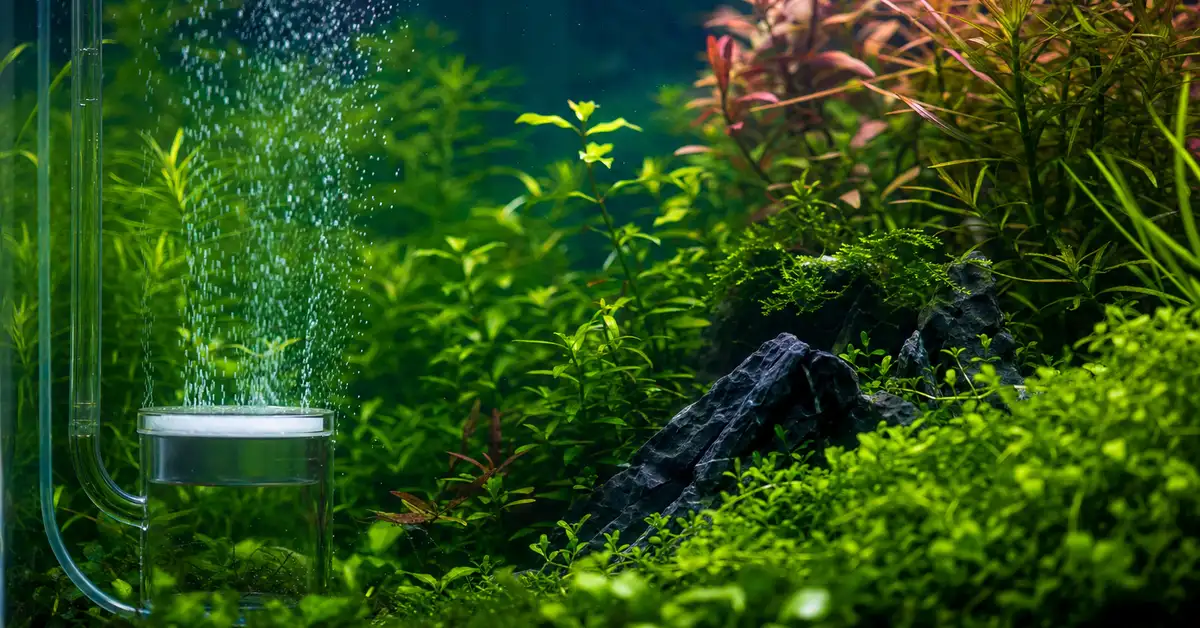
What “low-tech” and “high-tech” actually mean
Neither term describes the tank size or how it looks on day one — both describe how the plants get their carbon. A low-tech planted tank relies on the CO2 already dissolved in tap water plus whatever the surface picks up from gas exchange with the air. Light is usually moderate, growth is unhurried, and the plant list leans on hardy, low-light species — the kind covered in our low-light aquarium plants guide and our broader beginner plants guide. A high-tech tank adds pressurized or DIY CO2 injection, almost always paired with brighter light to make use of it, which unlocks faster growth, a wider plant palette and denser carpets — but it also raises the stakes, because light and CO2 have to stay roughly in balance or algae wins. Neither approach is “better” in the abstract; they’re two different tools for two different goals, and the honest answer to “which is right” depends far more on how much weekly attention you actually want to give the tank than on which one looks better in a photo.
Cost of ownership over a year
Low-tech is the cheaper build and the cheaper year. Beyond the tank, filter, heater and light every planted setup needs anyway, a low-tech tank typically adds only occasional root tabs or a light liquid fertilizer — see our plant fertilizer guide for dosing that fits a slow-growing tank — with no CO2 hardware, no gas refills and no extra electricity for a high-output light.
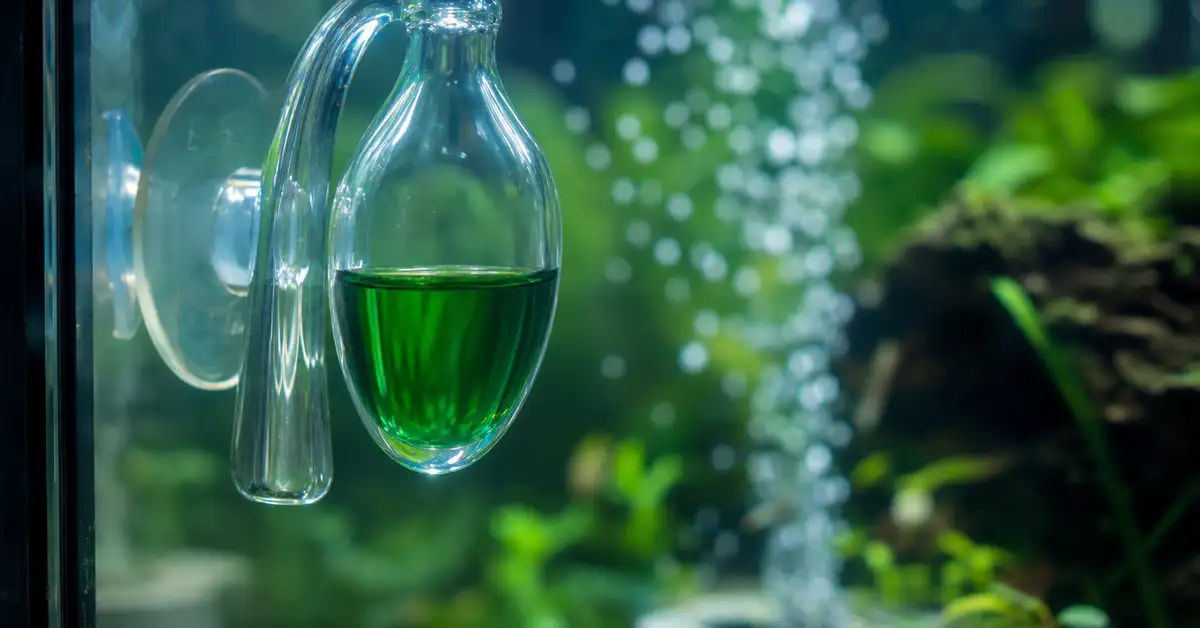
High-tech adds a real up-front cost: a complete pressurized CO2 setup (cylinder, regulator, solenoid, diffuser and a drop checker to monitor it) typically runs in the region of $200–$300 for a beginner-appropriate kit, per CO2ART’s own buyer’s comparison, on top of the brighter light most high-tech tanks need to make good use of the extra carbon. After that, ongoing costs are smaller but recurring — CO2 refills, replacement diffusers and drop-checker solution, and a heavier fertilizer routine because faster-growing plants pull through nutrients faster. Some keepers cut the up-front number with a DIY yeast-and-sugar CO2 setup instead of a pressurized system, which trades a lower purchase price for less consistent, less controllable CO2 output — a reasonable way to try high-tech cheaply, not a like-for-like substitute for a regulated system once you’re committed to it.
Time and maintenance, week to week
This is the difference that matters most day to day, and it’s less about total hours than about how forgiving a missed day is. Low-tech maintenance is genuinely weekly: a water change, a trim if things have grown, a glance at the plants. Miss a day here or there and nothing dramatic happens.
High-tech maintenance is closer to daily, even if each check only takes a minute: confirming the CO2 is actually running on schedule, reading the drop checker’s color, watching for any sign of gas building up overnight, and trimming more often because growth is genuinely faster. Rooted Tank’s comparison of the two approaches puts it plainly — low-tech tanks need attention on a roughly weekly cadence, where high-tech tanks call for daily observation and adjustment because light, CO2 and nutrients all have to stay in a moving balance rather than a simple maintenance schedule.
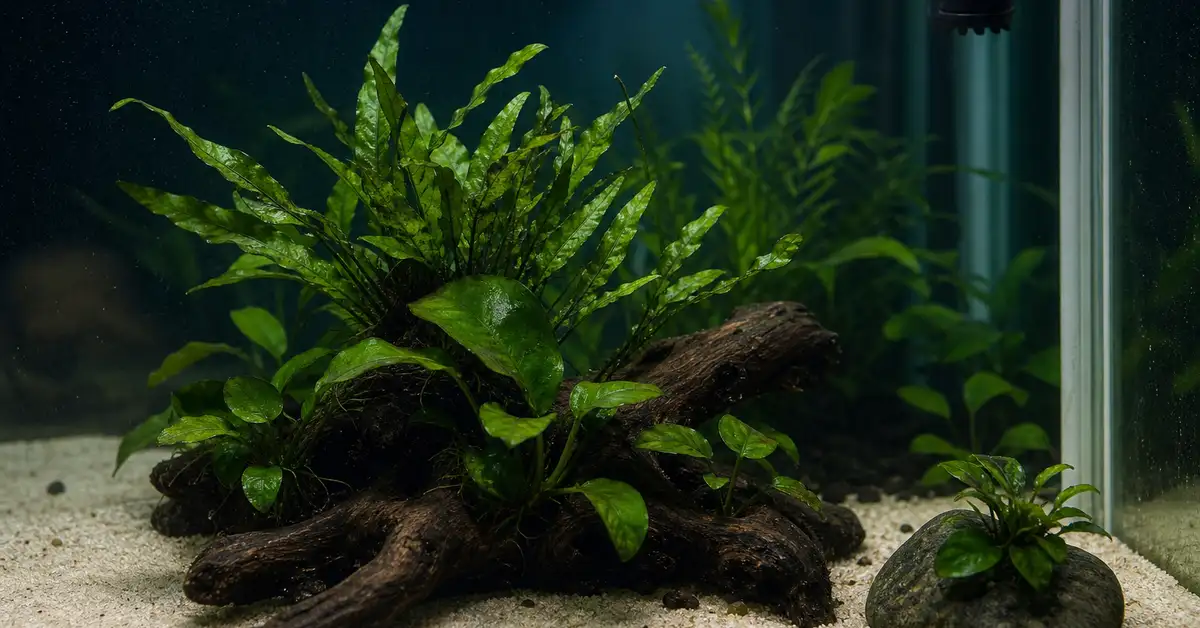
What happens when life gets in the way
This is where the two approaches diverge most sharply, and it’s the honest reason we recommend low-tech first for most readers. A low-tech tank left alone for a week is barely a risk — growth just slows a little further while you’re away. A high-tech tank left unmonitored is a genuinely different situation: light and CO2 keep running on their timers with nobody there to correct a drifting balance, and The 2Hr Aquarist’s own guidance for keepers going away is to either arrange careful cover (a big water change and a week’s fertilizer dosed before leaving, CO2 and light left on their normal timer) or, for trips longer than about a week, to turn CO2 off entirely and accept slower growth while you’re gone, since the plants will tolerate a CO2-free week far better than an unbalanced one. Canton Aquatics’ vacation guidance for planted tanks lands on the same practical point: an imbalance between light, CO2 and nutrients — not any one factor alone — is what tips an unattended high-tech tank toward an algae bloom, and keepers who’ve tracked it report exactly that outcome (lights and CO2 running with no fertilizer dosing) within about five days.
None of this means high-tech is reckless — keepers run high-tech tanks through vacations all the time. It means a high-tech tank asks for a plan before you leave, where a low-tech tank generally doesn’t need one.
What high-tech actually buys you
To be fair to the high-tech side: it isn’t just more equipment for its own sake. Injected CO2 removes carbon as the limiting factor on growth, which is what makes a dense, uniform carpet plant, fast-growing red or fine-leaved stem plants, and the lush, quick-filling look of a competition-style aquascape realistically achievable on a normal timeline. Every plant in our beginner plants guide and low-light plants guide grows well without any of that — but if the specific look or growth speed you want genuinely depends on it, that’s the legitimate reason to go high-tech, not “because more equipment must be better.” See our best CO2 systems for planted tanks guide when you’re ready to choose hardware, and our how to aquascape a planted tank guide for the layout process either way.
CO2 safety, in plain terms
If you do go high-tech, the safety margin is smaller than most first-timers expect, and it’s worth being direct about it: plants only consume CO2 while they’re photosynthesizing under light, so gas left running into the dark hours has nowhere to go and can build up in the water overnight. Aquarium Co-Op’s own guidance on CO2 in planted tanks is to run it on a timer that starts roughly an hour before the lights come on and shuts off roughly an hour before they go off, precisely so it isn’t accumulating unchecked overnight. A green drop checker at midday is a useful spot-check, but The 2Hr Aquarist has documented tanks where a green checker at noon still coincided with fish gasping at the surface by evening — CO2 had been building past the ideal range for hours by the time it showed up as a problem. If you ever see fish gasping at the surface, turn the CO2 off immediately and increase surface agitation to help the excess gas escape; treat it as an emergency response, not a wait-and-see situation. This is general information, not veterinary or aquatic-health advice — if a fish is in ongoing distress, an aquatic veterinarian or a reputable fish-health resource is the right next step, not a guess from a forum thread.
Low-tech vs high-tech at a glance
| Low-tech | High-tech | |
|---|---|---|
| CO2 | None injected — relies on tap water + surface gas exchange | Pressurized or DIY injection, timed with the light |
| Light | Low to moderate | Moderate to high, matched to the CO2 level |
| Up-front cost | Tank, filter, heater and light only | Adds roughly $200–$300 for a beginner CO2 kit |
| Ongoing cost | Occasional root tabs or light dosing | CO2 refills + a heavier fertilizer routine |
| Weekly time | Weekly water change + occasional trim | Daily checks on CO2, growth and balance |
| Forgiveness of a missed week | High — growth just slows | Low — needs a plan before you leave |
| Plant palette | Hardy, low-light species | Wider — carpets, fast stems, color-demanding species |
| Best for | Most beginners; anyone who travels or has a busy week | Keepers chasing a specific dense/competition look |
So, which should you build?
Build low-tech first if any of this sounds like you: it’s your first planted tank, you travel or have unpredictable weeks, you’d rather spend on the tank itself than on CO2 hardware, or you’re honestly not sure yet whether you’ll stay interested in the hobby. You’ll still get a genuinely attractive, thriving planted tank — slower, not lesser.
Go high-tech, or upgrade a low-tech tank into one later, once you know specifically what you’re chasing that low-tech can’t give you — a particular carpet plant, faster growth, or a denser competition-style look — and you’re willing to check the tank daily and plan ahead before any trip. That’s a real, common upgrade path, not a sign the low-tech tank was a mistake; most high-tech keepers we’ve read learned the basics on a low-tech tank first.
Frequently Asked Questions
General information only, not veterinary or aquatic-health advice — if a fish is in ongoing distress, consult an aquatic veterinarian rather than waiting on a forum reply.
Sources: CO2Art: Low-Tech vs High-Tech Planted Aquarium · Rooted Tank: Low-Tech vs High-Tech Planted Tank · The 2Hr Aquarist: Gasping Fish and CO2 · The 2Hr Aquarist: Preparing a Planted Tank Before Leaving for a Holiday · Aquarium Co-Op: CO2 in Planted Aquariums · Canton Aquatics: Going on Vacation — How to Keep Your Planted Tank Alive While You’re Away