There’s no single “correct” aquarium temperature — it depends entirely on what you keep. Coldwater goldfish do best at 65–75°F, most tropical community fish want 72–80°F, and warmth-loving species like discus need 82–86°F. Mixing incompatible temperature needs — goldfish with tropical fish is the classic beginner mistake — forces one species into conditions it isn’t built for. Here’s what your specific fish actually need, and why stability matters as much as the exact number.
Quick reference by species
| Species | Temperature range | Category |
|---|---|---|
| Betta fish | 76–81°F | Tropical |
| Goldfish (fancy & common) | 65–75°F | Coldwater |
| Neon tetras | 70–78°F | Tropical |
| Guppies | 72–82°F | Tropical |
| Corydoras catfish | 72–78°F (species-dependent) | Tropical |
| Platies | 70–80°F | Tropical |
| Mollies | 72–78°F | Tropical |
| Zebra danios | 65–75°F | Hardy / sub-tropical |
| Angelfish | 76–84°F | Tropical |
| Discus | 82–86°F | Warm-water specialist |
| African cichlids (Malawi) | 76–82°F | Tropical |
| African cichlids (Tanganyika) | 75–81°F | Tropical |
| Neocaridina shrimp | 65–80°F (72–76°F optimal) | Tropical, wide-tolerant |
| Live aquarium plants (most common) | 68–82°F (72–78°F ideal) | N/A |
These are typical ranges, not absolutes — always check the specific needs of the individual species you keep, since ranges can vary within a genus. New to fishkeeping? Start with our betta fish care guide or our water parameters reference.
Coldwater vs. tropical: why you can’t mix goldfish with tropical fish
Goldfish are coldwater fish, comfortable around 65–75°F, while most tropical community fish want 72–82°F — there’s only a narrow overlap, and it’s not a comfortable one for either group. This is one of the most common beginner mistakes in the hobby: a goldfish kept at true tropical temperatures has its metabolism sped up, which means it eats more, produces more waste, and by most accounts has a shortened lifespan compared to one kept properly cool. Tropical fish forced into cooler goldfish-appropriate water, meanwhile, become sluggish and more vulnerable to stress and disease. On top of the temperature mismatch, goldfish are also messy, fast-growing, and will often eat small tropical fish outright — the honest answer for almost every beginner is to keep goldfish and tropical community fish in separate tanks.
Tropical community tanks: the 72–80°F sweet spot
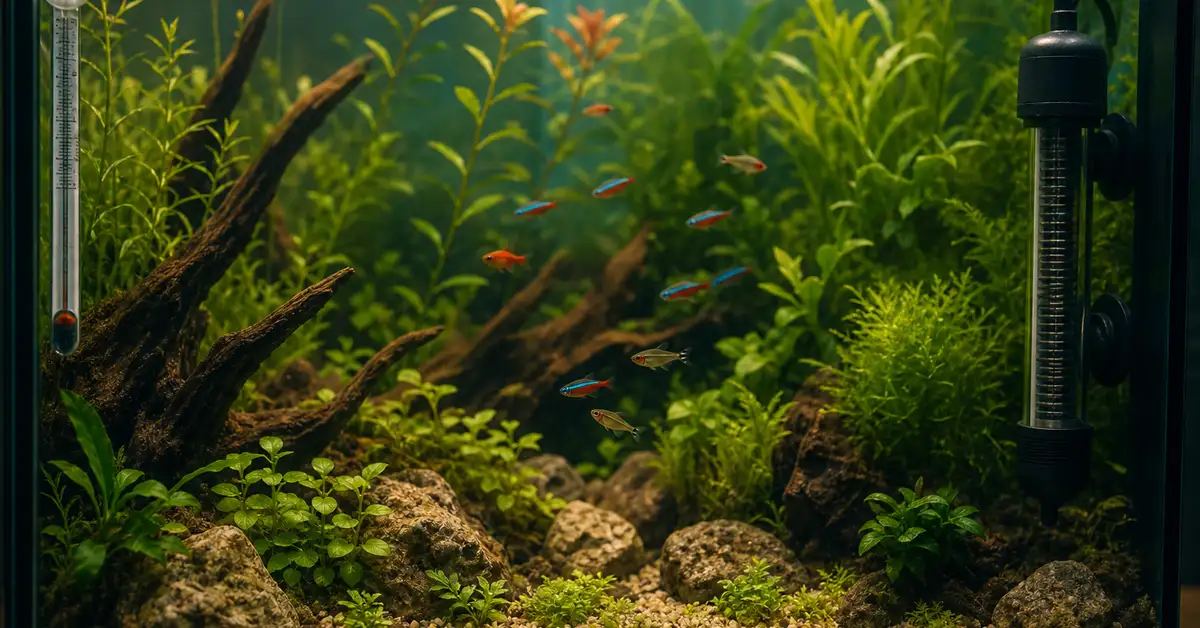
Most of the fish beginners actually keep — bettas, tetras, guppies, platies, mollies, corydoras — cluster in a broad 72–80°F band, which is why this range shows up so often as “the” tropical fish temperature. Within that band, individual species have narrower preferences (a betta is happiest a few degrees warmer than a platy, for instance), so when you’re stocking a mixed community tank, pick a target temperature that sits inside the overlap of every species you plan to keep, rather than the exact ideal for just one of them.
Warm-water specialists: discus and other demanding species
Discus are the clearest example of a species that needs meaningfully warmer water than a typical community tank — 82–86°F is standard care guidance, with some keepers running juvenile discus even warmer, into the high 80s, to support faster growth. That warmth speeds up discus metabolism and is linked to better color and activity in most care guides, but it also means discus generally can’t share a tank with cooler-preference community fish without compromising one or the other. If you’re planning a discus tank, build the whole stock list around discus’s needs first, not the other way around.
African cichlids: warm and stable matters more than exact degrees
Lake Malawi cichlids do best around 76–82°F and Lake Tanganyika species around 75–81°F — both meaningfully warm, reflecting the deep, thermally stable rift lakes they come from in the wild. Stability is repeatedly emphasized for Tanganyikan species in particular; these are fish adapted to an environment that essentially never fluctuates, so a heater that holds a steady number is arguably more important here than hitting one exact “ideal” degree.
Shrimp and plants: wider tolerance, but check the specific species
Neocaridina shrimp (cherry shrimp and similar) are genuinely more temperature-tolerant than most fish, with a workable range of roughly 65–80°F and an optimal zone closer to 72–76°F — useful to know if you’re pairing them with community fish, though it’s worth noting temperature can influence shrimp breeding and sex ratios, so a stable mid-range temperature is still preferable to letting it swing. Most common aquarium plants tolerate a wide 68–82°F range and thrive around 72–78°F, which comfortably overlaps with most community fish setups — plants are rarely the limiting factor when choosing a tank temperature.
Why stability matters more than hitting an exact number
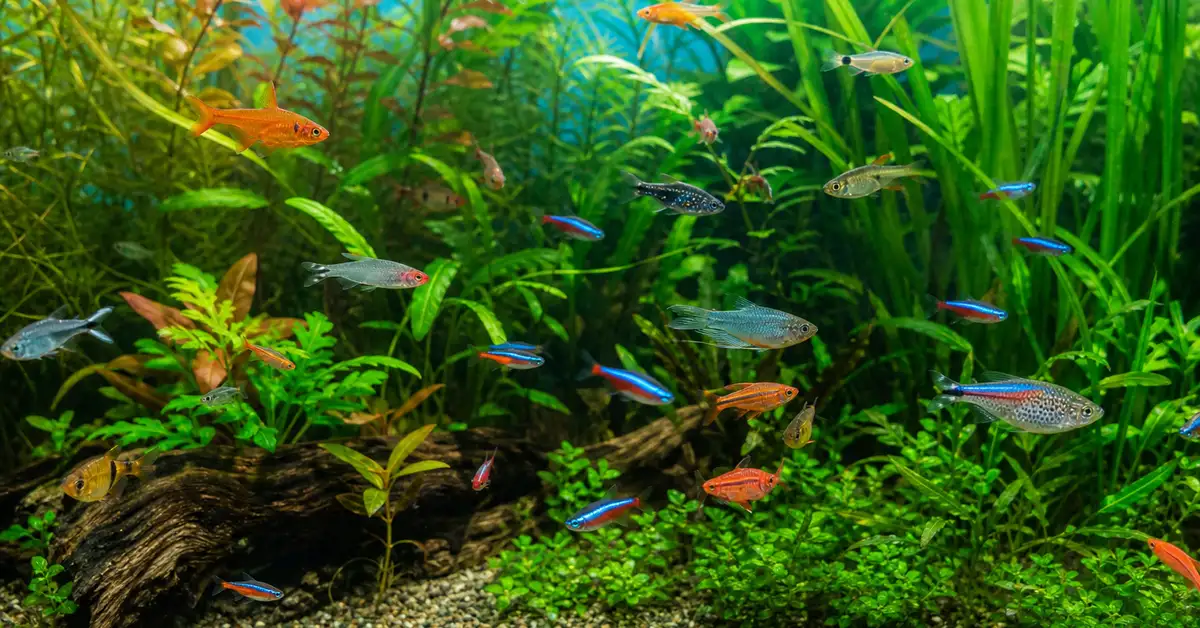
Aquarist consensus is consistent on this point: a stable temperature a couple of degrees outside a species’ “ideal” is generally safer than a temperature that swings within the ideal range but does so rapidly or repeatedly. Sudden temperature changes are a recognized stressor, and stressed fish have measurably weaker immune responses — this is part of why outbreaks of common parasitic conditions like ich are frequently linked to temperature swings or sudden drops, not just to the parasite being present (ich-causing organisms are often already present in a tank at low levels; it’s the stress event that lets an outbreak take hold). Practically, this means a heater that holds steady, a thermometer to confirm it’s actually doing so, and avoiding unnecessary temperature swings during water changes and maintenance all matter more than chasing a precise number to the decimal.
Seasonal considerations for US fishkeepers
Winter heating load increases in any room that isn’t climate-controlled, and a heater sized for a mild room can struggle in a cold garage or an unheated basement — size generously (see our best aquarium heaters guide for sizing guidance) rather than right at the minimum. Summer presents the opposite risk in homes without air conditioning: room temperatures in the 80s°F can push a tank above a species’ safe upper limit even with the heater switched off, since the heater can’t cool the water back down. In hot climates or un-air-conditioned spaces, options include a chiller, increased surface agitation and evaporation to assist cooling, or simply choosing warmth-tolerant species. Either direction, the fix is the same: check actual water temperature regularly with an independent thermometer rather than assuming the room “feels about right.” If your heater doesn’t seem to be holding the temperature you’ve set, see our heater troubleshooting guide before assuming it has actually failed.
How to find the right temperature for a new fish
Before buying any new species, check a specific care sheet rather than assuming it fits your existing tank’s temperature — reputable retailers and aquarist sites publish these for most commonly sold fish, and many local fish stores can tell you on request. If you’re building a community tank, list every species you’re considering and find the overlap in their temperature ranges before finalizing your stock list, rather than adding fish one at a time and hoping they’re compatible. Our best aquarium thermometers guide covers how to actually verify your tank is holding the temperature you think it is.
Frequently Asked Questions
General information only — not veterinary advice. If your fish show ongoing signs of stress or illness, consult an aquatic veterinarian.
Sources: Fishkeeper.co.uk: Can I Keep Goldfish with Tropical Fish? · Complete Goldfish Care: Goldfish and Tropical Fish · Aquarium Co-Op: Discus Care Guide · Discus.com: Ideal Water Temperature for Discus · Hepper (vet-reviewed): African Cichlid Water Temperature Guide · The Shrimp Farm: Understanding Temperature in a Shrimp Tank · Petco: Ich in Freshwater Fish — Causes, Treatment and Prevention · Chewy: Getting Rid of Ich on Fish and Aquariums · Merck Veterinary Manual: Parasitic Diseases of Fish · University of Florida IFAS: Ichthyophthirius multifiliis (White Spot) Infections in Fish