Written by Michael Probert, a research-led fishkeeper — not a lab or an aquatic vet. See our How We Choose methodology. This guide is general information, not veterinary or aquatic-health advice.
The fish genuinely suited to a 5-gallon tank are narrower than most pet-store advice suggests. Aquarium Co-Op’s own nano-fish picks are a good honest starting point: a solo dwarf pea puffer or solo scarlet badis (species-only — both will eat snails and shrimp given the chance), or a real little community built from rosy loaches, green neon tetras or white cloud mountain minnows. A single betta, per our own best betta fish tanks research, is arguably the single best use of the size. A tight school of chili rasboras is workable too. Skip regular neon tetras, standard corydoras, and anything sold as a multi-species “starter community” combo pack — most of them want a bigger school or more swimming room than 5 gallons comfortably gives. Below is the honest breakdown: what genuinely fits, three realistic single-focus builds, and what to leave at the store.
Why 5 gallons is a tighter fit than a 10-gallon
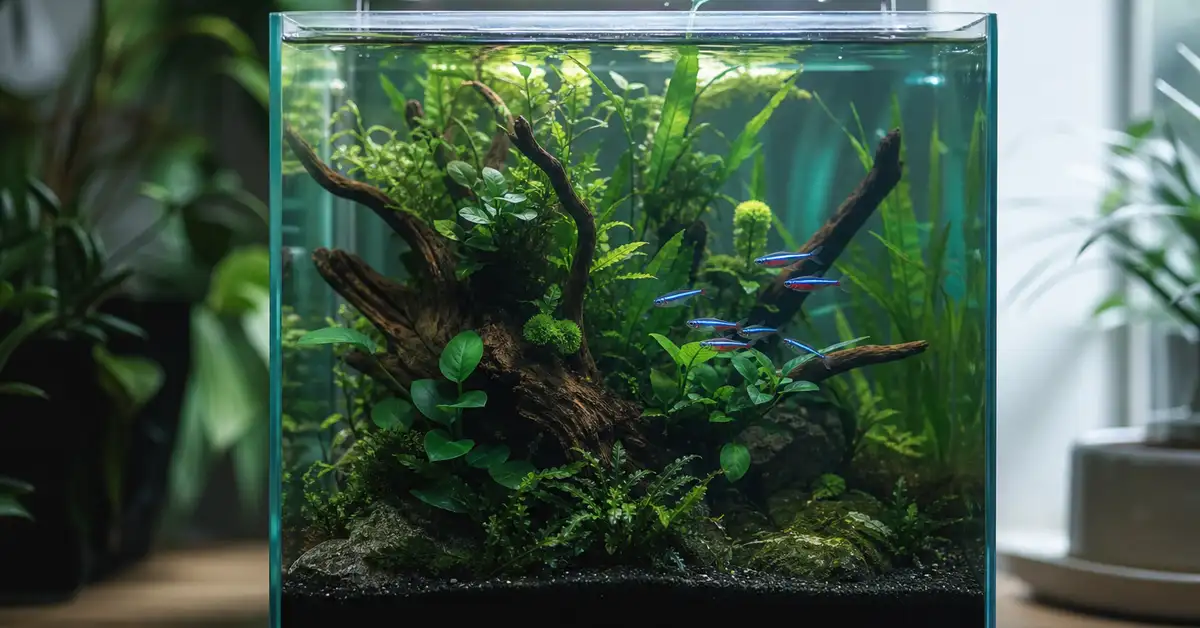
Everything that makes a 10-gallon tank forgiving for beginners — more water to dilute waste, more thermal stability, more margin for a missed water change — works in reverse at 5 gallons. Half the water volume means ammonia and nitrite can spike faster after a feeding mistake or a skipped test, temperature swings more with a small heater or a warm room, and there’s simply less swimming room for anything that schools or patrols a territory. None of that means a 5-gallon tank is a bad idea — it’s a genuinely rewarding size for the right occupant — but the honest list of what fits is shorter than the 10-gallon version, and “small fish” is not the same test as “5-gallon-appropriate fish.” If you’re still choosing the tank itself rather than what to put in it, see our best nano & 5-gallon fish tanks picks.
Fish and invertebrates that are genuinely fine in a 5-gallon tank
Every species below is listed at adult size, sourced primarily to Aquarium Co-Op’s own dedicated 5-gallon nano-fish guidance and cross-checked against our own best betta fish tanks and 10-gallon stocking research where the species overlaps.
| Fish / invert | Adult size | Group size | Notes |
|---|---|---|---|
| Betta | ~2.5″ | 1 (solo) | Per our best betta fish tanks guide, 5 gallons is the realistic minimum — 10 gallons is more forgiving. |
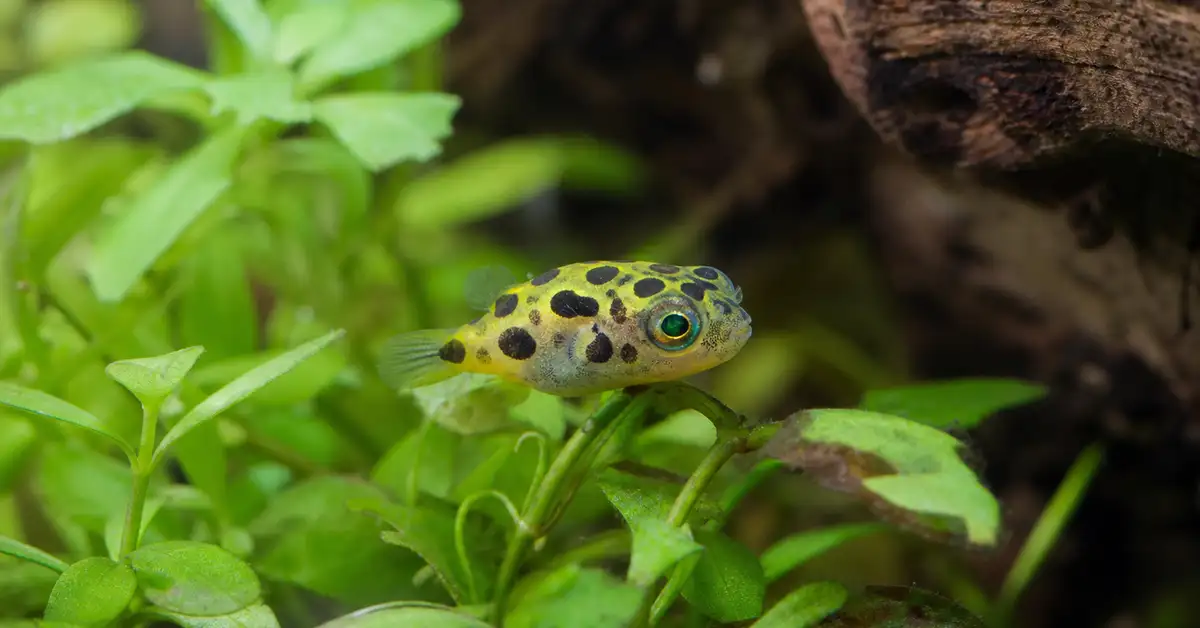
| Dwarf pea puffer | ~1″ | 1, species-only | Aquarium Co-Op recommends just one per 5-gallon tank — it will go after live snails and shrimp, so no cleanup crew. |
| Scarlet badis (Dario dario) | ~0.8″ | 1, or with the trio below | Also best solo per Aquarium Co-Op, but can join rosy loaches, green neon tetras or white clouds — keep it away from dwarf shrimp. |
| Rosy loach | ~1.25″ | 6+ | Active bottom-and-mid scavenger; sexually dimorphic, can even spawn in a well-planted tank. |
| Green neon tetra | ~1″ | 6 | Smaller cousin of the standard neon tetra; needs shelter and planting to feel secure at this size. |
| White Cloud Mountain minnow | ~1.5″ | 5–6 | Hardy, doesn’t need a heater, tolerates a wide range of water conditions — a genuinely easy pick. |
| Chili (mosquito) rasbora | ~0.75″ | 6–8, tight | Very low bioload — Aquarium Co-Op has kept them in planted tanks as small as 3 gallons, though a fuller 8–12-strong school is steadier at 10 gallons. |
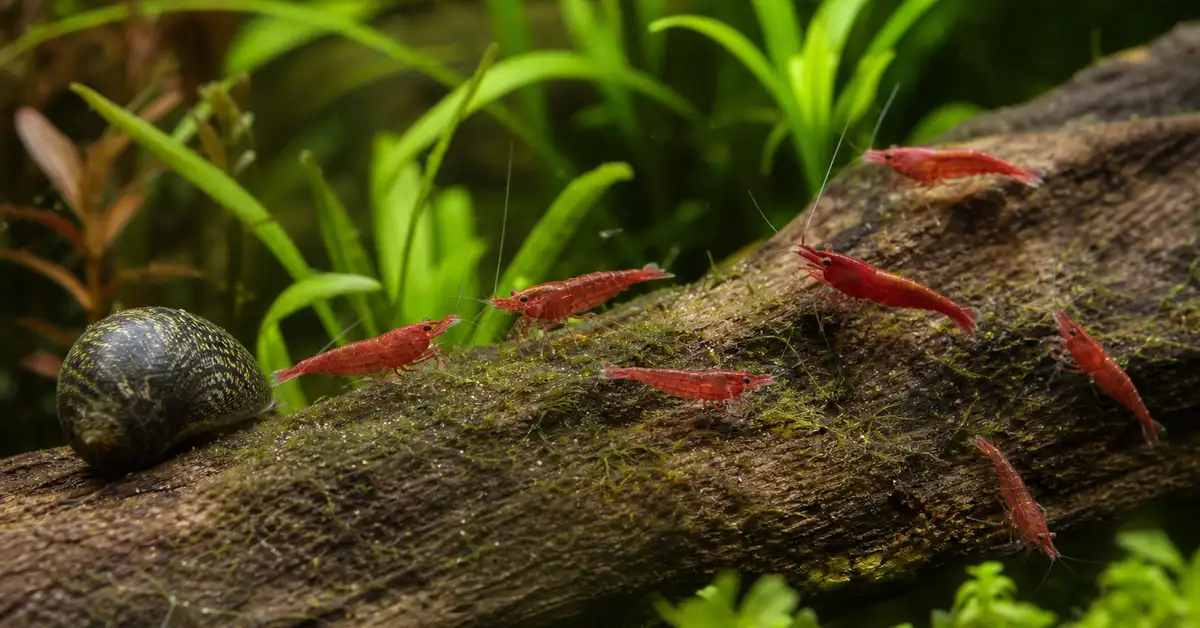
| Cherry shrimp | <1″ | 10–15 (colony) | Genuinely easy at this size and breeds readily — never combine with a pea puffer or scarlet badis, both will eat them. |
| Nerite snail | ~1″ | 1–2 max | Excellent algae control at this size; also unsafe with a pea puffer, and more than 2 will run short of algae to eat. |
The scarlet badis is the one genuine surprise on this list: Aquarium Co-Op’s own guidance is that it does best alone, like the pea puffer, but — unlike the pea puffer — it can share a 5-gallon tank with rosy loaches, green neon tetras or white cloud mountain minnows if you’d rather build a small community than keep a lone oddball. What it can’t share space with is dwarf shrimp, which it will eat before they’ve had a chance to settle in.
Three honest ways to stock a 5-gallon tank
As with a 10-gallon build, pick one complete plan rather than mixing pieces of several — at 5 gallons the margin for combining ideas is even thinner.
The betta build: a single betta as the whole tank, or a betta plus a nerite snail or two if that particular betta tolerates tank mates. Simplest option, and per our best betta fish tanks guide, the one most beginners already start with at this size. Our betta tank mates guide covers exactly which additions are a safe bet and which are a gamble — the calculus shrinks further at 5 gallons than it is at 10.
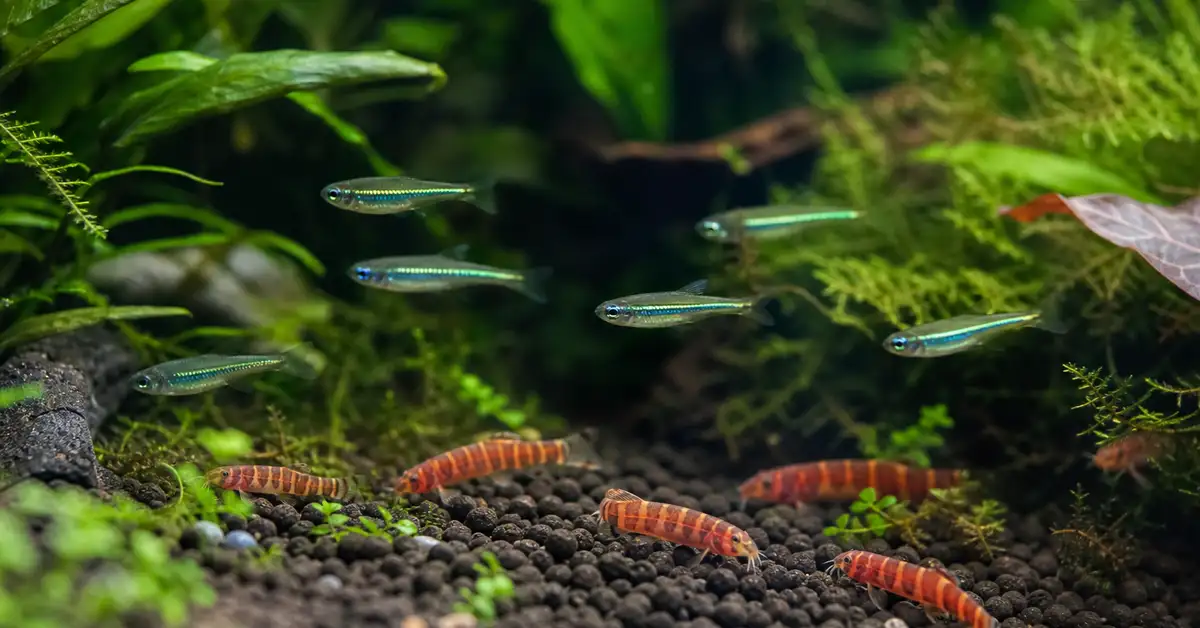
The little-community build: pick one school — rosy loaches, green neon tetras, or white cloud mountain minnows, not two schools stacked together — plus a cherry shrimp colony and a nerite snail or two. None of these three fish bother shrimp, so it’s the one build here that’s genuinely shrimp-safe.
The solo-oddball build: one dwarf pea puffer or one scarlet badis, decorated with live plants for it to explore, and nothing else in the water. Both are best kept alone at this size — think of it as a single wet pet to dote on rather than a community tank.
Fish (and combos) commonly sold for a 5-gallon tank but shouldn’t be
This is the section most beginner guides skip, and it’s usually the pet-store combo deals that cause the trouble.
Regular neon tetras. The classic neon tetra is a fine fish — just not at this size. Per our own 10-gallon stocking research, it wants a school of 6–8 and more swimming room than 5 gallons offers; the smaller green neon tetra above is the honest substitute.
Standard (and even pygmy) corydoras. Corydoras are shoaling bottom-dwellers that need a proper group across a wide floor footprint, not a cramped one. Our own 10-gallon research found even the smallest pygmy variety wants the extra room of a 10-gallon-plus tank for a real group — a 5-gallon floor is too small for the school size that keeps them settled.
Zebra danios. Fast, constantly active swimmers that patrol the whole length of a tank in a school of 6 or more — exactly the swimming room a 5-gallon can’t provide.
Multi-species “starter community” combo packs. A lot of big-box stores sell a bag of 2–3 different schooling species together for a “starter” tank. Individually, several of those species might be fine at 5 gallons; stacked together, they add up to more bioload and more competing schools than the space allows. Pick one plan from the builds above instead.
Goldfish, common plecos, and anything sold small that grows large. Same problem as at 10 gallons, only worse: goldfish and common plecos are routinely sold as an inch or two long and marketed for small tanks, but they outgrow 5 gallons within months, not years.
Before you add anything to a 5-gallon tank
A 5-gallon tank needs to finish the same nitrogen cycle a 10-gallon does — there’s no shortcut for less water — and because there’s less volume to dilute a mistake, ammonia and nitrite can climb faster once something goes in. See our full how to cycle a fish tank walkthrough and our water parameters reference before stocking anything, and test more often at this size than you would in a bigger tank, not less. If you’re still deciding whether 5 gallons is the right size for your first tank at all, our what size aquarium should a beginner get guide walks through why bigger is usually more forgiving, not harder.
Quarantine every new arrival for a couple of weeks before adding it to an established tank, and watch closely for clamped fins, white spots, ragged fin edges, or unusual lethargy during that window. We’ll cover what to do about specific symptoms in dedicated disease guides — starting with our guide on white spot (ich) — what to observe; for now, the honest answer is that a stable, fully-cycled tank and a proper quarantine period prevent far more problems than any medication does after the fact.
Frequently Asked Questions
General information only, not veterinary or aquatic-health advice — if a fish or invertebrate shows ongoing signs of illness or distress, consult an aquatic veterinarian rather than guessing from a forum thread.
Sources: Aquarium Co-Op: Top 5 Nano Fish for a 5-Gallon Aquarium · Aquarium Co-Op: Care Guide for Pea Puffers · Aquarium Co-Op: Care Guide for Chili Rasboras · AquAnswers: 23 Best Fish for a Small Tank (5-Gallon, Freshwater)