Written by Michael Probert, a research-led fishkeeper — not a lab or an aquatic vet. See our How We Choose methodology. This guide is general information, not veterinary or aquatic-health advice. Last updated September 2026 — species sizes and stocking guidance re-checked against current sources, no changes to the recommendations below.
The fish that are genuinely fine in a 10-gallon tank at full adult size are smaller than most pet-store advice suggests: small schooling nano fish (ember tetras, neon tetras, harlequin rasboras, celestial pearl danios), peaceful livebearers (guppies, dwarf platies), a few bottom-dwelling scavengers, and a single small centerpiece fish such as a honey gourami or a betta — not several “will stay small” species crammed in together. Skip goldfish, common plecos, iridescent sharks, red-tail sharks and full-grown angelfish, all of which are routinely sold for tanks this size and all of which outgrow one. Below is the honest breakdown: what actually fits, realistic combinations, and what to leave at the store.
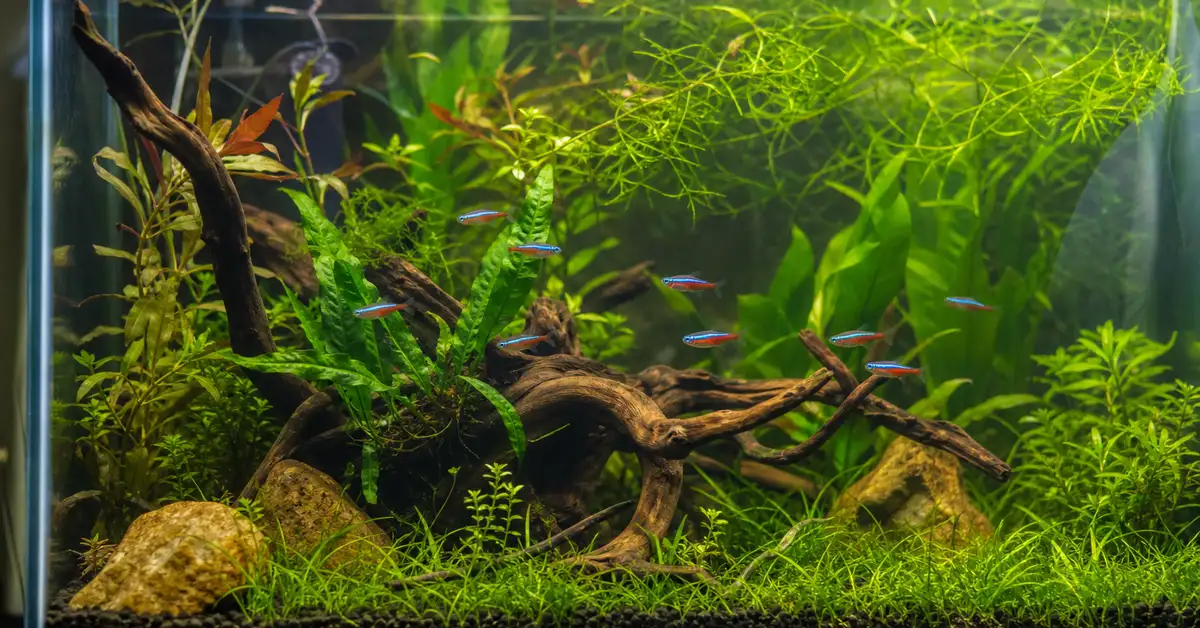
Why the “1 inch of fish per gallon” rule keeps failing beginners
Almost every new fishkeeper hears some version of the same shortcut: one inch of fish per gallon of water. It’s a reasonable starting intuition for small community fish in the 1–3 inch range, but it breaks down the moment you compare fish that are shaped differently or behave differently. Aquarium Co-Op’s own stocking guidance makes the point with a blunt example: ten 1-inch tetras do not have the same body volume, waste output, or oxygen demand as one 10-inch fish — the rule only ever measured length, never the things that actually determine whether a tank stays healthy.
What actually matters is waste load (how much a fish eats and poops, and how good your filtration and plant mass are at processing it), swimming space (an active, fast-moving fish like a zebra danio needs more room than a sedentary bottom-dweller of the same length), and temperament (whether a species can be crowded to control aggression, like African cichlids, or needs the opposite — open sightlines and no competition). A fish sold as a 1-inch juvenile at the store can also be a very different animal at its adult size, which is the root of almost every “outgrew the tank” story in this hobby. See our full stocking framework guide for the four-factor method and worked examples at 5, 10 and 20 gallons.
Fish that are genuinely fine in a 10-gallon tank at full size
Every species below is listed at its real adult size, not the juvenile size it’s usually sold at, sourced from Aquarium Co-Op and AquAnswers stocking guides and cross-checked against our own betta tank mates research where the species overlaps.
Quick answer: find your fish in the table below by adult size and minimum group — that’s the honest ceiling, not the size it’s sold at.
| Fish | Adult size | Group size | Notes |
|---|---|---|---|
| Ember tetra | ~0.8″ | 6+ | Calm, unassuming schooler; does well in a planted 10–15 gallon tank. |
| Neon tetra | ~1.4″ | 6–8 | Classic beginner schooler; give it dense planting to feel secure. |
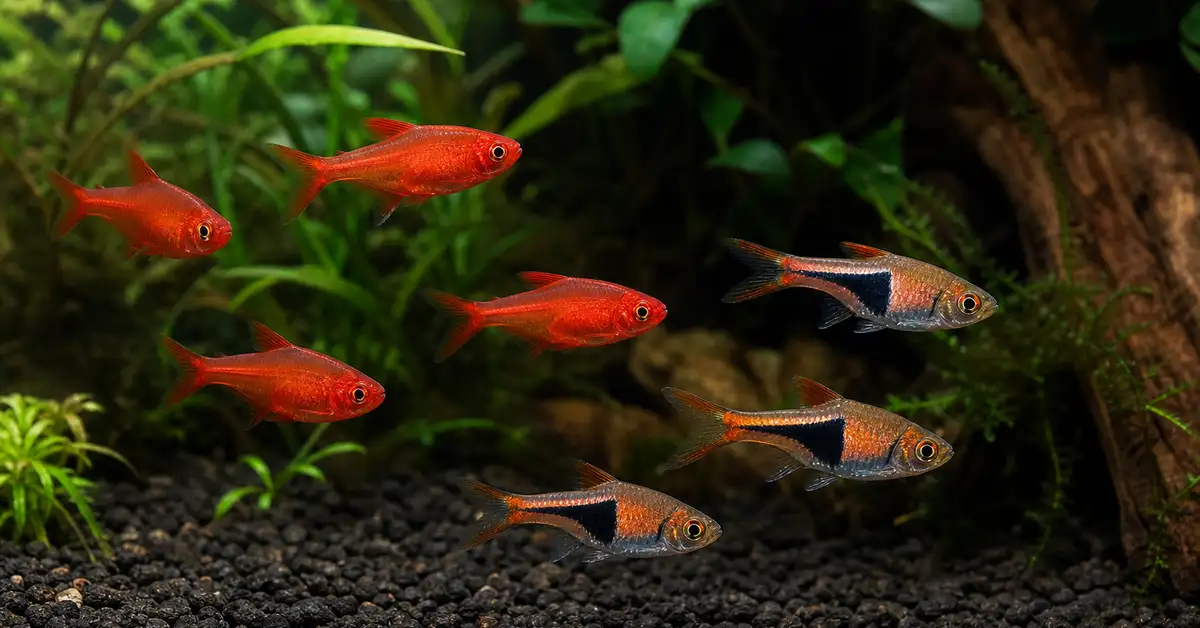
| Harlequin rasbora | ~1.75″ | 5–6 | Peaceful, hardy, does well in a 10-gallon-plus planted tank. |
| Celestial pearl danio (galaxy rasbora) | ~1″ | 6–10 | Needs a large-enough group that no single fish gets singled out. |
| Cherry barb | ~2″ | 6+ | One of the mildest barbs — genuinely community-safe, unlike tiger barbs. |
| Guppy | 1.4″ (male) / 2.4″ (female) | Small group | Prolific breeders — expect a growing population, which adds to waste load over time. |
| Dwarf/teacup platy | ~1″ | Trio (1 male, 2 female) | Stays noticeably smaller than a standard platy; also a livebearer. |
| Pygmy corydoras | ~1″ | 6+ | Unlike standard corydoras (which want ~15 gallons), pygmy varieties genuinely fit a 10. |
| Otocinclus | ~1.5″ | 3+ | Delicate — needs an established tank with existing biofilm, not a brand-new setup. |
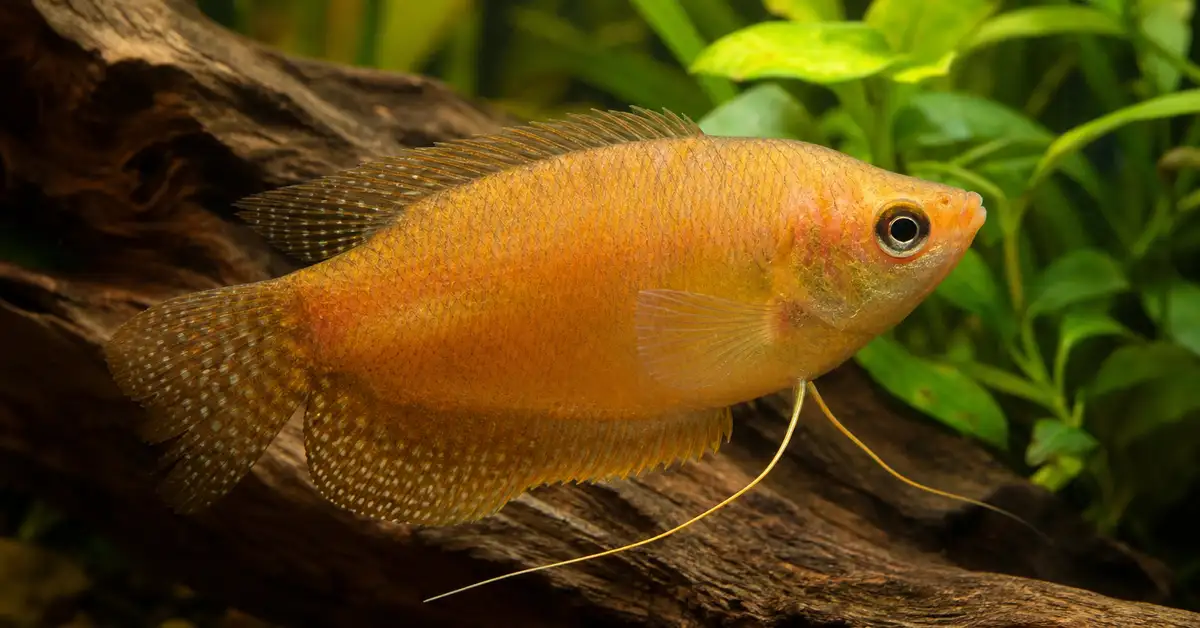
| Honey or dwarf gourami | Up to ~3.5″ | 1 (single specimen) | The largest fish that genuinely works here, and only as a solo centerpiece — not a pair. |
Kuhli loaches are worth a specific honest note: they’re often recommended for small tanks, but our own betta tank mates research found they really want groups of three to five in a 20-gallon long tank to feel secure and have room to forage — a single kuhli or two can limp along in a 10-gallon, but a proper group does better once you size up. Don’t let a store clerk sell you “just get a few, they’re tiny” as a 10-gallon-safe answer.
A single betta is also a genuine option in a 10-gallon — arguably one of the best uses of the size, per our best betta fish tanks guide. If you’re set on a betta plus company rather than a community-first tank, our dedicated betta tank mates guide covers exactly which of the species above are safe, which are a gamble, and which to avoid with a betta specifically — the calculus is different from a plain community tank because of betta temperament.
Three honest ways to stock a 10-gallon tank
Rather than a shopping list, here are three complete, realistic builds — pick one rather than mixing pieces of all three, since waste load adds up fast at this size.
The centerpiece build: one honey or dwarf gourami as the visual anchor, plus a school of 6 ember tetras that stay out of its way, plus a trio of nerite snails for algae cleanup. Calm, low-conflict, and visually varied without overloading the filter.
The schooling-only build: a school of 8 harlequin rasboras or celestial pearl danios in the mid-water, plus 6 pygmy corydoras working the substrate. No single centerpiece, but a genuinely active, always-something-moving tank.
The betta build: one betta, plus a small cherry shrimp colony or a couple of nerite snails, following the species-by-species compatibility notes in our betta tank mates guide before adding anything that swims. Simplest option, and the one most beginners actually start with.
Fish that are commonly sold for a 10-gallon tank but shouldn’t be
This is the section most beginner guides skip, and it’s where the most expensive mistakes happen — usually because the fish is sold small.
Goldfish. Fancy and common goldfish are cold-water fish that can reach 8 inches or more, and Aquarium Co-Op’s own sizing guidance puts the realistic minimum at a 20-gallon-long tank just for the swimming room, before accounting for their heavy bioload. A goldfish bought as a 1-inch feeder-size fish for a 10-gallon bowl or tank is one of the most common and most avoidable beginner mistakes in the hobby.
Common pleco. Sold small (often 2–4 inches) and marketed as an algae-eating cleanup crew, the common pleco can reach up to 24 inches at full size and produces a genuinely heavy waste load long before it gets there. If you want an algae-eating catfish for a 10-gallon, look at otocinclus or a dwarf/bristlenose variety instead, and size up even for those.
Iridescent shark. Also sold as a small, silvery juvenile a couple of inches long, this species (a type of shark catfish, not a true shark) can reach 3–4 feet in length as an adult and is a schooling fish that wants to be kept in groups — it needs a tank measured in hundreds of gallons, not ten.
Red-tail shark. A genuinely striking fish that tops out around 4–6 inches, but it’s territorial and active enough that a 55-gallon-plus tank is the realistic recommendation, not a 10.
Angelfish. Angelfish are sometimes sold as 10-gallon-appropriate because the juveniles are small and slow-growing, but an adult’s body is taller than it is long — roughly 6 inches long by 8 inches tall — and needs a tank with real vertical height, not just gallons. They also become increasingly territorial as they mature. A 10-gallon works only as a short-term juvenile grow-out, never as the permanent home.
Before you add a single fish
None of the species above should go into water that hasn’t finished cycling — a tank with no established beneficial bacteria colony will spike ammonia and nitrite the moment fish start producing waste, which is the single most common cause of new-tank fish deaths. See our full how to cycle a fish tank walkthrough and our water parameters reference for the ammonia/nitrite/nitrate ranges you’re aiming for before anything goes in. If you’re choosing a tank and filter for this stocking plan, our best 10-gallon fish tanks guide, our nano and 5-gallon tanks guide (if you’re sizing down instead), and our best aquarium filters guide (filtered by tank size) cover the hardware side.
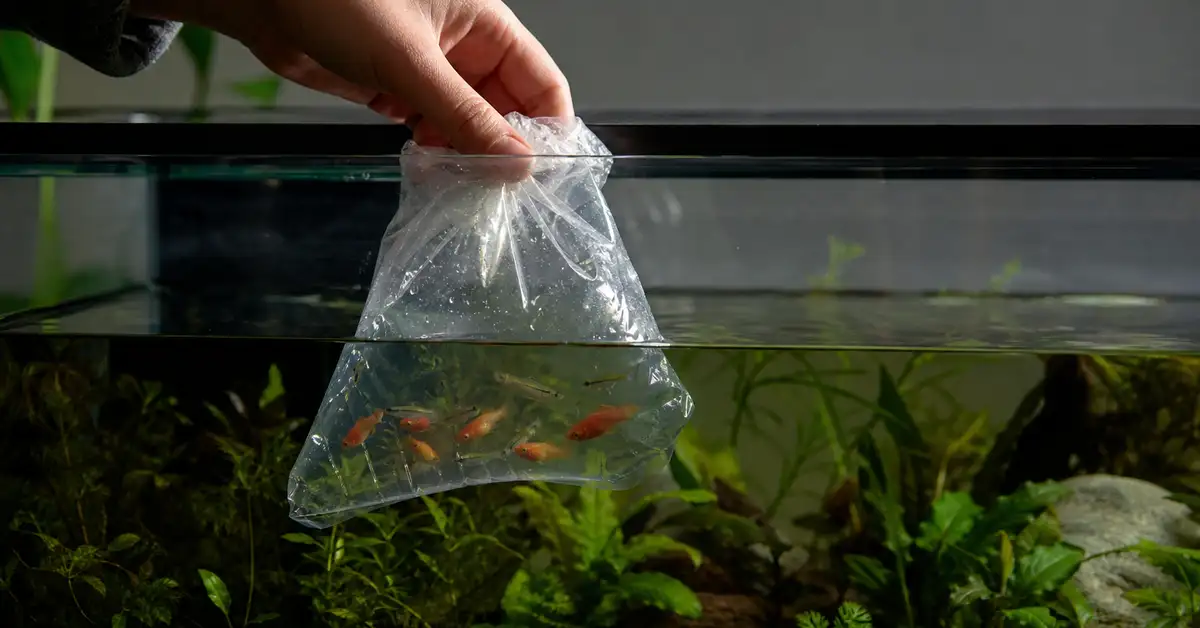
Once the tank is cycled and stocked, quarantine every new arrival for a couple of weeks before it goes in with existing fish, and watch closely during that window for anything off — clamped fins, white spots, ragged fin edges, or unusual lethargy. We’ll cover what to do about specific symptoms in dedicated disease guides — starting with our guide on white spot (ich) — what to observe; for now, the honest answer is that quarantine and a stable, fully-cycled tank prevent far more problems than any medication does after the fact.
Frequently Asked Questions
General information only, not veterinary or aquatic-health advice — if a fish shows ongoing signs of illness or distress, consult an aquatic veterinarian rather than guessing from a forum thread.
Sources: Aquarium Co-Op: Top 10 Freshwater Fish for a 10-Gallon Aquarium · Aquarium Co-Op: How Many Fish Can I Put in a Fish Tank? · AquAnswers: 12 Best Freshwater Fish Ideas for a 10-Gallon Tank · Aquarium Source: Common Pleco Care Guide · FishLore: Iridescent Shark Care · The Aquarium Guide: Red Tail Shark Care Guide