A heater is the one piece of aquarium equipment where failure can be genuinely dangerous — a stuck-on thermostat can cook a tank of fish in hours, and a stuck-off one can slowly chill them. We researched 11 real, currently-sold heaters and controllers across mechanical and digital designs, screened every brand against US CPSC recall records, and sized each by the standard 3-5 watt-per-gallon rule. Here’s the honest breakdown, with safety front and center.
How we chose these heaters
We pulled wattage-to-tank-size tables, thermostat type and manufacturer safety-feature claims directly from Eheim, Fluval, Aqueon, Cobalt Aquatics, Hygger, Finnex, Hydor and Inkbird product documentation, cross-checked against retailer listings and general buying guidance from Aqueon and Bulk Reef Supply on sizing and placement. Every brand named here was individually checked against current US Consumer Product Safety Commission recall records — none of the 11 picks below carry an active CPSC recall. Two historical aquarium heater recalls exist in the wider record (Marineland Stealth/Stealth PRO, 2011; Top Fin plastic heaters sold by PetSmart, 2015), and neither applies to any product in this list. This isn’t a substitute for checking cpsc.gov yourself before a purchase, since recall status can change. Full method: How We Choose. Heater acting up already? See our heater troubleshooting guide.
Last updated July 2026. New to aquarium heating? Our how to set up a betta tank guide covers heater installation step by step, and our water parameters reference covers target temperatures by species. Keeping a betta specifically? See our betta fish care guide for temperature needs, or our temperature guide by fish type if you’re keeping something else. Still choosing the tank itself? See our best aquarium kits for beginners hub.
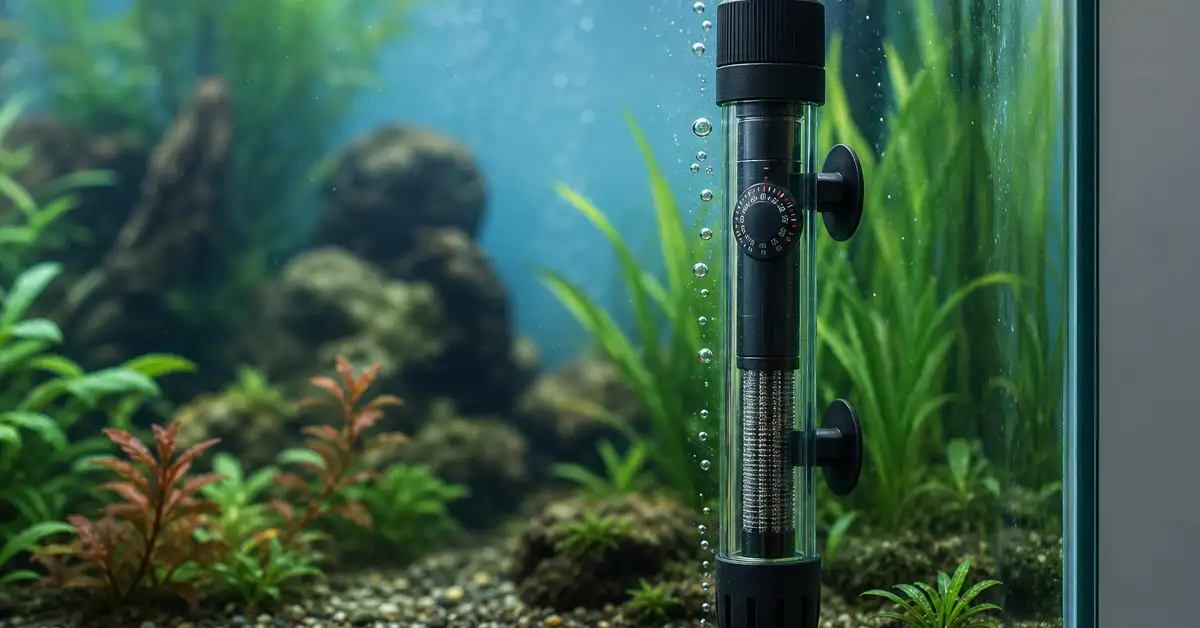
The watts-per-gallon rule, and why sizing matters for safety
Aqueon’s own cold-weather guidance recommends roughly 5 watts per gallon for tanks up to 55 gallons, and about 3 watts per gallon above that, with cooler rooms or exterior walls pushing you toward the higher end. Bulk Reef Supply’s rule of thumb for Eheim Jager heaters is similar — 2.5 to 5 W per gallon, with a suggestion to use two smaller heaters instead of one large one on bigger tanks, purely for redundancy: if one fails, the other keeps the tank from swinging to either extreme while you notice and replace it.
Quick comparison
| Heater | Thermostat | Tank size | Key safety feature | Price band |
|---|---|---|---|---|
| 1. Fluval E-Series | Digital, dual-sensor | Up to ~100 gal (300W) | Auto shutoff if removed from water | $$$ |
| 2. Eheim Jager TruTemp | Mechanical dial | 5-264 gal (25-300W) | Run-dry protection | $$ |
| 3. Hydor Theo | Mechanical (PTC element) | 5-105 gal (25-400W) | Self-limiting PTC film | $$ |
| 4. Aqueon Pro | Electronic | Up to 100+ gal (50-300W) | Tilt auto shut-off | $ |
| 5. Aqueon Preset | Fixed at 78°F | Up to ~75 gal (50-200W) | Automatic safety shut-off | $ |
| 6. hygger Digital 100W | Digital LED | 10-15 gal | Leaving-water auto stop | $ |
| 7. hygger Digital 800W | Digital LED | 120-180 gal | Leaving-water auto stop | $$ |
| 8. Finnex HMX Titanium | Digital touch controller | Model-dependent, 50-800W | Unbreakable titanium tube + guard | $$$ |
| 9. Fluval M-Series | Mechanical dial | Up to 80 gal (300W) | Shock-resistant borosilicate glass | $$ |
| 10. Cobalt Neo-Therm Pro | Digital, ±0.5°F | Model-dependent | Auto shutoff + shatterproof casing | $$$$ |
| 11. Inkbird ITC-308 | External dual-relay controller | Any (pairs with your heater) | Independent secondary shutoff | $$ |
The 11 best aquarium heaters and controllers (2026)
Transparency first: This guide contains affiliate links. If we’re enrolled in an affiliate program, we may earn a commission at no extra cost to you — it never affects how we research or rank. Read our full affiliate disclosure policy.
1. Fluval E-Series — Best Overall
Fluval’s E-Series pairs dual digital temperature sensors with the VueTech alert system — a colored display that shows green when the tank is in range and switches to blue or red to flag under- or over-temperature conditions, so you can spot a problem at a glance rather than digging out a separate thermometer. An integrated fish guard keeps livestock away from the heating element, and a thermal-protection circuit powers the unit down automatically if it’s ever removed from the water.
Best for: owners who want the most informative, safety-layered heater here and are willing to pay for it.
Key specs: 50W (up to ~15 gal) through 300W (up to ~100 gal) · dual-sensor digital thermostat · VueTech color-coded alert display · integrated fish guard · auto shutoff out of water.
Pros: genuinely informative at-a-glance status display, built-in fish guard, no bi-metallic parts to wear out.
Cons: premium price relative to mechanical alternatives; like any electronic device, still benefits from an external controller as a second layer of protection on valuable tanks.
Price band: $$$ · Evidence: manufacturer specs confirm dual-sensor design and auto-shutoff; no CPSC recalls found for this product line.
2. Eheim Jager TruTemp — Best Classic, Most Proven
The Jager TruTemp line has been a mainstay of the hobby for decades, using a mechanical adjustment ring that lets you calibrate the dial against an independent thermometer to correct for factory tolerance. It’s not digital, but its simplicity is exactly the point — fewer components to fail, and a run-dry protection circuit that shuts it off if it’s ever exposed to air.
Best for: aquarists who want mechanical simplicity with a genuinely long track record, from nano tanks up to large aquaria.
Key specs: 25W (5-7 gal) through 300W (159-264 gal) · mechanical calibratable dial · run-dry / Thermo safety control · on/off indicator lamp.
Pros: decades of hobbyist track record, calibratable against your own thermometer, run-dry protection built in.
Cons: mechanical dials drift with age more than digital sensors do — recalibrate periodically against an independent thermometer, and replace if drift becomes significant.
Price band: $$ · Evidence: manufacturer/retailer wattage-to-tank tables (Bulk Reef Supply) confirm sizing; no CPSC recalls found for this product line.
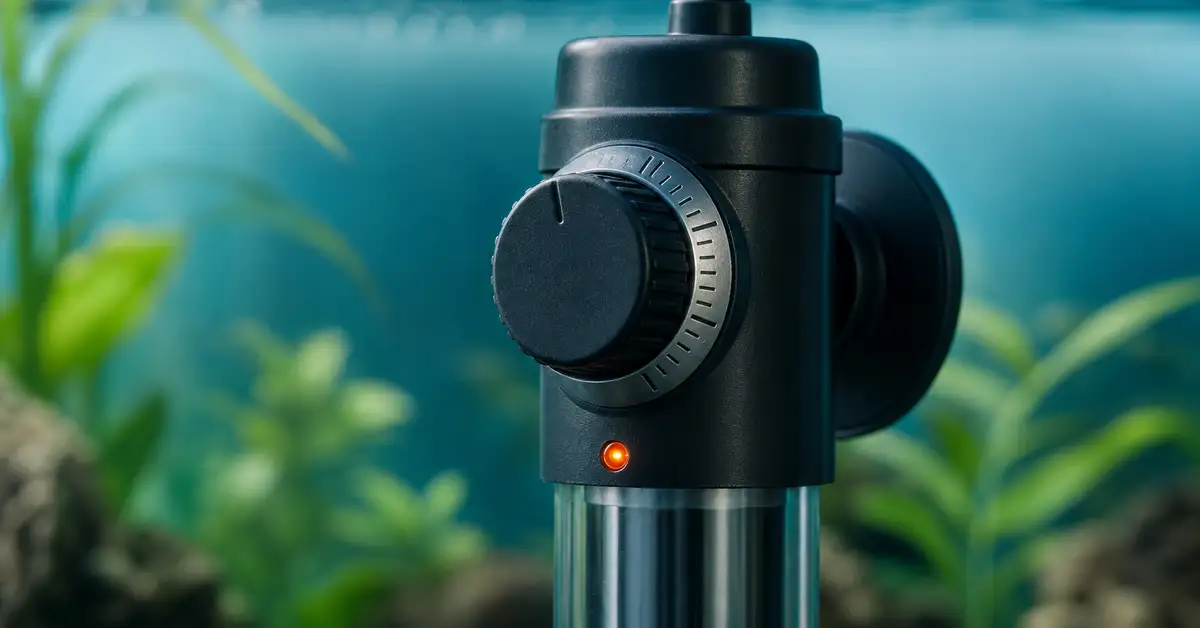
3. Hydor Theo — Best Safety Engineering
The Theo line uses patented PTC (positive temperature coefficient) heating film rather than a conventional element — a self-limiting technology that physically reduces its own power output as it approaches temperature, rather than relying purely on a thermostat switching it off. The manufacturer specifically markets this as protection against dry-running, since the PTC film’s resistance rises sharply if it’s not submerged and cooled by water.
Best for: aquarists who want a mechanical heater with a genuinely different (and manufacturer-described as safer) approach to overheat protection.
Key specs: 25W (very small tanks) through 400W (80-105 gal) · PTC self-limiting heating film · shatterproof glass tube · graduated calibration dial.
Pros: PTC technology is a genuinely different safety mechanism from simple on/off thermostats, shatterproof construction, wide wattage range.
Cons: mechanical dial still benefits from periodic calibration checks against an independent thermometer.
Price band: $$ · Evidence: manufacturer product pages and retailer listings confirm PTC technology and wattage/tank-size tables; no CPSC recalls found for this product line.
4. Aqueon Pro — Best Value Adjustable
Aqueon’s Pro line is an electronic, adjustable heater in a shatter-resistant thermal-plastic housing, with a tilt-activated auto shut-off — if the heater’s orientation changes enough to suggest it’s fallen or come loose, it cuts power. An LED indicator shows when it’s actively heating.
Best for: budget-conscious owners who still want adjustable temperature and a real safety cutoff, not just a fixed-temp unit.
Key specs: 50W (up to 20 gal) through 300W (larger tanks) · adjustable 68-88°F, roughly ±1°F · tilt auto shut-off · shatter-resistant housing.
Pros: genuinely affordable, tilt shut-off is a distinctive safety feature at this price point, wide size range.
Cons: some owner reports on hobbyist forums describe occasional composite-housing failures over time — we couldn’t independently verify how common this is, and Aqueon backs the line with a warranty; inspect periodically like any heater.
Price band: $ · Evidence: manufacturer specs confirm tilt shut-off and adjustable range; no CPSC recalls found for this product line.
5. Aqueon Preset — Best for Simplicity and Beginners
The Preset line skips the dial entirely: it’s factory-calibrated to 78°F, a temperature that suits most common tropical community fish, and simply maintains it. One less setting to get wrong for a first-time owner, at the cost of flexibility if your species needs something outside that range.
Best for: beginners keeping standard tropical community fish who want a genuinely foolproof, no-configuration heater.
Key specs: 50W through 200W · fixed 78°F ±1°F · shatter-resistant quartz glass · automatic safety shut-off · LED heating indicator.
Pros: nothing to set incorrectly, straightforward LED indicator, inexpensive.
Cons: not adjustable — unsuitable for species needing a different target temperature (cooler-water goldfish, or warmer-water discus at the upper end).
Price band: $ · Evidence: manufacturer specs confirm fixed 78°F calibration and shut-off feature; no CPSC recalls found for this product line.
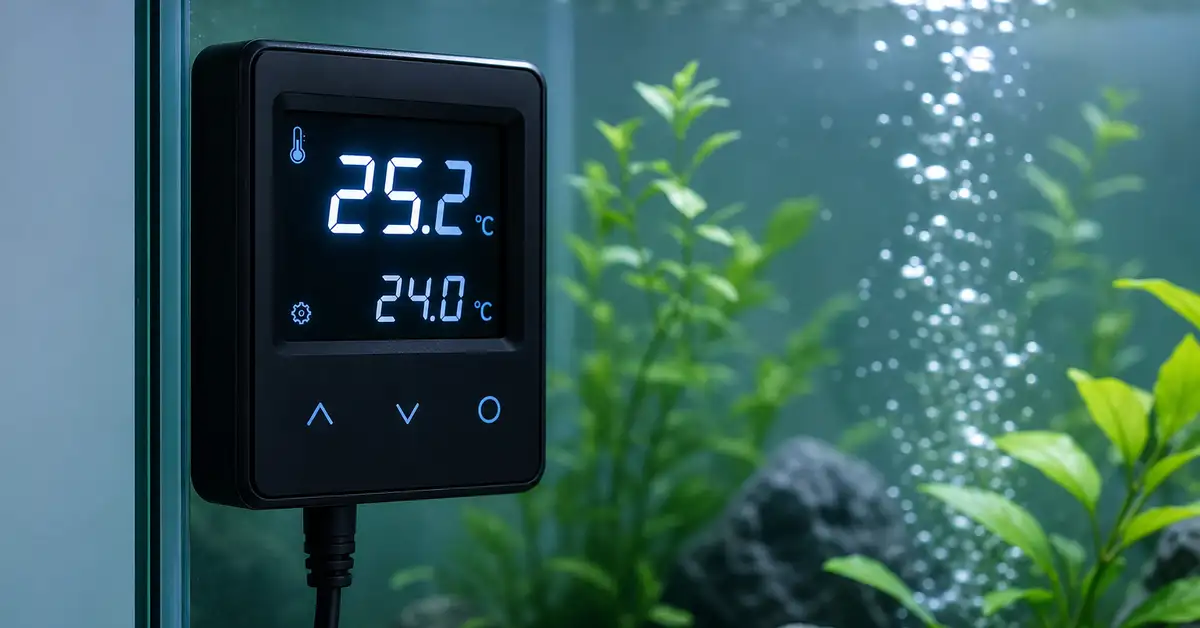
6. hygger Digital Heater (100W) — Best for Nano Tanks
hygger’s smaller digital models bring an LED temperature display and a “leaving-water” auto-stop function down to nano-tank wattages, where fixed-temperature or purely mechanical options are more common. The digital readout means you can verify the actual water temperature without a separate thermometer.
Best for: 10-15 gallon nano tanks where you still want digital monitoring and an auto-stop safety feature.
Key specs: 100W rated for 10-15 gal · digital LED display · leaving-water automatic stop · adjustable range.
Pros: digital precision at a nano-tank size and price, auto-stop if removed from water, easy-to-read display.
Cons: newer brand with less multi-decade track record than Eheim or Fluval; watch for early signs of drift and verify against an independent thermometer.
Price band: $ · Evidence: manufacturer/retailer listing confirms wattage-to-gallon rating and auto-stop feature; no CPSC recalls found for this brand.
7. hygger Digital Heater (800W) — Best for Large Tanks
The same digital-controller design scaled up: hygger’s higher-wattage models (up to 1000W) extend digital monitoring and the leaving-water auto-stop function to large, heavily-stocked aquaria where a single high-output heater — or, better, two of these split across the tank — needs to move a lot of heat reliably.
Best for: 120-180+ gallon tanks needing serious heating capacity with digital monitoring.
Key specs: 800W rated for roughly 120-180 gal (1000W available for larger) · digital LED controller · leaving-water automatic stop · external probe on some models.
Pros: genuine large-tank wattage options, same digital safety features as the smaller models, relatively affordable for the capacity.
Cons: at this wattage, a stuck-on failure would be more consequential — this is a strong case for pairing with an external controller like the Inkbird ITC-308, or splitting your total wattage across two heaters.
Price band: $$ · Evidence: manufacturer/retailer listing confirms wattage-to-gallon rating; no CPSC recalls found for this brand.
8. Finnex HMX Titanium — Best Shatter-Resistant
Finnex builds its heating element into a titanium tube rather than glass — the manufacturer describes it as “virtually unbreakable,” which matters both for physical durability and for reducing risk around large, strong or boisterous fish that might otherwise crack a glass heater. The HMX series pairs this with a touchscreen digital controller and includes a plastic guard over the heating element itself.
Best for: tanks with large or rough fish (bigger cichlids, oscars) where physical durability matters as much as thermal accuracy.
Key specs: 50W through 800W depending on model · titanium heating tube · digital touch controller, roughly ±2°F · included element guard · settings retained through power outages.
Pros: genuinely impact-resistant construction, corrosion-resistant for fresh or saltwater use, guard reduces livestock contact risk.
Cons: published accuracy (±2°F) is looser than some premium digital competitors; pair with an independent thermometer if precise control matters for your species.
Price band: $$$ · Evidence: manufacturer specs confirm titanium construction and controller accuracy; no CPSC recalls found for this product line.
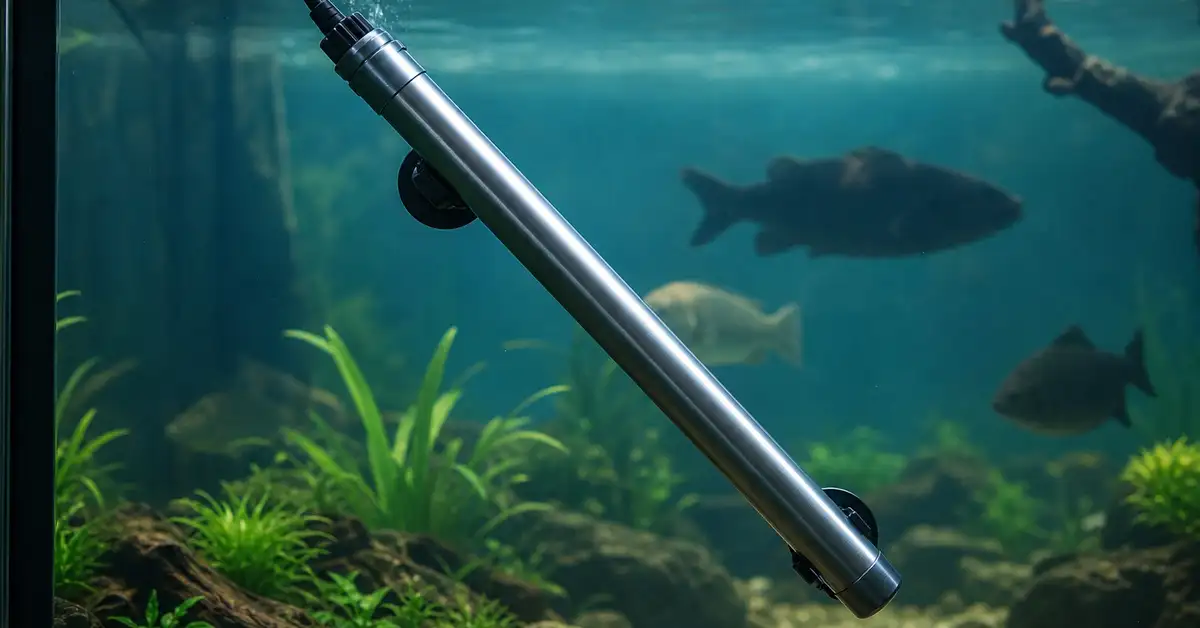
9. Fluval M-Series — Best Discreet Design
The M-Series trades Fluval’s E-Series digital display for a simpler mechanical dial in a mirrored, heat- and shock-resistant borosilicate glass housing designed to blend into the tank rather than stand out. It’s a straightforward mechanical heater aimed at aquarists who want Fluval’s build quality without the premium electronic features.
Best for: owners who want a mechanical heater that’s visually unobtrusive in an aquascaped tank.
Key specs: up to 300W (rated to ~80 gal) · mechanical dial thermostat · shock-resistant mirrored borosilicate glass.
Cons flagged honestly: some owner discussion threads describe the M-Series holding temperature less steadily than the digital E-Series — we couldn’t independently verify how widespread this is from manufacturer sources, so treat it as an unconfirmed but recurring owner observation, and verify actual tank temperature with an independent thermometer regardless of which heater you choose.
Pros: discreet mirrored housing, genuinely shock-resistant glass, simpler mechanism than digital alternatives.
Price band: $$ · Evidence: manufacturer/retailer listing confirms glass type and wattage-to-tank rating; no CPSC recalls found for this product line.
10. Cobalt Neo-Therm Pro — Best Precision Electronic
The Neo-Therm Pro is a flat, fully submersible electronic heater with a front-facing display showing both set and actual temperature, electronic accuracy the manufacturer and LiveAquaria’s listing both describe as roughly ±0.5°F, and circuitry described as continuously varying power output rather than simple on/off cycling. Honest disclosure: earlier (non-“Pro”) Neo-Therm units had a documented history of hobbyist-reported case cracking and stuck-on failures in long-running forum discussions; the current Neo-Therm Pro is a redesign with revised thermoplastics and updated electronics specifically aimed at those issues, per the manufacturer. We could not independently verify long-term reliability data on the current Pro version beyond manufacturer and retailer claims — if you choose this heater, pairing it with an external controller (like our Inkbird pick below) is a sensible extra layer of protection given that history.
Best for: aquarists who want the tightest published accuracy here and are comfortable paying a premium for it, ideally alongside an external controller.
Key specs: flat, fully submersible design · electronic thermostat, roughly ±0.5°F accuracy · front display of set + actual temperature · automatic shutoff + shatterproof casing.
Pros: tightest published accuracy in this roundup, clear dual-readout display, redesigned casing addressing earlier-generation complaints.
Cons: premium price; the older model’s reported issues (even though addressed in this redesign) are exactly why we’d pair this one with an external controller rather than run it standalone on a valuable tank.
Price band: $$$$ · Evidence: manufacturer and LiveAquaria retailer listing confirm accuracy spec and shutoff features; no CPSC recalls found for this product line; historical reliability concerns sourced to hobbyist forum discussion, disclosed above, not to any official recall.
11. Inkbird ITC-308 — Best External Controller
The ITC-308 isn’t a heater — it’s an external dual-relay temperature controller that sits between your heater and the wall outlet, with its own independent temperature sensor and shutoff logic. Set your heater’s own thermostat slightly above your real target, and let the Inkbird act as the primary control and safety cutout; both the heater’s internal thermostat and the Inkbird’s relay would need to fail simultaneously for a stuck-on event to reach the tank, which is exactly the layered protection safety-conscious aquarists recommend.
Best for: pairing with any heater on this list, especially higher-wattage units or valuable/sensitive livestock, as a second independent safety layer.
Key specs: dual relay (heating + cooling outlets) · independent waterproof temperature probe · digital display with programmable thresholds · works with any standard heater.
Pros: genuinely independent second layer of protection against stuck-on failures, works with heating and cooling equipment, straightforward setup.
Cons: an added cost and cable on top of your heater; doesn’t replace the need to also monitor your tank directly.
Price band: $$ · Evidence: manufacturer specs confirm dual-relay design and probe-based control; no CPSC recalls found.
Failure modes worth knowing before you buy
Hobbyist consensus (echoed across multiple independent forum discussions) is blunt: heaters are among the most failure-prone components in a tank, and when they fail, they more often fail “stuck on” than “stuck off” — meaning the thermostat stops switching the element off, and the tank keeps heating past the set point. A stuck-off failure just means the tank slowly cools, which is stressful but rarely fatal if caught within a day or so; a stuck-on failure in a small, well-insulated tank can push temperature into dangerous territory within hours. This is the single biggest argument for the safety features covered above: run-dry protection, auto-shutoff circuits, and above all, an external controller or a second heater for redundancy on any tank holding livestock you’d hate to lose.
What we can’t verify
We haven’t bench-tested any of these heaters ourselves — no lab thermometers, no long-term drift measurements, no accelerated failure testing. Every accuracy figure and safety-feature claim above comes from the manufacturer or a retailer listing, cross-checked where possible against independent buying guides, and we’ve flagged the one case (Cobalt Neo-Therm) where hobbyist forum history added an important caveat manufacturer marketing doesn’t mention. Treat published accuracy specs as a starting point, not a guarantee, and verify your own tank’s actual temperature with an independent thermometer regardless of which heater you choose — see our best aquarium thermometers guide for picks.
How to choose by tank size
For nano tanks (under 10 gallons), a small mechanical or digital heater in the 25-50W range — the smallest Eheim Jager, Hydor Theo or hygger models — is plenty, and the lower absolute wattage also limits how much damage a stuck-on failure could do. For 20-55 gallon community tanks, the Fluval E-Series, Aqueon Pro or Eheim Jager in the appropriate wattage all suit typical tropical fish well; add a second, lower-wattage heater if you want redundancy. For 75+ gallon or heavily-stocked tanks, look at the higher-wattage hygger models, Finnex titanium heaters for durability against large fish, or split your total wattage across two units — and strongly consider an Inkbird ITC-308 as an independent safety layer, since the consequences of a single large heater failing stuck-on scale with tank size and stocking value.
Frequently Asked Questions
General information only — not veterinary or electrical-safety advice. Always follow manufacturer installation instructions, use a grounded outlet with GFCI protection where required by local code, and consult a qualified professional for home electrical questions.
Sources: Aqueon: Fish Tank Heater Tips for Cold Weather · Aqueon: Heating Products · Bulk Reef Supply: Eheim Jager TruTemp Heater · Fluval: E-Series Heaters · Fluval: M-Series Heaters · Hydor: Theo Heater · hygger Aquarium · Finnex: Titanium Heaters · Cobalt Aquatics: Neo-Therm Pro · LiveAquaria: Neo-Therm Pro · Inkbird: ITC-308 Controller · US CPSC: Top Fin Heater Recall (2015) · US CPSC: Recalls