Written by Michael Probert, a research-led fishkeeper — not a lab or an aquatic vet. See our How We Choose methodology. This guide is general information, not veterinary or aquatic-health advice.
There’s no single number that answers “how many fish can I keep?” — not for a 10-gallon tank, not for any size. The honest framework has four inputs: your filtration capacity, each fish’s real adult size (not the juvenile size it’s sold at), how active and social the species is, and how often you’re realistically going to do water changes. Get those four right and a tank comfortably supports more life than the old “1 inch per gallon” rule ever allowed for; get them wrong and even a “correctly stocked” tank by that rule can spike ammonia. Below: why the inch-per-gallon rule keeps failing beginners, the actual framework, worked examples at 5, 10 and 20 gallons, and the one habit — testing more than you stock — that catches a mistake before it kills anything.
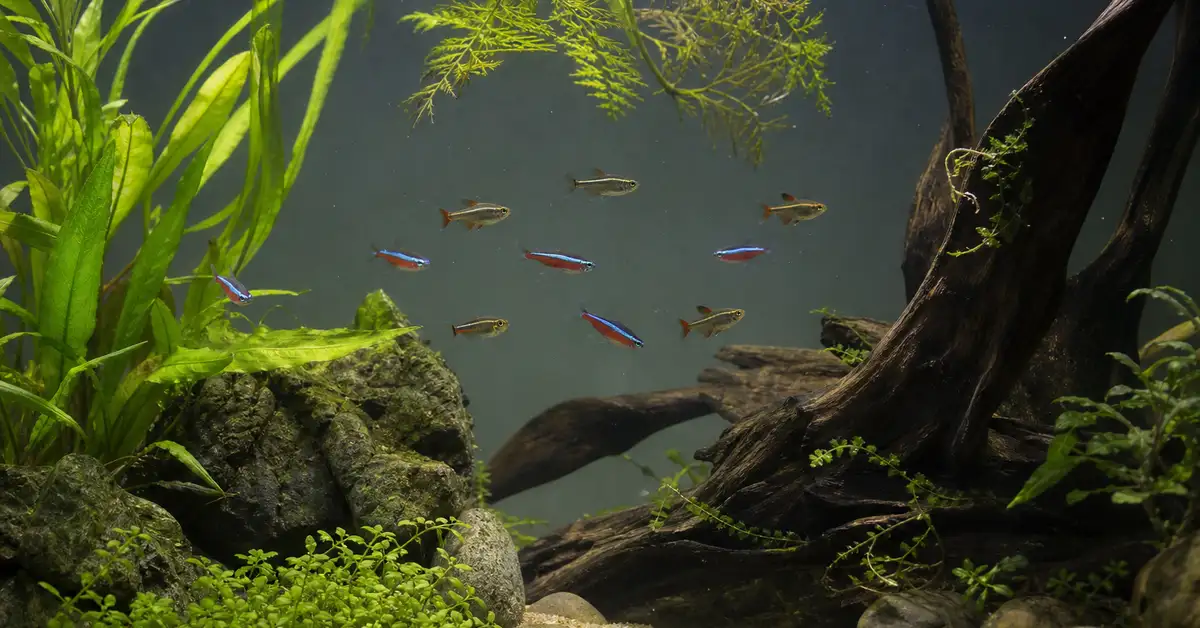
Retire the “1 inch of fish per gallon” rule
Almost everyone who has ever bought a fish tank has heard some version of this rule, and it isn’t useless — as a rough starting intuition for small, similarly-shaped community fish in the 1–3 inch range, it’s not wildly wrong. But it breaks down the moment you compare fish that differ in body shape, activity level, or waste output. Aquarium Co-Op makes the point bluntly: ten 1-inch tetras do not have the same body volume, waste output, or oxygen demand as one 10-inch fish. The rule only ever measured length. It never measured the things that actually decide whether a tank stays healthy.
AquariumScience.org goes further and treats the rule as actively misleading once fish get past nano size: a single fat-bodied, heavy-waste species like a common goldfish or a common pleco can out-produce the bioload of a dozen slim schooling fish of the same total length. Our own 10-gallon stocking guide and 5-gallon stocking guide both ran into this directly: several of the fish routinely sold as “fits a small tank” (goldfish, common plecos, iridescent sharks) fail on adult size and bioload long before they’d fail an inch-per-gallon count.
The framework that actually works
Four inputs decide how much a tank can genuinely support, and they interact — a change in one changes what the others can carry.
1. Filtration capacity. Your filter’s flow rate and media volume set the ceiling on how much ammonia and nitrite your tank’s bacteria colony can process per day. A tank running an undersized or clogged filter supports meaningfully less life than the same tank with an appropriately-sized one, regardless of gallons. If you’re choosing a filter for a specific tank size, our aquarium filters guide covers matching flow rate to tank volume.
2. Adult size, not sale size. Every fish on a pet-store shelf is sold small. A common pleco sold at 2–3 inches reaches up to 24 inches; a goldfish sold as a feeder-size juvenile can reach 8 inches or more. Stock for the animal your fish will become in a year, not the one you’re carrying home today.
3. Activity level and temperament. A fast, constantly-swimming fish like a zebra danio needs meaningfully more linear swimming room than a sedentary bottom-dweller of the same body length. Schooling species also need a real group — five or six, not two or three — to feel secure and behave normally; a couple of individuals of a schooling species stresses more, not less, which itself raises disease risk independent of gallons.
4. Water-change frequency and plant mass. Nitrate is the one waste product routine filtration doesn’t remove — only water changes and plant uptake bring it back down. A stocking level that’s honestly too high for a biweekly water-change habit becomes appropriate on a weekly one, and a heavily-planted tank (see our substrate guide and low-light plants guide for planting a nutrient-poor tank) can carry meaningfully more bioload than the same tank kept bare.
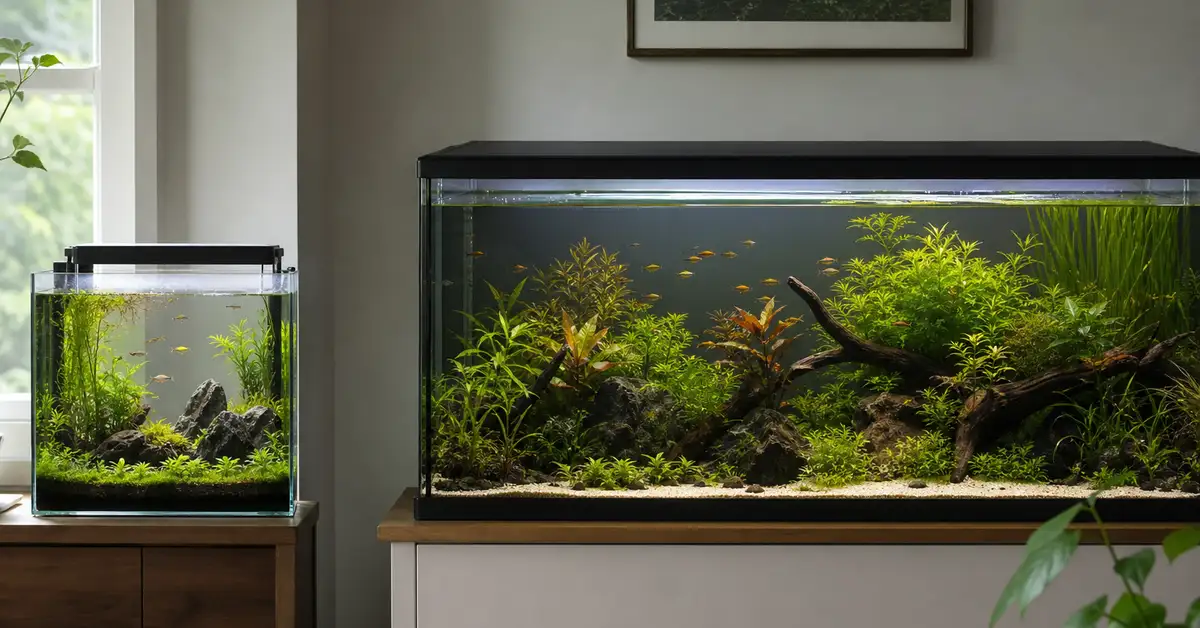
Worked examples: 5, 10 and 20 gallons
These are realistic, complete stocking plans at three common sizes — not a maximum, and not padded to hit a round number. Each assumes a fully-cycled tank, an appropriately-sized filter, and weekly water changes.
A 5-gallon tank genuinely supports very little: a single betta, a small shrimp colony, or a handful of nano fish such as a dwarf pea puffer or a small group of green neon tetras — not a mixed community. Our 5-gallon stocking guide goes through the honest short list species-by-species; the short version is that most “community tank” stocking simply doesn’t fit at this size, and a single well-chosen resident beats a crowded attempt at variety. Pairing this with the right hardware matters more at 5 gallons than at any larger size — see our nano and 5-gallon tanks guide for tank and filter options built for this footprint.
A 10-gallon tank is where a genuine small community becomes realistic: one small centerpiece fish (a honey gourami or a solo betta), a school of 6–8 small nano fish (ember tetras, harlequin rasboras), and a few bottom-dwelling scavengers such as pygmy corydoras. Our 10-gallon stocking guide covers three complete builds at this size and — just as importantly — the popular “beginner” fish (goldfish, common plecos, iridescent sharks) that are routinely sold for a 10-gallon and shouldn’t go in one. If you’re still choosing the tank itself, our best 10-gallon fish tanks guide covers the hardware side.
A 20-gallon tank roughly doubles the realistic stocking of a 10-gallon, but not linearly — the extra water volume buys stability (slower, gentler swings in ammonia and temperature) as much as it buys raw capacity. A 20-gallon comfortably supports two small schools (for example 6 harlequin rasboras plus 6 cherry barbs), a small group of corydoras, and either a centerpiece fish or a bonded pair of dwarf/bristlenose plecos — the extra footprint is also the realistic minimum for species like the zebra danio that need more linear swimming room than their body length suggests. If you’re weighing whether to start at 10 gallons and grow into 20, or begin there, our what size aquarium should a beginner get guide makes the case for buying more tank than feels necessary; our glass vs. acrylic aquariums guide is worth reading before this size, since weight and material tradeoffs start to matter more once a tank moves past 10 gallons.
Whichever size you land on, our best fish for beginners guide is the species-first companion to this page — it ranks individual fish by genuine hardiness across sizes, rather than by tank volume.
Bioload, testing, and why “stock less, test more” beats any fixed number
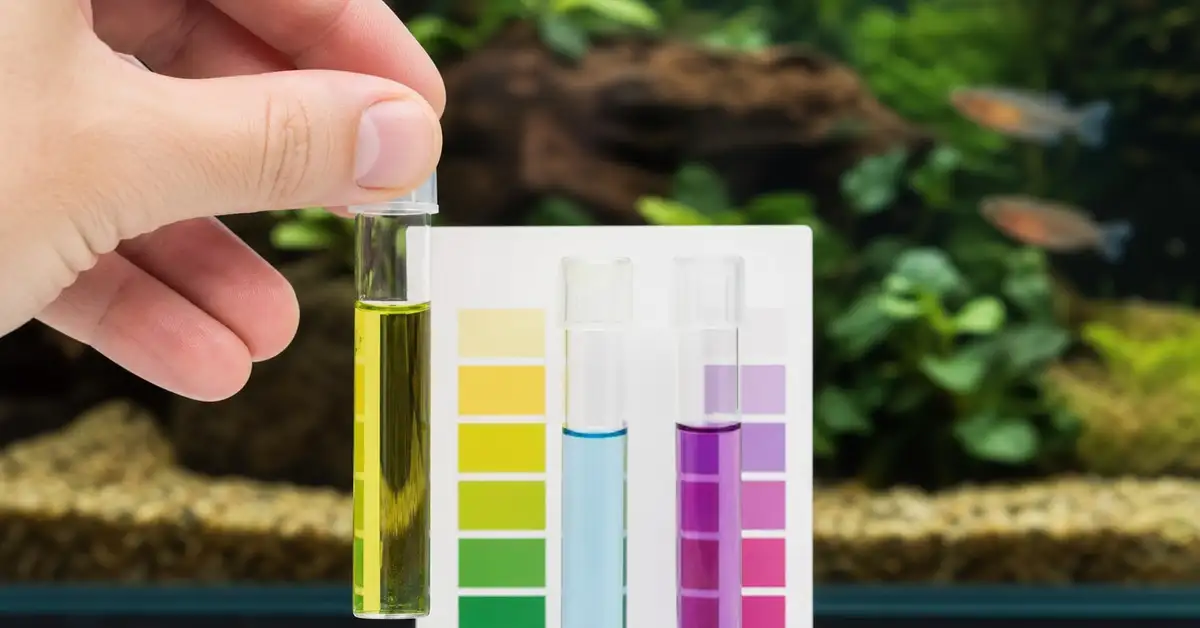
Overstocking is a genuine ammonia and nitrite risk, and the risk is worst in a tank that hasn’t finished cycling — an uncycled tank has no established beneficial-bacteria colony to process the waste new fish produce, and that gap is the single most common cause of new-tank fish deaths (the syndrome vets call “new tank syndrome”). Every stocking plan above assumes the tank is already fully cycled; if yours isn’t, stocking math is the wrong problem to solve first. See our full how to cycle a fish tank walkthrough before adding any of the fish above, and our aquarium water parameters reference for the exact ammonia, nitrite and nitrate ranges you’re testing against.
The practical target, drawn from the same sources behind our cycling and water-parameters guides: ammonia and nitrite at 0 ppm at all times, and nitrate kept below roughly 40–50 ppm through water changes and plant uptake. When you add new fish — at any tank size — add them in small batches rather than all at once, and test daily for the first week or two afterward rather than trusting the stocking math alone. If ammonia or nitrite reads above 0 at any point, that’s the tank telling you it’s carrying more bioload than its current filtration and water-change schedule can process, regardless of what any calculator or rule of thumb said going in.
This is the honest bottom line behind every worked example above: when in doubt, stock less than the framework technically allows, and test more often than feels necessary. A slightly understocked tank with a stable nitrogen cycle beats a “correctly stocked” tank running an ammonia spike, every time.
Before you add a single fish
If you’re still deciding on a tank size or the hardware to go with it, our best aquarium kits for beginners guide covers all-in-one starter setups across these sizes, and our what size aquarium should a beginner get guide is worth reading before you buy — bigger is usually more forgiving, not less. Once the tank is running, cycle it fully before any fish go in, following our cycling guide, and quarantine every new arrival for a couple of weeks before it joins an existing tank. We’ll cover what to do about specific symptoms in dedicated disease guides — starting with our guide on white spot (ich) — what to observe; for now, the honest answer is that a stable, fully-cycled tank, conservative stocking, and a real quarantine period prevent far more problems than any medication does after the fact.
Frequently Asked Questions
General information only, not veterinary or aquatic-health advice — if a fish shows ongoing signs of illness or distress, consult an aquatic veterinarian rather than guessing from a forum thread.
Sources: Aquarium Co-Op: How Many Fish Can I Put in a Fish Tank? · Aquarium Co-Op: Top 10 Freshwater Fish for a 10-Gallon Aquarium · AquariumScience.org: Tank Stocking — How Many Fish? · PetMD: New Tank Syndrome in Fish