Written by Michael Probert, a research-led fishkeeper — not a lab or an aquatic vet. See our How We Choose methodology. This guide is general information, not veterinary or aquatic-health advice.
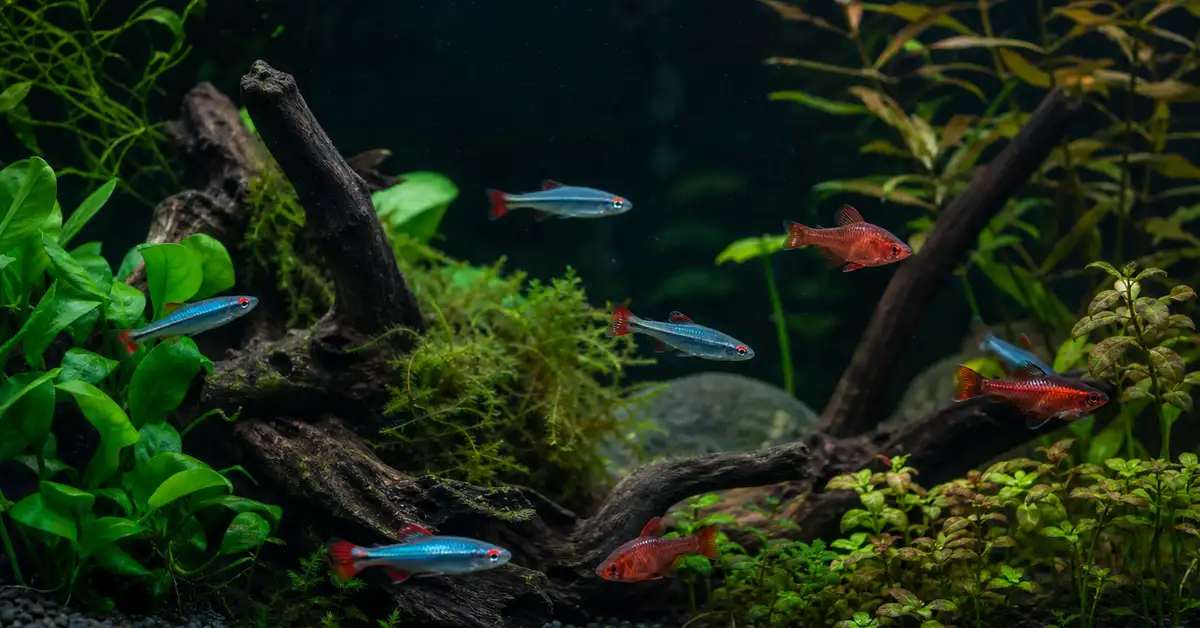
The best beginner fish aren’t the prettiest ones on the wall at the pet store — they’re the ones that forgive a missed water change, a temperature swing, or an early feeding mistake without dying on you. By that standard, the honest short list is: White Cloud Mountain minnows, cherry barbs, harlequin rasboras, ember tetras, fancy guppies and platies, zebra danios (given enough swimming room), bronze/albino cory catfish, a bristlenose pleco (never a common pleco), and a solo betta. Skip the classic beginner traps: common plecos and goldfish that outgrow every starter tank, tiger barbs mistaken for their much calmer cherry-barb cousins, and neon tetras added to water that hasn’t finished cycling. Below is the honest breakdown: which fish actually forgive beginner mistakes, three realistic ways to combine them, and the popular “beginner” fish that are more of a gamble than the label suggests.
What actually makes a fish “beginner-friendly”
Most “best beginner fish” lists are really “prettiest inexpensive fish” lists in disguise. Hardiness is a different, narrower quality: a genuinely forgiving fish tolerates the mistakes almost every new fishkeeper makes at least once — a skipped water test, a slightly-off temperature, a tank that’s a few weeks newer than it should be when the first fish go in. Aquarium Co-Op’s own beginner picks are built around exactly this idea, calling out fish that “can withstand a wide variety of temperatures and water parameters” rather than simply the cheapest or most colorful options on the shelf. AquAnswers frames it the same way: the goal is a fish that’s hardy first, interesting second — not the reverse.
That framing also explains why a few classic “starter fish” don’t make our list, or only make it with a caveat: they’re sold small, sold cheap, and sold constantly, but hardiness was never really the reason they ended up on a beginner shelf.
Fish that genuinely forgive beginner mistakes
Every species below is listed at real adult size, sourced primarily to Aquarium Co-Op’s and AquAnswers’ own beginner-fish guidance and cross-checked against our own 10-gallon and 5-gallon stocking research where a species overlaps.
| Fish | Adult size | Group size | Why it forgives mistakes |
|---|---|---|---|
| White Cloud Mountain minnow | ~1.5″ | 5–6 | Doesn’t need a heater and tolerates a wide temperature range — one of the most bulletproof community fish sold. |
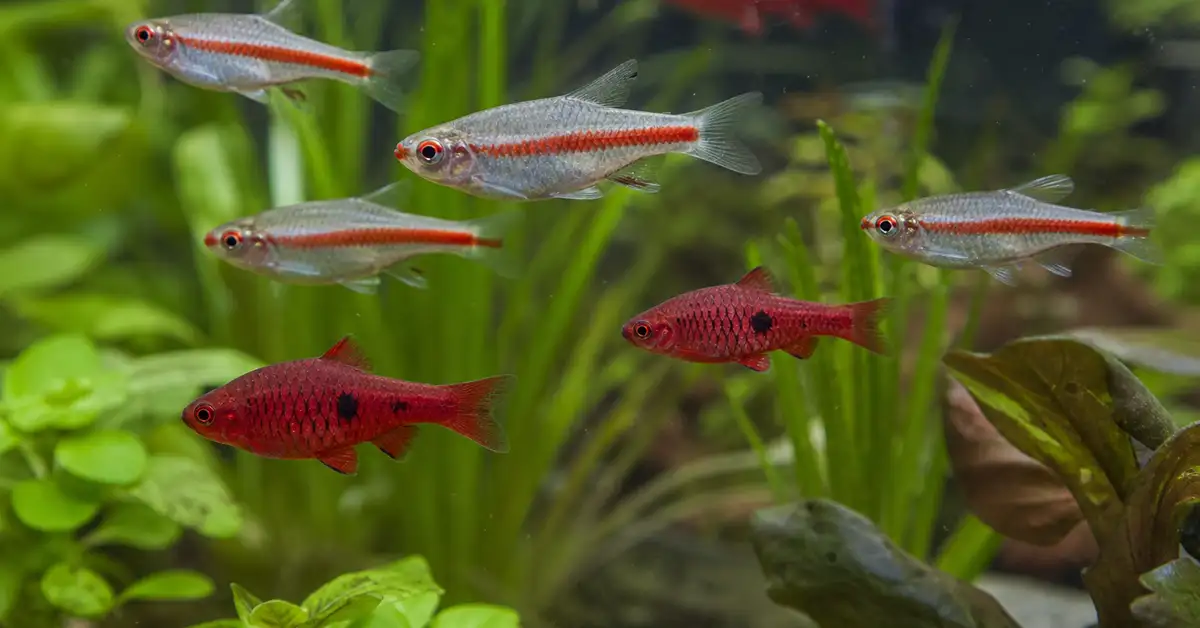
| Cherry barb | ~2″ | 6+ | The mildest barb — genuinely community-safe, unlike the tiger barb it’s often confused with. |
| Harlequin rasbora | ~1.75″ | 5–6 | Peaceful and hardy across a genuinely wide range of water conditions. |
| Ember tetra | ~0.8″ | 6+ | Calm, unassuming, and — in Aquarium Co-Op’s own words — “very forgiving when it comes to beginner mistakes.” |
| Fancy guppy | 1.4″ (male) / 2.4″ (female) | Small group | Extremely hardy livebearer that thrives across a wide temperature and pH range; expect a growing population. |
| Dwarf/teacup platy | ~1″ | Trio (1 male, 2 female) | Same hardy livebearer family as the guppy, stays noticeably smaller. |
| Zebra danio | ~2.2″ | 6–7 | Famously tolerant of temperature and water-quality swings — but a genuinely active swimmer that needs a long tank (15–20 gallons+), not a nano tank. |
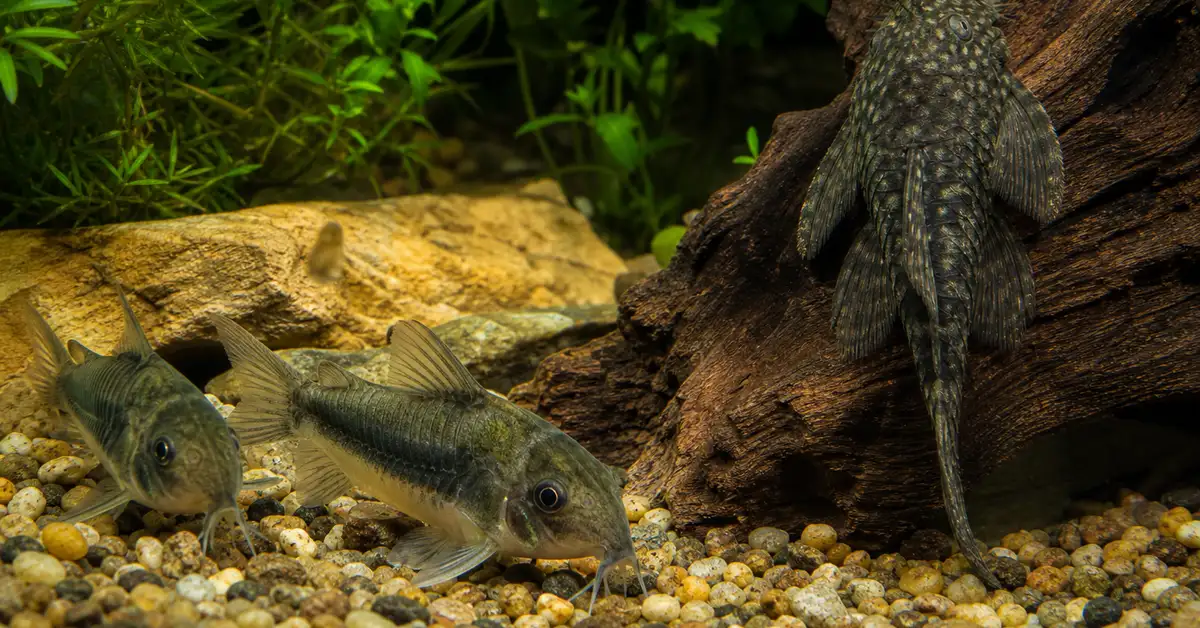
| Bronze/albino cory catfish | ~2.5–2.8″ | 5+ | Tough, inexpensive, social bottom scavenger; wants a 10–20-gallon floor footprint for a real group. |
| Bristlenose pleco | 3–6″ depending on variety | 1 (or a bonded pair) | The honest algae-eating alternative to a common pleco — but still needs roughly 20–30 gallons at full size, not a small starter tank. |
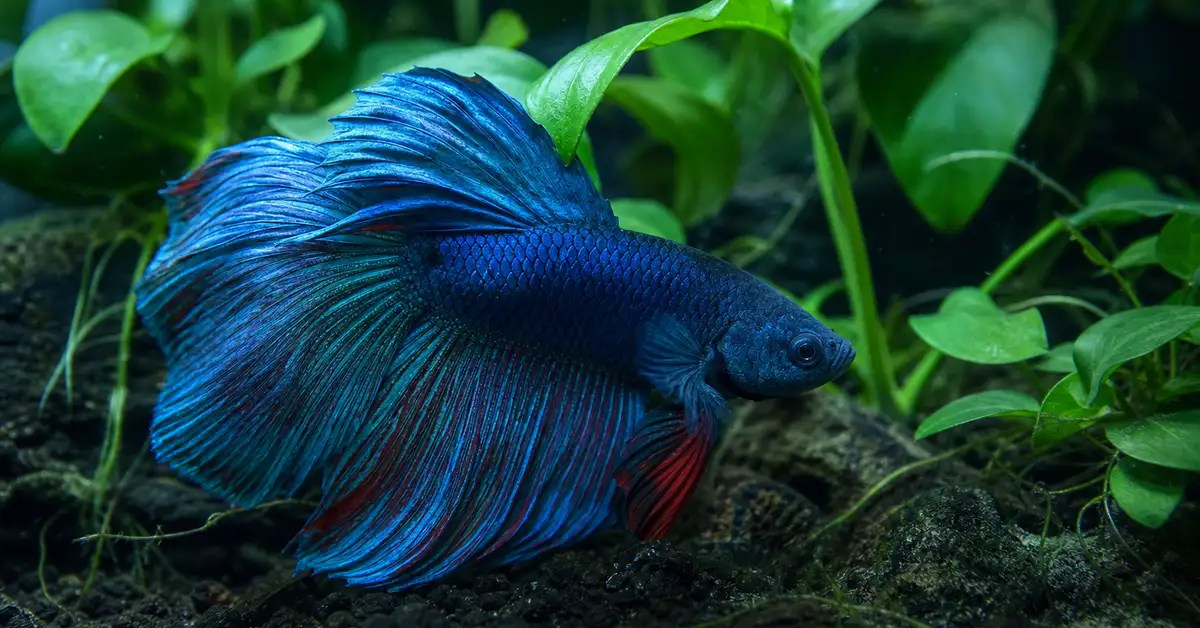
| Betta | ~2.5″ | 1 (solo) | Tolerant of a wider range of conditions than most centerpiece fish; see our betta fish care guide before buying one. |
The bristlenose pleco deserves a specific honest note, since it’s the fish most beginners reach for by accident: pet stores routinely sell an unlabeled 2–3 inch “algae eater” that turns out to be a common pleco capable of reaching up to 24 inches, exactly the mistake we cover in our 10-gallon stocking guide. Ask specifically for a bristlenose (or check the scientific name, Ancistrus) and you get a genuinely beginner-appropriate algae eater instead.
Three honest ways to start
Pick one complete plan rather than mixing pieces of several — that keeps the bioload predictable while you’re still learning to read your own tank.
The classic community build: one school of 6–8 harlequin rasboras or cherry barbs in the mid-water, plus 5–6 bronze cories working the substrate, plus a bristlenose pleco or a couple of nerite snails for algae. The most forgiving all-rounder here, and the build most experienced fishkeepers actually recommend for a genuine first tank.
The livebearer build: a small group of fancy guppies or dwarf platies (pick one, not both, so you’re only managing one growing population at a time), plus a few nerite snails. Extremely hardy and visually varied without much fuss, though expect fry if you keep both sexes.
The betta build: one betta as the whole tank, or a betta plus a nerite snail or cherry shrimp colony if that individual betta tolerates company. Simplest option, and per our 5-gallon stocking guide, arguably the single best use of a small first tank. Check our dedicated betta tank mates guide and betta fish care pillar before adding anything else to the water.
Fish commonly recommended to beginners that are more of a gamble than advertised
This is the section most “best beginner fish” lists skip, and it’s where most of the hobby’s early disappointments happen.
Common pleco. Sold small and marketed as an easy cleanup crew, the common pleco can reach up to 24 inches at full size — the same fact we flag in our 10-gallon stocking guide. If you want an algae eater, ask for a bristlenose specifically; “pleco” alone isn’t specific enough at the register.
Goldfish. Goldfish are genuinely hardy fish, which is exactly why they get recommended to beginners — but “hardy” was never the whole test. Fancy and common goldfish are cold-water fish that can reach 8 inches or more and need a 20-gallon-long tank at minimum, not the small bowl or starter tank they’re routinely sold alongside.
Tiger barb. Easy to confuse with the genuinely mild cherry barb on our list above, but tiger barbs are considerably more prone to fin-nipping and are best kept in a larger school (8+) specifically to spread out that aggression — not the calm community addition a beginner usually wants.
Kuhli loach. Frequently sold as a small, easy oddball fish, and it’s genuinely hardy once settled — but our own betta tank mates research found it really wants a proper group of three to five in a 20-gallon-long tank to feel secure and forage normally. A single kuhli or two can survive in a smaller tank; it won’t thrive the way a full group does, so don’t let “just get a couple, they’re tiny” be the whole plan.
Neon tetra, in an uncycled tank specifically. The classic neon tetra is a fine, hardy community fish once a tank is biologically mature — AquAnswers is explicit that neons are hardy “as long as they are not exposed to inconsistent temperatures or unstable water parameters.” The catch is that neon tetras are also one of the most commonly sold “first fish” for a tank that hasn’t finished cycling yet, which is precisely the unstable-parameter scenario they don’t forgive. The fish isn’t the problem; the timing usually is.
Before you add a single fish
Every fish on this page, including the genuinely hardy ones, still needs to go into water that has finished cycling — an uncycled tank has no established beneficial-bacteria colony to process the ammonia and nitrite that fish waste produces, and that spike is the single most common cause of new-tank fish deaths. See our full how to cycle a fish tank walkthrough and our water parameters reference for the ammonia/nitrite/nitrate ranges you’re aiming for before anything goes in. If you’re still choosing the tank and equipment rather than what to put in it, our best aquarium kits for beginners guide covers the all-in-one hardware side, and our 10-gallon and 5-gallon stocking guides go deeper once you’ve picked a tank size.
Once the tank is cycled and stocked, quarantine every new arrival for a couple of weeks before it joins an existing tank, and watch closely during that window for clamped fins, white spots, ragged fin edges, or unusual lethargy. We’ll cover what to do about specific symptoms in dedicated disease guides — starting with our guide on white spot (ich) — what to observe; for now, the honest answer is that a stable, fully-cycled tank and a real quarantine period prevent far more problems than any medication does after the fact.
Frequently Asked Questions
General information only, not veterinary or aquatic-health advice — if a fish shows ongoing signs of illness or distress, consult an aquatic veterinarian rather than guessing from a forum thread.
Sources: Aquarium Co-Op: Top 10 Easy Fish That Beginners Always Love · AquAnswers: 7 Best Freshwater Aquarium Fish for Complete Beginners · Aquarium Co-Op: Top 10 Freshwater Fish for a 10-Gallon Aquarium